Renewable energy sources like solar and wind don’t generate electricity at a steady rate—their output varies with the weather and time of day. On a sunny afternoon, they can produce more electricity than is actually needed, while in the evening, when demand peaks, generation often drops off.
Electricity is generally consumed as it is produced. So when electricity generation and demand don’t line up, surplus power can go to waste, while any shortfall has to be met another way. The system that helps bridge this gap is the ESS (Energy Storage System). Let’s take a closer look at the role an ESS plays, the components that work together inside it, and where it’s used.
What Is an ESS (Energy Storage System)?
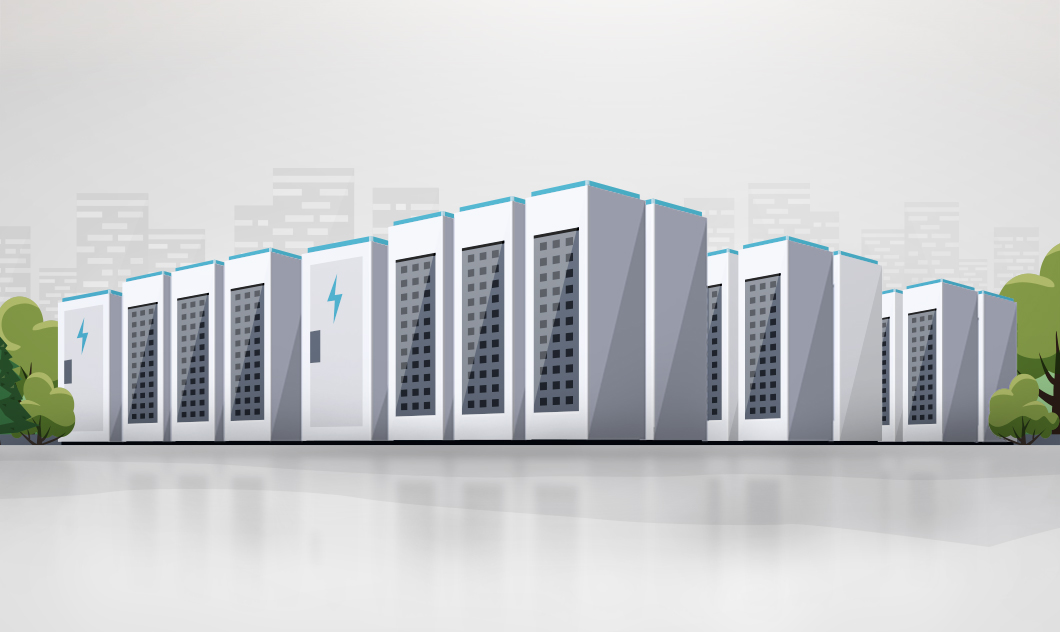
An ESS stores electricity that has been generated so it can be supplied where and when it is needed, such as when demand rises or supply falls short. This makes it possible to use electricity when it is needed, even when generation and demand occur at different times.
An ESS is especially useful for making the most of renewable energy, since renewable power generation—solar and wind alike—varies with the time of day and the weather. Storing the electricity generated by solar panels during the day in an ESS, for instance, makes that power available again in the evening or at night, once generation drops off.
An ESS can also store energy when power usage is low and release it during periods of high demand. That’s why it’s used across such a wide range of settings—homes, commercial facilities, and factories among them.
What role does an ESS play?
An ESS helps ensure a stable power supply, enables greater use of renewable energy, and maintains power quality.
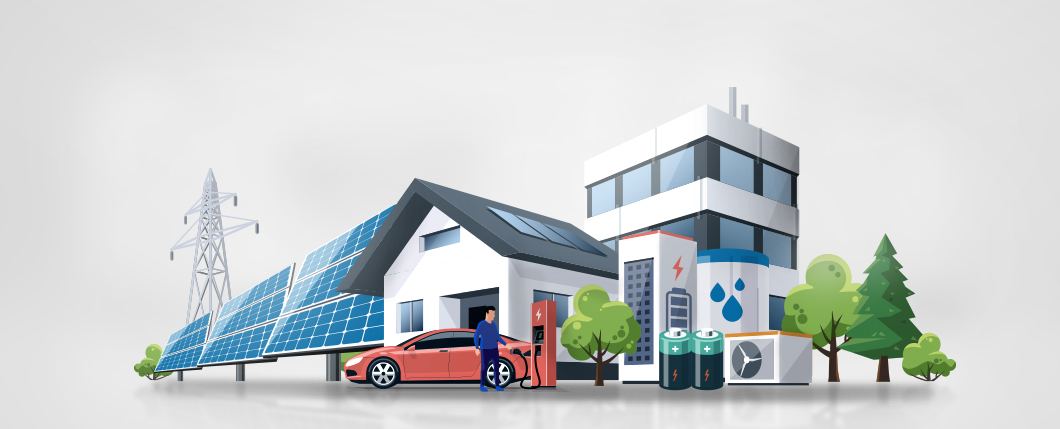
1) Backup power during outages: Facilities like hospitals, banks, and data centers can’t afford to lose power, even during an unexpected outage. When an outage occurs, an ESS can supply stored power as an uninterruptible power source..
2) Smoothing out renewable generation: Solar and wind output shifts with natural conditions. An ESS stores the electricity generated and releases it when demand rises, helping offset fluctuations in renewable generation and support a more stable power supply.
3) Keeping grid frequency steady: When supply and demand on the power grid fall out of balance, frequency can drift. An ESS helps maintain the grid frequency at Korea’s standard of 60 Hz.
Core components of an ESS, and how they work together
In a battery-based ESS, the battery system, the PCS (Power Conversion System), and the EMS (Energy Management System) work together to store and supply electricity.
Battery system
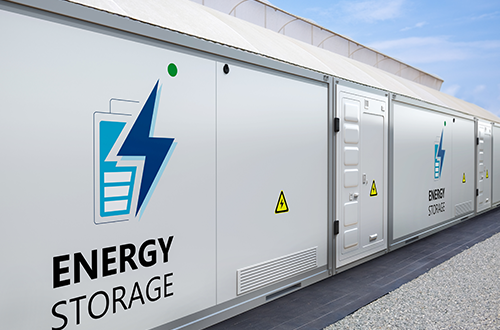
The battery system is the core component that actually stores the electricity. Batteries are built up in units of cells, modules, packs, and racks. Multiple packs or racks can then be installed together in a container to store electricity at scale.
Inside the battery system sits the BMS (Battery Management System), which monitors key status data such as voltage, current, and temperature. Based on this data, it estimates SoC (State of Charge)*, which reflects remaining capacity, and SoH (State of Health)*, which reflects lifespan and performance. It also handles cell balancing and protects against overcharging, over-discharging, and overcurrent, keeping the battery operating safely and reliably within its intended range.
*View: Battery Glossary – BMS (Battery Management System)
*View: Battery Glossary – SoC
*View: Battery Glossary – SoH
PCS (Power Conversion System)
The PCS (Power Conversion System)* converts electricity between AC and DC so it can be stored in the battery or supplied when needed.
Batteries store electricity as direct current (DC), while the power grid and most electronic devices run on alternating current (AC). When the ESS is charging, the PCS converts AC to DC. When it’s discharging, it converts that DC back to AC. In this way, the PCS converts power in both directions, supporting both the charging and the discharging side of the ESS.
The PCS also manages an ESS’s active power1 and reactive power2, and monitors voltage and operating status to maintain power quality. In the event of a power outage, it protects the power system and can operate independently using energy stored in the battery, even without grid power.
*View: Battery Glossary – PCS (Power Conversion System)
EMS (Energy Management System)
The BMS and EMS operate at different levels. While the BMS manages what’s happening inside the battery, the EMS (Energy Management System)* oversees the ESS as a whole. The EMS monitors and manages how power is used and supplied across the ESS. It collects data on energy use and consumption patterns, analyzes when and where energy is used, and helps reduce inefficient energy use while controlling charging and discharging based on preset criteria.
*View: Battery Glossary – EMS (Energy Management System)
Where Is ESS Used?
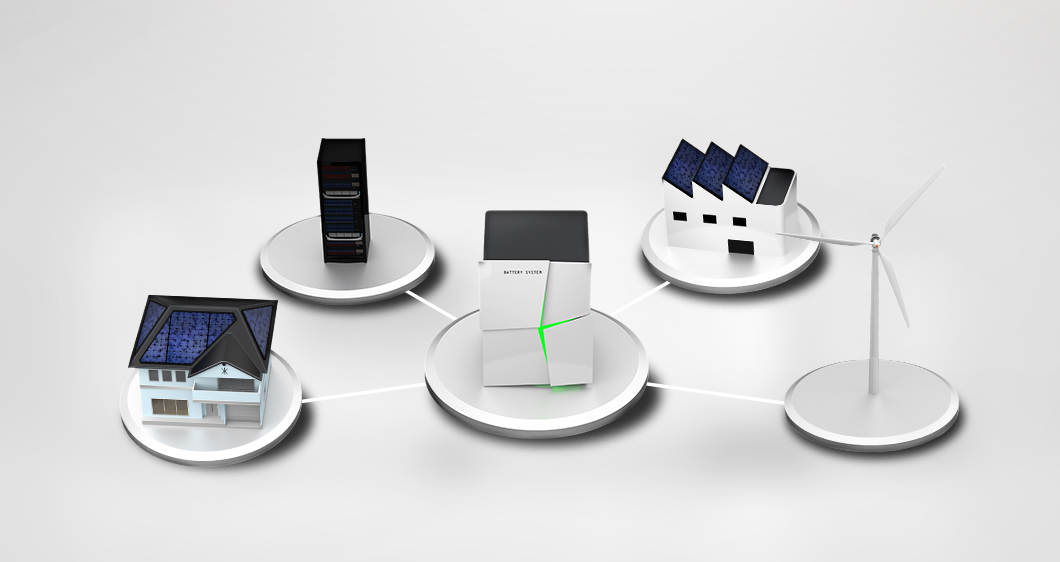
Depending on where it is installed and what it is used for, ESS is used in a wide range of settings, including homes, commercial facilities, power grids, data centers, and telecom facilities.
1) Home ESS: These systems can be connected to a solar power system. They store the solar power generated during the day so it can be used later, whenever it’s needed.
2) Commercial ESS: These systems are installed in commercial buildings such as offices, factories, and schools. They store electricity when usage is low and draw on it during periods of higher demand.
3) Grid ESS: These systems are installed in thermal power stations, solar/wind power plants, and substations. They store and supply power at scale, helping balance electricity supply with demand.
4) UPS (Uninterruptible Power Supply) ESS: These systems provide backup power when a sudden outage occurs at data centers or telecom facilities. When power is unexpectedly cut, these systems supply their stored electricity so critical equipment can keep running.
Key Q&A
Q. What is an ESS?
An ESS is an energy storage system that stores electricity and supplies it when needed.
Q. How does an ESS work?
When charging, the PCS converts AC to DC so the battery can store the power; when discharging, the PCS converts that DC back to AC. Throughout this process, the BMS manages the battery’s condition while the EMS monitors and manages how power is used and supplied across the ESS in real time.
Q. What role does an ESS play?
An ESS supplies power during outages, offsets fluctuations in renewable generation, and helps regulate grid frequency—all of which support overall power quality.
Q. Where is an ESS used?
ESSs are used in a wide range of settings where power needs to be stored or reliably supplied, including homes, commercial facilities, power plants, substations, data centers, and telecom facilities.
We’ve now covered what an ESS is, what it’s made of, and how and where it’s used. An ESS has become a key system for delivering power reliably when it’s needed, while supporting both renewable energy use and grid stability. As the shift toward carbon neutrality continues, ESSs are expected to be deployed in an even wider range of settings, from homes and industrial sites to power grids. Next time you come across an ESS, you’ll know exactly which components are working together behind the scenes, and what each one does.