You may have come across the term “BMS” when reading about battery safety or electric vehicles. Short for Battery Management System, BMS monitors the condition of a battery and helps keep the battery operating efficiently within a safe operating range.
In battery systems such as electric vehicles (EVs) and energy storage systems (ESS), where many battery cells are connected, it is important to monitor key data such as voltage, current, and temperature. Based on this data, BMS estimates the battery’s State of Charge (SoC) and State of Health (SoH). It also helps prevent conditions such as overcharging, over-discharging, and overcurrent while managing the battery’s performance and lifespan.
In this Battery Glossary, we’ll explore what BMS is, its key functions, and why it plays such an important role in battery systems.
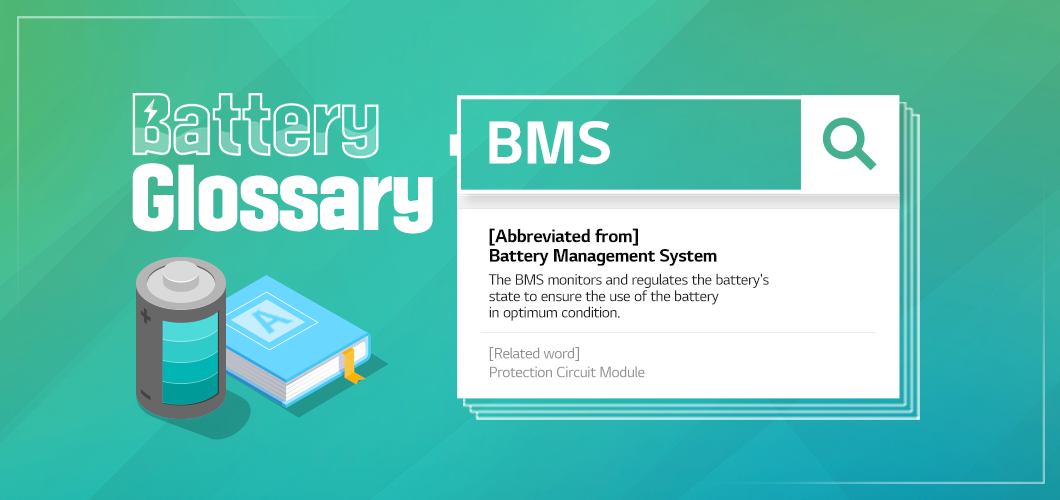
What is BMS?
Short for Battery Management System, BMS monitors key battery data such as voltage, current, and temperature. Based on this information, it estimates the battery’s SoC*, which indicates the remaining battery capacity, SoH*, which represents the battery’s health, including its lifespan and performance. BMS also manages battery performance, lifespan, and safety through functions such as cell balancing and protective control.
*View: Battery Glossary – State of Charge (SoC)
*View: Battery Glossary – State of Health (SoH)
What does BMS do?
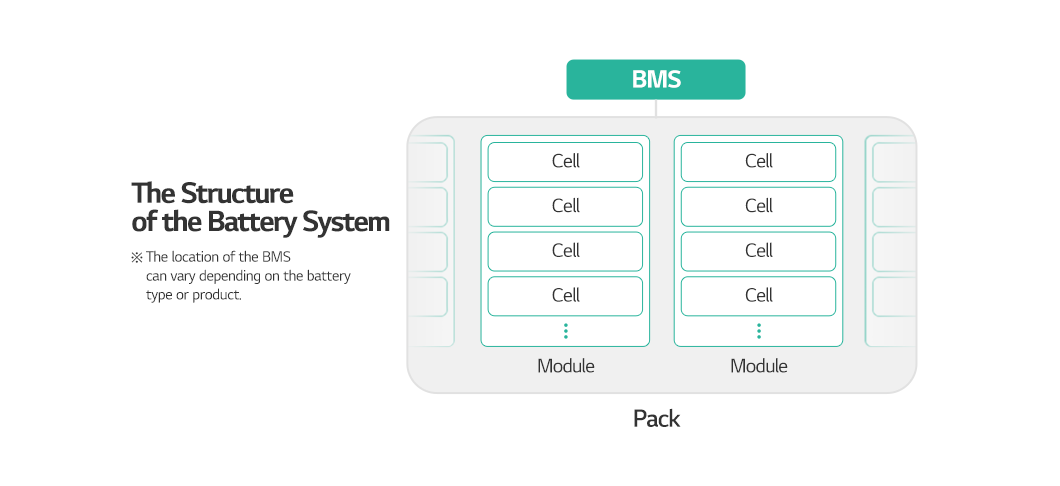
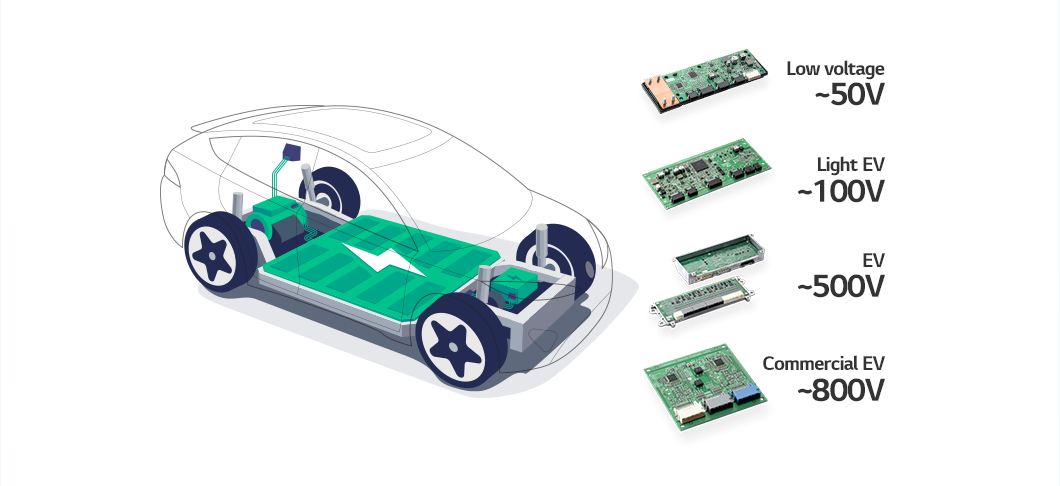
The smallest unit of a battery is the cell. A group of cells forms a module, and multiple modules, along with other components, make up a battery pack. Since battery packs used in EVs and ESS contain many connected cells, managing the condition of each cell is essential for stable operation.
BMS monitors the battery pack’s voltage, current, and temperature, estimates its SoC and SoH, and reduces differences between individual cells. It also controls the battery to prevent conditions such as overcharging, over-discharging, and overcurrent, helping the battery pack operate safely and reliably.
You can think of BMS as the conductor of a choir. Just as a conductor brings different voices together into harmony, BMS coordinates individual battery cells to help keep the battery pack operating safely and reliably.
What are the Key Functions of BMS?

BMS performs three main functions: monitoring, cell management, and control. Together, these functions help manage the battery’s performance, lifespan, and safety.
① Monitoring: BMS monitors battery voltage, current, temperature, and other key parameters through sensors installed in the battery system. Based on this data, it estimates the battery’s SoC and SoH.
② Cell Management: BMS performs cell balancing* to reduce differences between individual battery cells. Since multiple cells work together in a battery pack, minimizing cell-to-cell variation is essential for stable battery pack operation.
③ Control: BMS controls the battery to prevent conditions such as overcharging, over-discharging, and overcurrent. By keeping the battery within its safe operating range, it helps ensure stable charging and discharging.
*View: A Better Life with Batteries – Achieving Energy Balance through Cell Balancing
Why is BMS Important?
As batteries are used in more applications, the role of BMS continues to become more sophisticated. Because battery packs contain many connected cells, differences in cell conditions can occur. Managing those differences is essential for reliable battery operation. BMS has evolved beyond simply monitoring battery conditions. It has become a core system that helps manage battery lifespan, performance, and safety throughout battery operation.
Key Q&A
Q. What is BMS?
BMS, short for Battery Management System, monitors key battery data such as voltage, current, and temperature. It helps ensure the battery operates safely and efficiently by keeping it within its safe operating range.
Q. Why is BMS necessary?
Battery packs used in electric vehicles (EVs) and energy storage systems (ESS) consist of many battery cells. Because the condition of each cell can vary, BMS helps reduce cell-to-cell differences and prevents conditions such as overcharging, over-discharging, and overcurrent.
Q. What are the key functions of BMS?
The main functions of BMS include monitoring battery voltage, current, and temperature, estimating the battery’s State of Charge (SoC) and State of Health (SoH), performing cell balancing, and preventing overcharging, over-discharging, and overcurrent. Together, these functions help manage the battery’s lifespan, performance, and safety.
Although users rarely notice BMS directly, it continuously monitors and controls battery conditions whenever a battery is charged or used. Understanding BMS makes it easier to see how battery packs made up of many individual cells are managed safely and operate reliably.
In future episodes of the Battery Glossary, we’ll continue exploring the key concepts behind batteries.