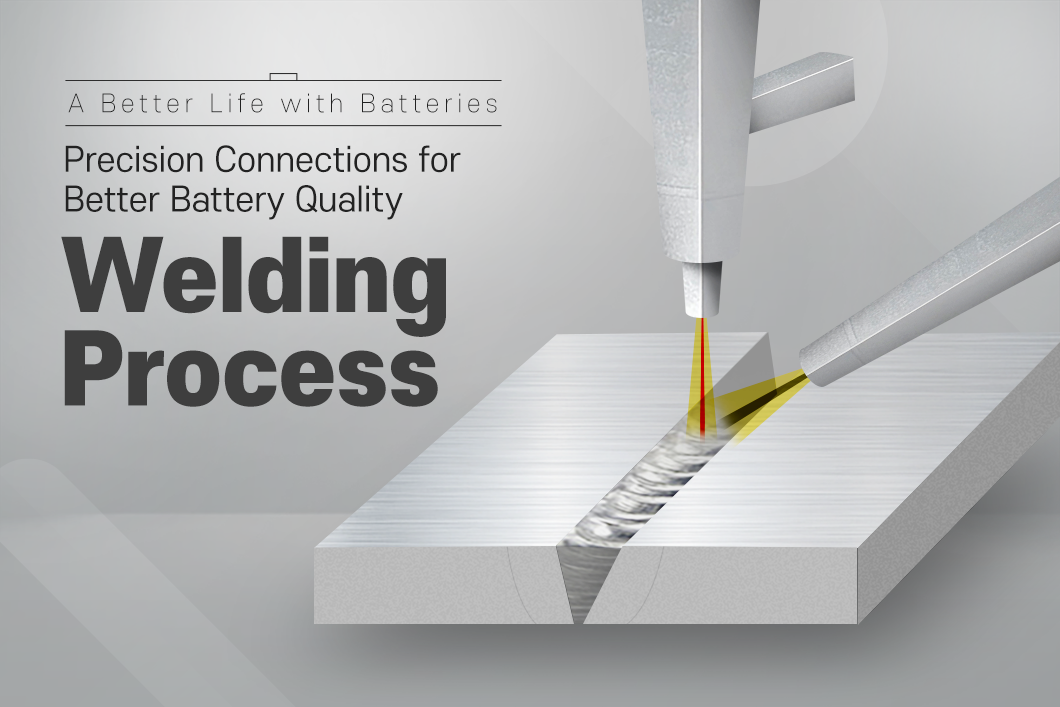
Hundreds of battery cells are connected to form a module, and multiple modules are assembled into a battery pack before being installed in electric vehicles (EVs) or energy storage systems (ESS). Every stage of the assembly process requires precise electrical connections for reliable battery operation. The process that joins these various battery components is called the welding process. Welding is a critical manufacturing process that has a significant impact on battery performance and quality. What types of welding processes are used in battery manufacturing, and what are the characteristics of each? Let’s take a closer look.
The Hidden Backbone of Battery Manufacturing: Welding
Welding is a joining technology that permanently bonds two or more metals or materials using heat or pressure, and it plays a critical role in battery manufacturing. This method is essential for precisely joining electrodes and tabs to create electrical connections between battery cells. It is also used during module assembly to join electrical connection components such as busbars.
In battery manufacturing, welding must achieve more than simply joining materials. It must ensure both electrical conductivity and mechanical strength, requiring high precision and advanced expertise. This is particularly important when joining dissimilar materials such as copper (Cu) and aluminum (Al), which are commonly used for battery tabs. Differences in melting point, thermal expansion, and thermal conductivity make it difficult to achieve consistent weld quality. Therefore, selecting the welding method best suited to each material is critical to battery performance and safety.
Resistance Welding: Joining Through Precise Current Control
Resistance welding is a welding technology that bonds two metals using the resistive heat generated by electric current. To achieve this, two metal sheets are placed between electrodes under pressure, and a high current is applied for a short period. The electrical resistance generated at the contact surface produces heat, causing localized melting12 at the joint and creating a strong bond between the two metals.
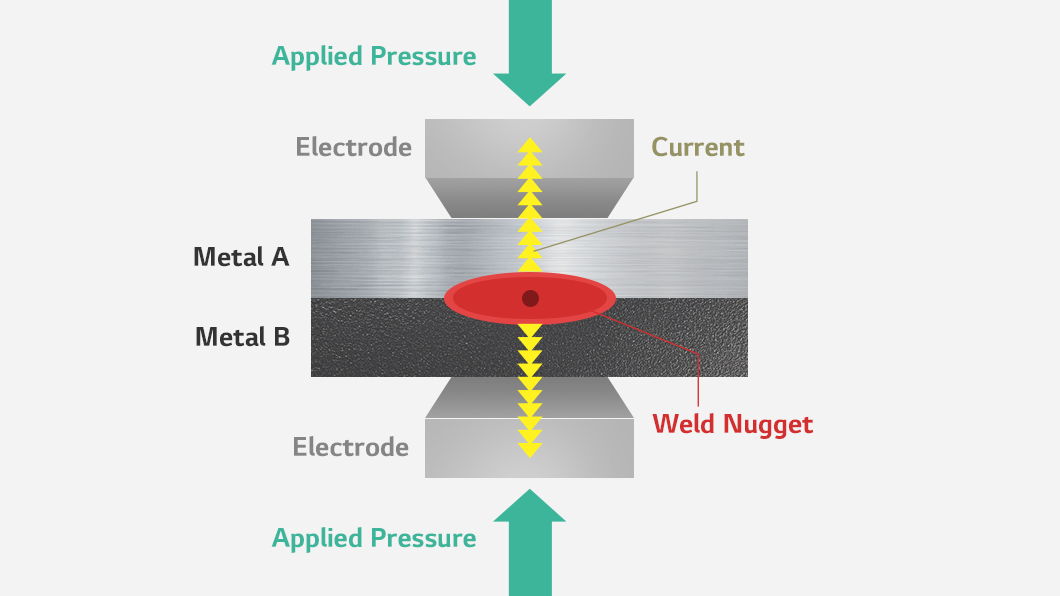
The most common type of resistance welding is resistance spot welding (RSW). As its name suggests, it joins metals by forming localized spot welds over a small area. Because the weld area is very small, this method is ideal for precision components and thin metal sheet applications.
Resistance welding also delivers consistent quality in high-volume manufacturing, where the same components must be welded repeatedly, because it completes the joining process almost instantaneously with a short burst of current. In addition, its precise, monitoring-based heat control enables seamless integration with automated systems. The process also produces relatively low levels of hazardous substances such as spatter and fumes, providing a safer working environment. These advantages have made resistance welding a widely adopted joining technology across various manufacturing industries. In cylindrical battery manufacturing, it is commonly used to weld the bottom inner surface of the cylindrical case to the negative tab.
However, resistance welding also has its limitations. It requires a large amount of electrical current, necessitating high-capacity power equipment. Determining the optimal welding parameters, such as current, applied pressure, and weld time, is challenging because they must be adjusted according to the material type and thickness. In addition, weld quality cannot be accurately assessed through visual inspection alone, and the limited availability of non-destructive testing (NDT)3 methods make it difficult to detect internal defects.
Ultrasonic Welding: Joining a Wide Variety of Materials
Ultrasonic welding is a joining technology that uses high-frequency vibrations of 20 kHz or higher to join identical or dissimilar metals. During the process, ultrasonic vibration is applied while two materials are held together, generating localized heat and plastic deformation. This removes oxide layers and surface contaminants from the contact surfaces, promoting solid-state joining4 and creating a strong bond without melting the materials.
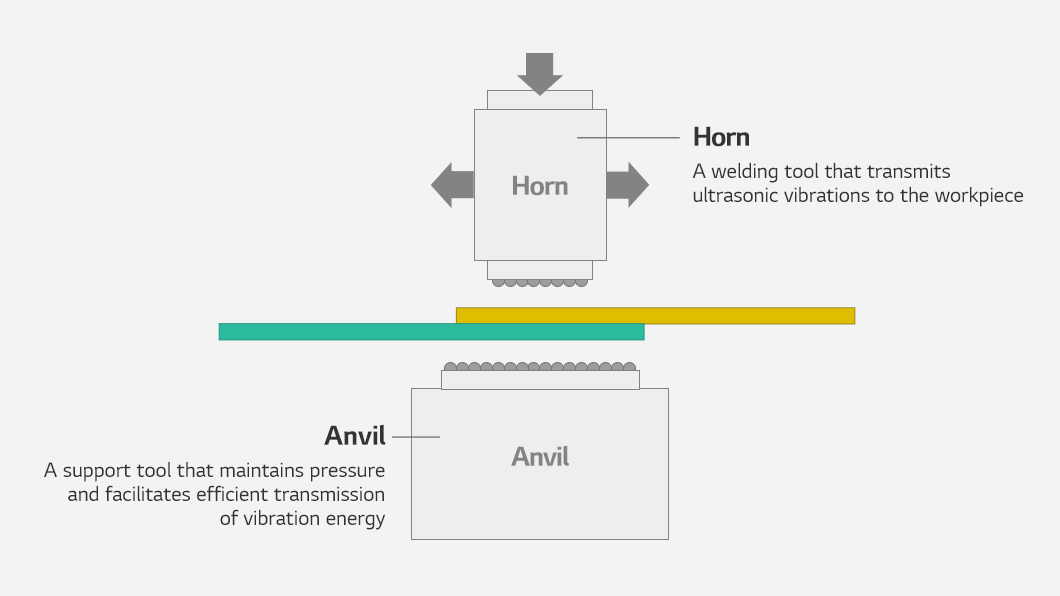
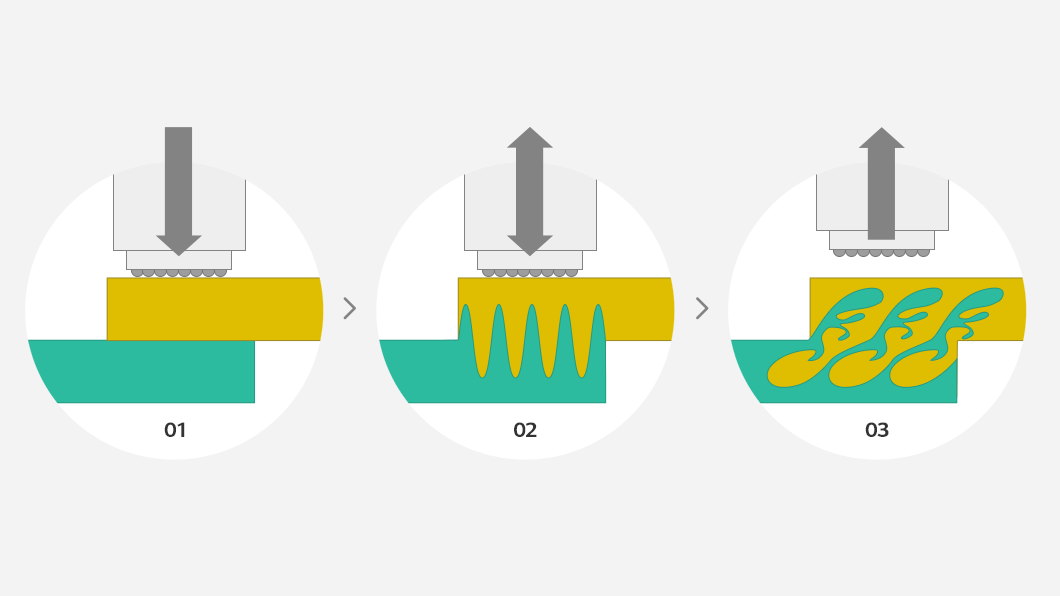
Ultrasonic welding can join a wide range of materials, from dissimilar metals to polymers and thin films. Unlike resistance welding, it does not generate heat by passing electrical current through the workpiece. As a result, it minimizes electrical heat loss and maintains a relatively low welding temperature, making it suitable for heat-sensitive materials.
Ultrasonic welding has gained significant attention in the aerospace and automotive industries. As lightweight structures and high-performance materials become increasingly common across a wide range of mobility applications, the need for precise joining of dissimilar materials continues to grow. Because ultrasonic welding produces little to no heat-affected zone (HAZ) and is less sensitive to differences in the melting points of materials, it has emerged as a promising hybrid joining technology for combining multiple materials.
Laser Welding: Expanding Across Battery Manufacturing
Laser welding is a welding process that melts and joins materials using a high-density energy beam. The highly concentrated laser beam produces deep-penetration welds, making it well suited for welding narrow, deep joints.
This characteristic minimizes the HAZ (Heat Affected Zone)and thermal distortion around the weld. It also enables stable welding of materials with different thicknesses and in applications that require a large number of welds.
When welding highly reflective metals, reflected laser light can damage equipment. To prevent this, the optical system5 can be tilted at a specific angle to control the direction of the laser beam.
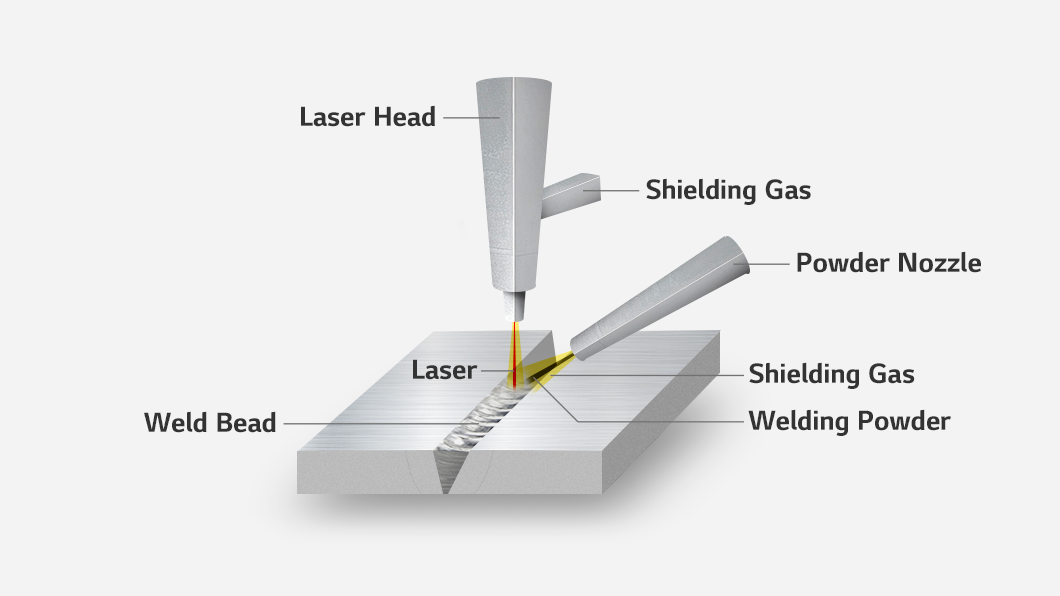
Laser welding is now widely used throughout battery manufacturing. Unlike contact-based welding methods such as resistance welding and ultrasonic welding, which require electrodes or ultrasonic horns to come into direct contact with the material, laser welding is a non-contact process. This eliminates issues such as tool wear, weld deformation, noise, dust generation, and design constraints.
Because it does not require direct contact with the cell surface, laser welding can be applied to a wide range of battery cell formats, including cylindrical, prismatic, and pouch cells. As a result, it is used throughout the battery manufacturing process, from internal electrode welding and electrical connections between cells during module and pack assembly to BMS connections.
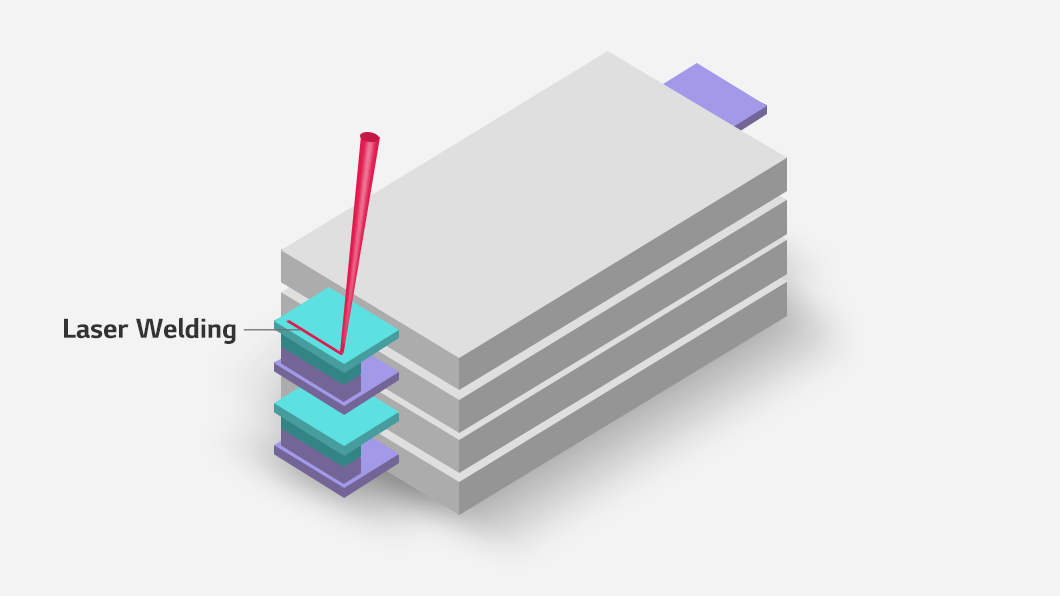
As demand for high-capacity batteries continues to grow to extend EV driving range, battery electrodes and tabs are being stacked in increasingly greater numbers to improve energy density. Accordingly, demand is also increasing for high-precision laser welding technologies capable of producing reliable welds in multi-layer structures.
Comparing Battery Welding Processes at a Glance
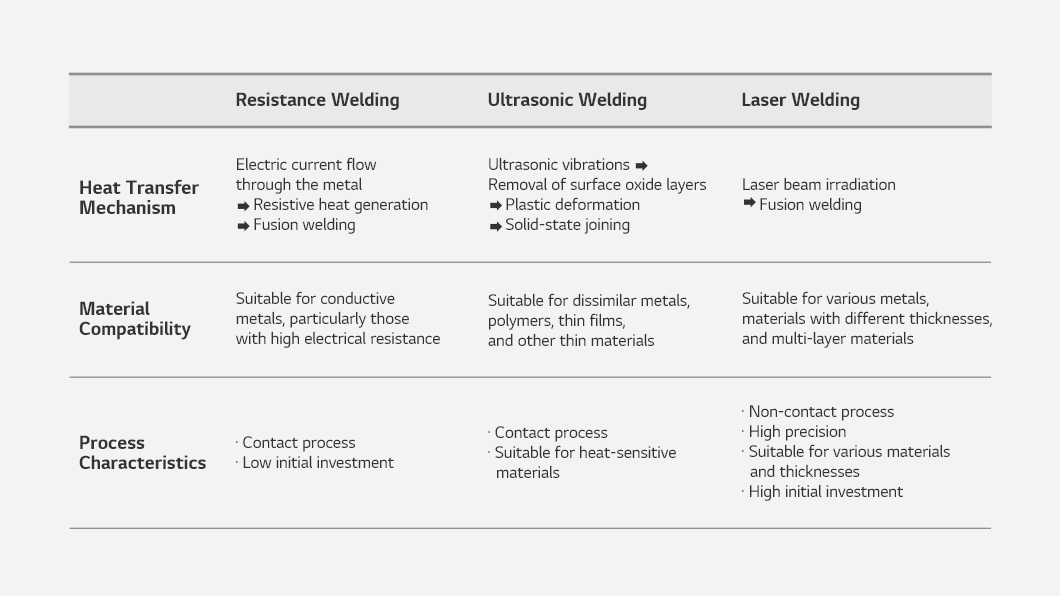
The ongoing pursuit of higher battery performance is driving greater material diversity and increasingly sophisticated manufacturing processes. Accordingly, welding processes for connecting battery components are also rapidly evolving through integration with advanced technologies such as automation systems, real-time quality monitoring, and non-destructive testing. Continued innovation in welding will remain a key driver of competitiveness in battery manufacturing.
- Localized melting: The melting of a limited area of the base material, where only a localized region is heated above its melting point. ↩︎
- Melting: The process in which a solid material is heated above its melting point and changes into a liquid state. ↩︎
- Non-destructive testing (NDT): Inspection methods used to detect internal defects without damaging the product. ↩︎
- Solid-state joining: A bonding method in which metals are joined through interatomic attraction induced by heat, pressure, and vibration while remaining below their melting point. ↩︎
- Optical system: Devices such as lenses and mirrors used to control or focus a laser beam. ↩︎