The application of batteries is expanding beyond electric vehicles into a diverse range of fields, including humanoid robots and Urban Air Mobility (UAM). At the same time, interest is growing in next-generation batteries that can store more energy while offering enhanced safety. One of the most promising technologies addressing these needs is the all-solid-state battery (ASSB). Alongside this technology, the dry electrode process, which eliminates the use of solvents, is emerging as a key manufacturing technology for the commercialization of all-solid-state batteries. This is because the dry electrode process is essential for controlling moisture during the production of sulfide-based all-solid-state batteries.
In this article, we take a closer look at the relationship between dry electrode processing and all-solid-state batteries through a presentation by Minsu Kim of LG Energy Solution at the LG Tech Conference 2026.
What is an All-Solid-State Battery?
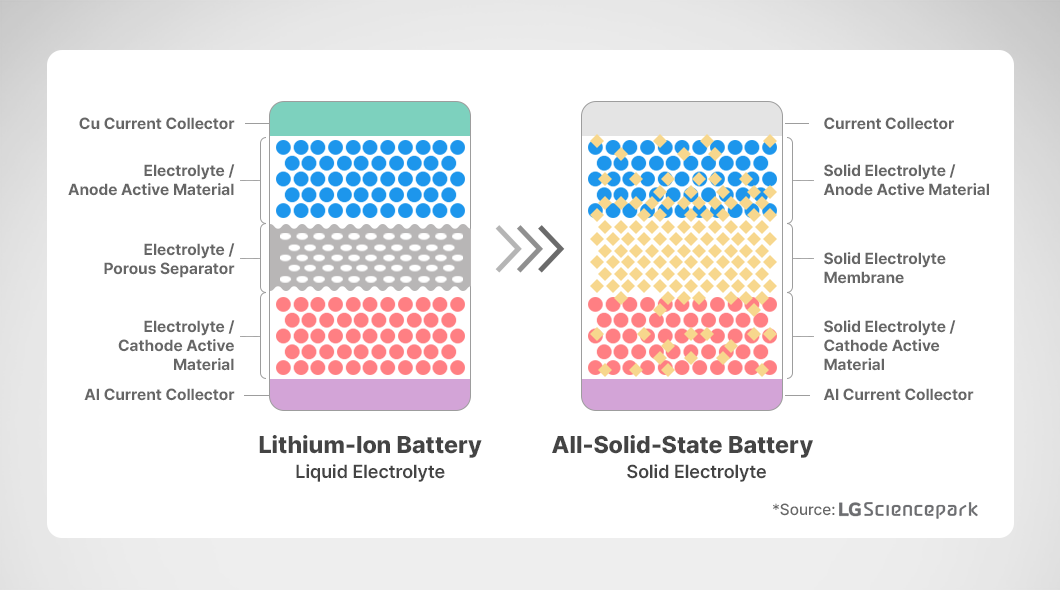
An all-solid-state battery is a next-generation battery that replaces the liquid electrolyte used in lithium-ion batteries with a solid electrolyte. Conventional liquid-electrolyte lithium-ion batteries use a porous separator between the cathode and anode to enable lithium-ion transport while preventing short circuits between the electrodes. Although this battery architecture is currently the most widely used, porous separators consist of thin membranes with microscopic pores, making them susceptible to external pressure or structural changes.
In contrast, all-solid-state batteries use highly robust solid electrolytes, allowing them to maintain stability even under external impact or structural deformation. They are also well suited for the use of high-capacity anode materials such as lithium metal (Li metal). In conventional liquid-electrolyte batteries, however, the use of lithium metal anodes has been limited by dendrite formation, which occurs when lithium deposits unevenly on the anode surface.
Solid electrolytes can help suppress the growth of these dendrites and reduce the risk of cell damage. As a result, all-solid-state batteries are attracting attention as a promising next-generation technology capable of delivering both enhanced safety and higher energy density.
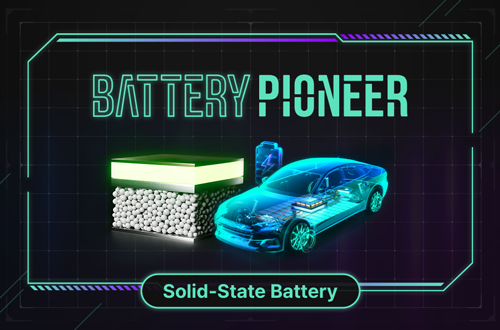
*View: Battery Pioneer – Solid-State Batteries
*View: Separator: Safeguarding Batteries
*View: Battery Glossary – Dendrites
What Are the Characteristics of Sulfide Solid Electrolytes?
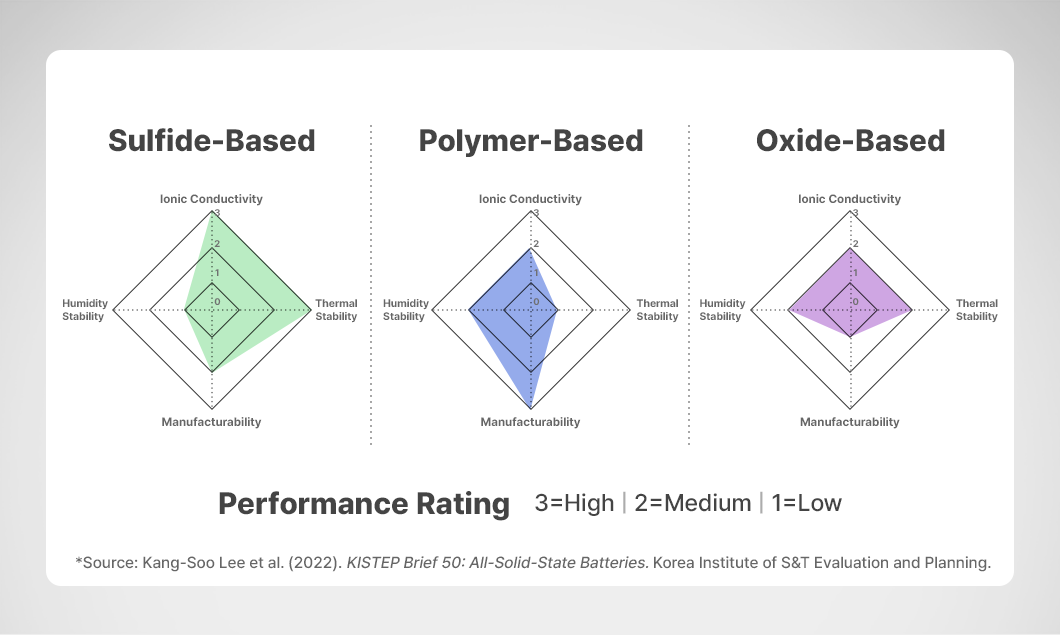
Solid electrolytes can generally be classified into sulfide-, oxide-, and polymer-based systems. Among them, sulfide solid electrolytes are considered one of the leading candidates for all-solid-state batteries due to their high ionic conductivity, excellent formability, high thermal stability, and compatibility with high-capacity anode materials.
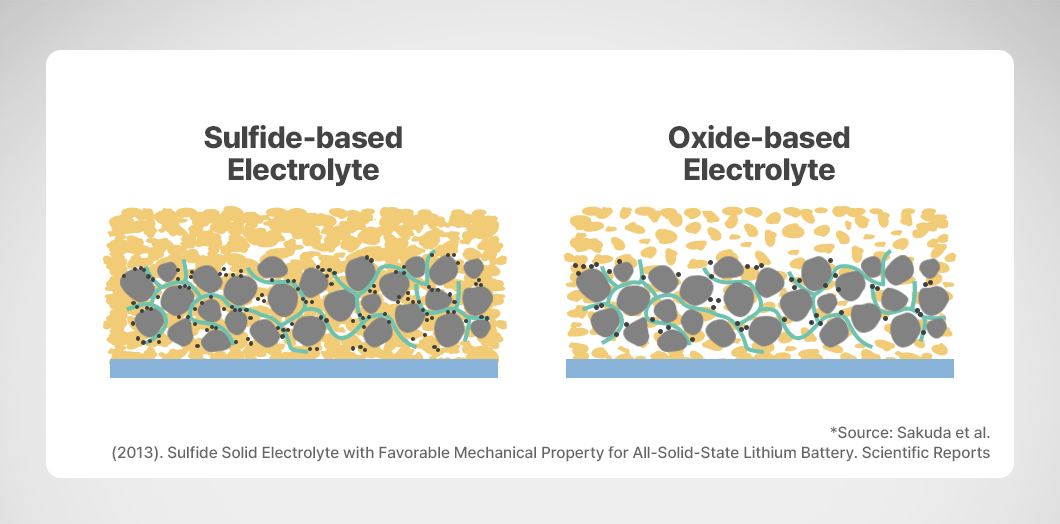
1) High Ionic Conductivity: Due to the structural characteristics of sulfur (S), sulfide solid electrolytes provide favorable pathways for lithium-ion transport within the crystal structure. Compared with oxygen ions, sulfur ions are larger and exhibit weaker bonding interactions with lithium ions, creating wider pathways for lithium-ion transport. As a result, sulfide solid electrolytes achieve higher ionic conductivity than many alternative materials.
2) Excellent Formability: Because all-solid-state batteries are composed entirely of solid materials, minimizing internal pores is essential. As porosity increases, interfacial resistance can rise, potentially degrading battery performance. Sulfide solid electrolytes are highly formable and can be readily processed under specific pressure conditions. This helps reduce internal porosity, improve contact between the electrode and electrolyte, and promote stable interface formation while lowering interfacial resistance.
3) High Thermal Stability: Because batteries can generate heat during charging and discharging, stable operation across a wide range of temperatures is important. Thanks to their high ionic conductivity, sulfide solid electrolytes can support stable performance under varying temperature conditions.
4) Compatibility with High-Capacity Anode Materials: In conventional liquid-electrolyte systems, the use of high-capacity anode materials such as lithium metal and silicon has been limited by challenges including heat generation, electrolyte leakage, and the need for venting1 systems. In contrast, all-solid-state batteries based on sulfide solid electrolytes help mitigate these limitations and improve the feasibility of technologies such as silicon anodes and anodeless batteries that have traditionally been difficult to implement. This paves the way for high-energy-density battery designs capable of storing more energy.
In fact, through joint research with the University of California, San Diego (UCSD), LG Energy Solution has demonstrated the potential for long-cycle operation in an all-solid-state battery combining a silicon anode with a sulfide solid electrolyte.
*View: A Better Life with Batteries – Solid Electrolyte
*View: Battery Glossary – Anodeless Batteries
*View: A new solid-state battery surprises the researchers that created it
Why Do Sulfide-Based All-Solid-State Batteries Require a Dry Electrode Process?

Why is the dry electrode process essential for the production of sulfide solid electrolytes? The answer lies in the high sensitivity of sulfide solid electrolytes to both moisture and solvents.
Because sulfide solid electrolytes can undergo material degradation when exposed to polar organic solvents such as NMP, conventional wet electrode processing is difficult to apply directly. While nonpolar solvents may be considered as an alternative, completely preventing moisture intrusion during manufacturing remains a challenge. In fact, sulfide solid electrolytes can begin to degrade even when exposed to trace amounts of moisture, making it critically important to minimize exposure to solvents.
For this reason, the dry electrode process has emerged as a key manufacturing technology for all-solid-state batteries. Unlike the conventional wet electrode process widely used today, the dry electrode process manufactures electrodes without using solvents. Active materials, conductive additives, and binders are mixed to produce a solid-state powder, which is then directly coated onto a current collector.
By eliminating solvents from the manufacturing process, the dry electrode process fundamentally reduces the exposure of the solid electrolyte to solvents. It also provides benefits in terms of manufacturing efficiency. Producing sulfide all-solid-state batteries using a wet process requires thorough moisture removal, necessitating long dry-room production lines that can significantly increase energy consumption and operating costs. The dry electrode process helps alleviate these burdens while improving overall production efficiency.
Key Advantages of the Dry Electrode Process
The dry electrode process is well suited for the production of sulfide solid electrolytes and offers benefits beyond manufacturing efficiency.
1) Cost Reduction: In conventional wet electrode processing, an extensive drying line is required to evaporate the solvents contained in the slurry. Because the evaporation rate of the solvent per unit time is limited, increasing production speed inevitably requires a longer drying line. In practice, high-temperature drying equipment spanning approximately 100 meters is often used, resulting in substantial energy consumption and capital costs.
In contrast, the dry electrode process eliminates the need for solvents, removing the high-temperature drying step entirely. As a result, the overall production line can be reduced to less than one-tenth the size of a conventional wet process line, leading to lower energy consumption, improved manufacturing efficiency, and reduced production costs.
2) Environmental Sustainability: Conventional lithium-ion battery cathode manufacturing relies on organic solvents such as NMP (N-Methyl-2-pyrrolidone). Because NMP is classified as a highly toxic substance, it requires special handling and management throughout the manufacturing process. By comparison, the dry electrode process operates without the use of solvents, helping limit environmental pollutants. In addition, eliminating the high-temperature drying stage reduces energy consumption while also contributing to lower carbon emissions.
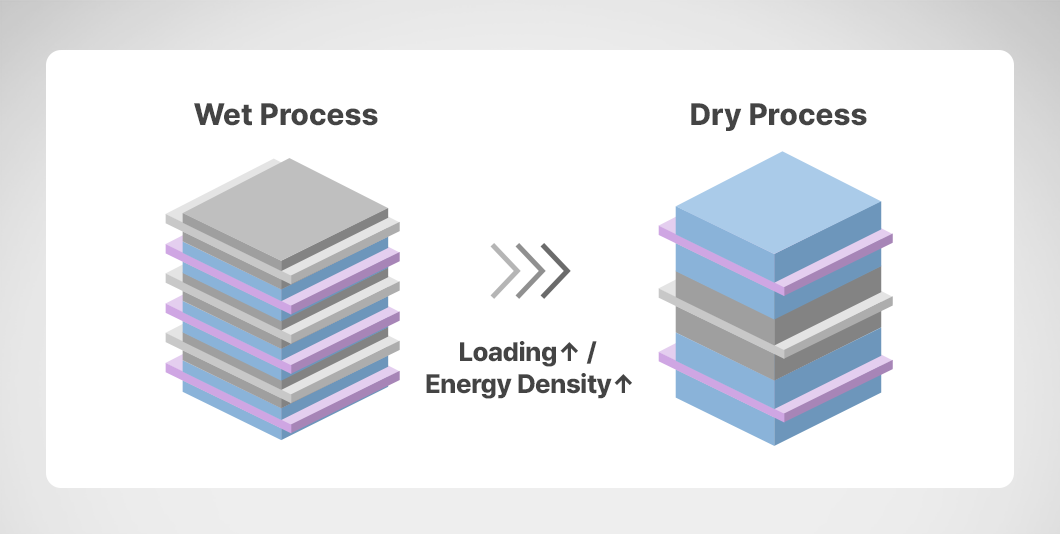
3) Performance Improvement: The wet electrode process faces limitations in implementing high-loading electrode designs, as thicker electrodes are more prone to cracking during drying. As a result, incorporating larger amounts of active material into the electrode can be difficult. The dry electrode process, however, is better suited for high-loading electrode designs, enabling greater active material loading and potentially leading to higher energy density.
4) Quality Improvement: The dry electrode process offers advantages in terms of electrode uniformity. In conventional wet electrode processing, a phenomenon known as binder migration can occur during drying, causing the binder to migrate toward the upper portion of the electrode. This can result in non-uniform binder distribution throughout the electrode and variations in product quality. Because the dry electrode process does not require a separate drying stage, it can achieve a more uniform binder distribution.
Another advantage of the dry electrode process is its ability to produce cleaner electrode edges. During wet electrode manufacturing, a phenomenon known as sliding can occur, causing the edges of the electrode to shift or stretch. If this leads to misalignment between the cathode and anode, lithium may deposit unevenly within the cell, increasing the risk of dendrite formation. By enabling more precise edge processing, the dry electrode process helps minimize these manufacturing-related issues.
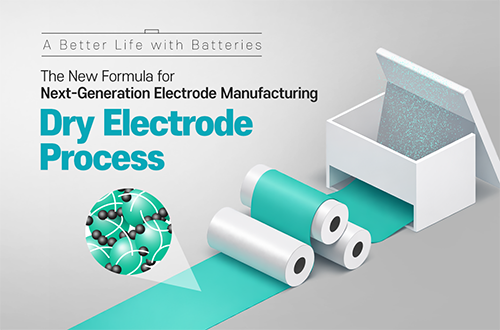
*View: A Better Life with Batteries – Dry Electrode Process
How Is the Dry Electrode Process Implemented?
As a next-generation manufacturing technology, a range of process technologies are being developed to implement the dry electrode process. Representative approaches include electrostatic spray deposition, hot pressing, and roll-to-roll coating utilizing PTFE fibrillation. Among these, the PTFE-based roll-to-roll process is considered particularly promising for mass production.
PTFE-Based Roll-to-Roll Process
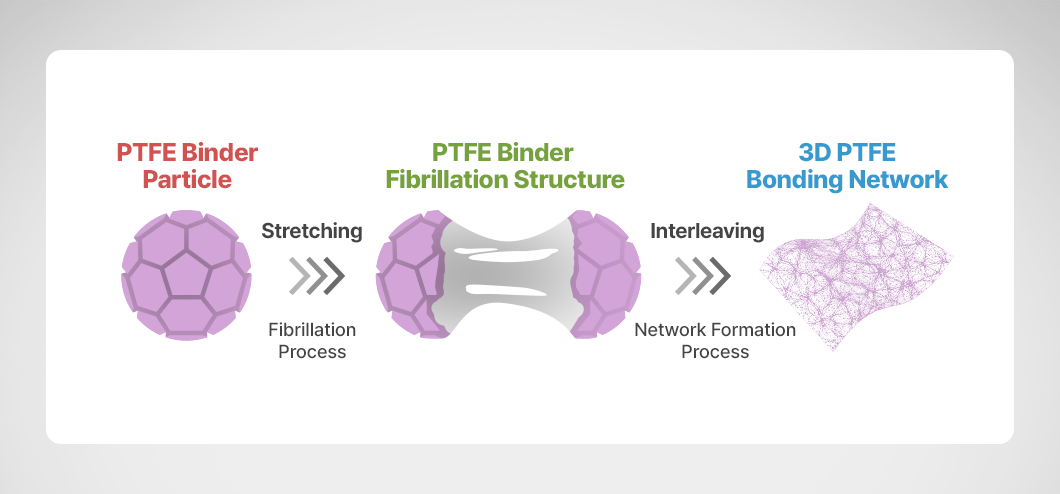
PTFE (Polytetrafluoroethylene), commonly known as Teflon, is a non-aqueous binder composed of strongly bonded carbon (C) and fluorine (F) atoms. It offers excellent thermal and chemical stability, as well as high mechanical strength, enabling it to maintain its structural integrity even under demanding processing conditions such as high temperatures and high voltages.
One of the most notable characteristics of PTFE is its ability to undergo fibrillation when subjected to shear force2 without the use of solvents. Under an appropriate level of shear force, PTFE particles elongate into fiber-like structures, forming a three-dimensional (3D) network. This network strengthens the connections among the active material, conductive additive, and binder, helping establish a stable electrode structure.
In addition, PTFE exhibits linear-binder characteristics, covering a relatively small portion of the active material surface. The lower binder coverage can help lower electrical resistance, contributing to reduced resistance at the cell level as well.
How Does the Roll-to-Roll Process Form Electrodes?
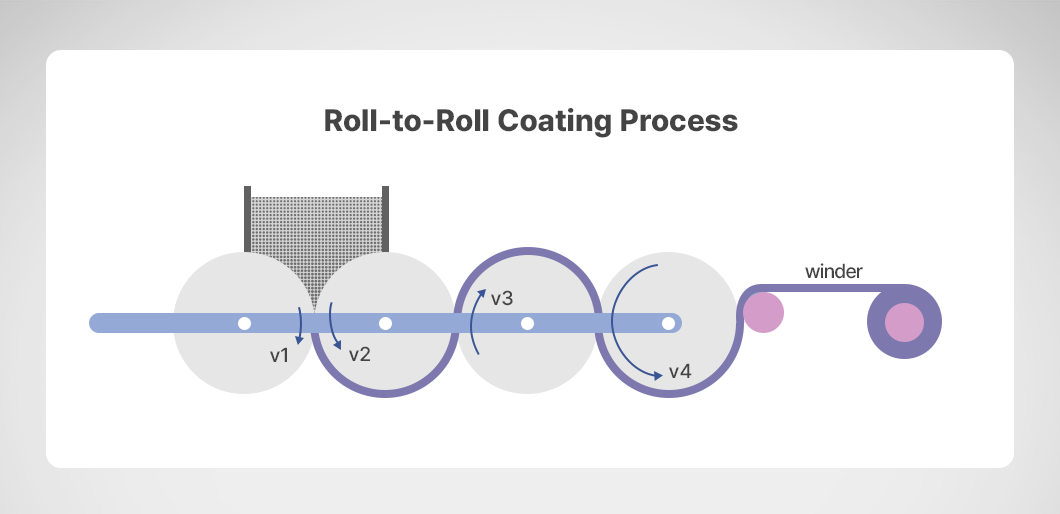
In a roll-to-roll coating process, electrodes are gradually formed into thinner and more uniform structures using multiple rolls operating at different speeds. During this process, the powder moves toward the faster-rotating roll due to differences in the shear force generated between the rolls and the powder.
As the process progresses, the roll speed gradually increases while the gap between the rolls narrows, allowing electrode loading to be adjusted step by step. In other words, both the amount of active material in the electrode and the electrode thickness are continuously refined to achieve greater uniformity throughout the manufacturing process.
The combination of roll speed and roll gap is a critical factor in the roll-to-roll process. Variations in these parameters can significantly affect electrode quality and increase the risk of defects. At the mass-production stage, the ability to precisely control and optimize these variables becomes a key competitive advantage.
LG Energy Solution’s Vision for an “All-Dry” Electrode Process

LG Energy Solution is advancing dry electrode process technology to accelerate the commercialization of all-solid-state batteries. To address challenges traditionally associated with dry processing, such as powder uniformity and process speed, the company has developed a new mixing process and successfully implemented it on a pilot line, achieving a high level of electrode uniformity and manufacturing efficiency. In addition, LG Energy Solution is pursuing an All-Dry manufacturing approach that applies dry processing not only to cathodes, but also to anodes and solid electrolytes.
One of the most technically challenging areas of the dry electrode process is the fabrication of solid electrolyte membranes. Although PTFE binders have traditionally been used to create fibrillated structures, PTFE has limitations in terms of reduction3 stability. In a solid electrolyte environment, reduction reactions can alter the chemical structure of PTFE, potentially causing the solid electrolyte membrane to become electrically conductive. If this occurs, current may flow between the cathode and anode, increasing the risk of internal short circuits. To address this challenge, LG Energy Solution is developing new processing methods and binder technologies that do not rely on PTFE.
At the same time, the company is working to overcome other key challenges in the commercialization of all-solid-state batteries, including improving power performance, enabling low-pressure operation, and enhancing interfacial stability. LG Energy Solution continues to advance research into technologies such as functionally coated cathode materials and highly ion-conductive solid electrolytes, with the goal of delivering both high performance and enhanced safety in all-solid-state batteries.
Key Q&A
Q. What Is an All-Solid-State Battery?
An all-solid-state battery is a next-generation battery that replaces the liquid electrolyte used in lithium-ion batteries with a solid electrolyte. It offers enhanced structural stability and can achieve high energy density through the use of high-capacity anode materials.
Q. Why Are Sulfide Solid Electrolytes Attracting Attention?
Sulfide solid electrolytes offer high ionic conductivity and excellent formability, enabling strong interfacial contact with electrodes. They are also highly compatible with high-capacity anode materials, making them a key material for high-energy-density all-solid-state batteries.
Q. What Is the Dry Electrode Process?
The dry electrode process is an electrode manufacturing method in which active materials, conductive additives, and binders are mixed and directly coated onto a current collector without the use of solvents. By eliminating the high-temperature drying step, it can reduce energy consumption and manufacturing costs while also offering environmental benefits.
Q. Why Is the Dry Electrode Process Important for All-Solid-State Batteries? Sulfide solid electrolytes are highly sensitive to moisture and solvents, making them difficult to process using conventional wet electrode manufacturing methods. Because the dry electrode process operates without the use of solvents, it can help minimize material degradation while reducing the operational burden associated with dry-room facilities.
All-solid-state batteries represent a promising next-generation technology capable of delivering both enhanced safety and higher energy density. While several challenges still remain before full commercialization, the dry electrode process is expected to play a critical role in overcoming them. Its solvent-free nature makes it particularly well suited for handling highly sensitive sulfide solid electrolytes.
Recognizing the potential of dry electrode technology early on, LG Energy Solution has been advancing an All-Dry electrode process that applies dry manufacturing not only to cathodes and anodes, but also to solid electrolytes. Through continuous innovation in battery technology and process development, LG Energy Solution remains committed to accelerating the commercialization of all-solid-state batteries.