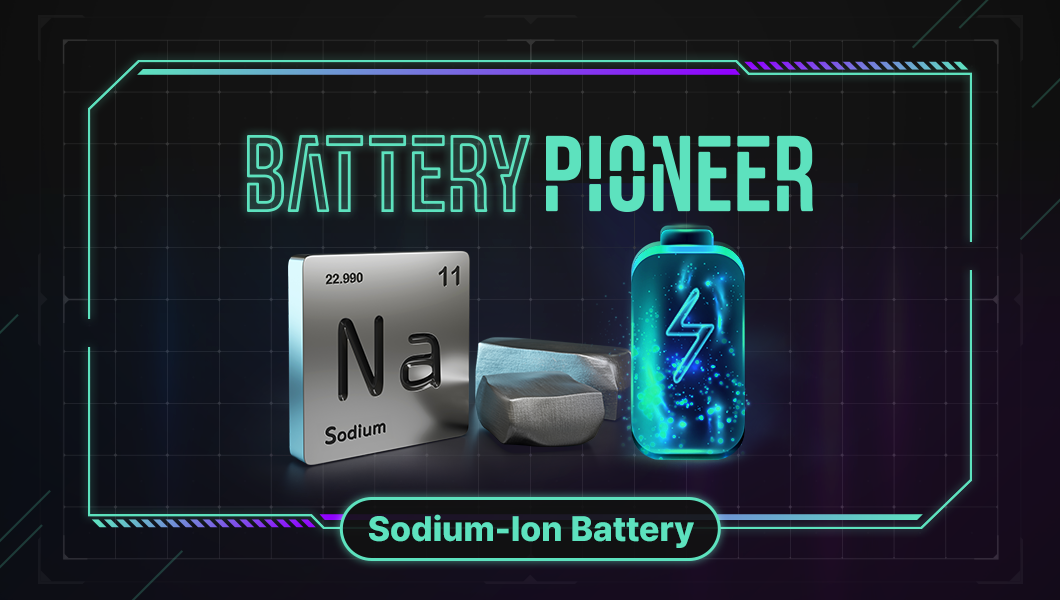
A rechargeable battery that operates much like a lithium-ion battery but uses sodium ions instead of lithium ions (Li⁺) is known as a sodium-ion battery (also called a Na-ion battery). Sodium is abundantly distributed around the world, giving it an advantage in raw material sourcing and cost. And when electrode materials and electrolytes tailored to sodium’s properties are applied, it can also deliver excellent high-rate performance and strong low-temperature output.
Building on these characteristics, LG Energy Solution is pursuing a roadmap to expand sodium-ion battery applications — from automotive 12/24V products to ESS (energy storage systems) and even the Affordable EV market. In this article, we’ll take a closer look at the key characteristics of sodium-ion batteries, along with LG Energy Solution’s roadmap for their development.
What Is a Sodium-Ion Battery?
A sodium-ion battery is a type of battery in which sodium ions (Na⁺) move between the cathode and anode to store and release electricity.
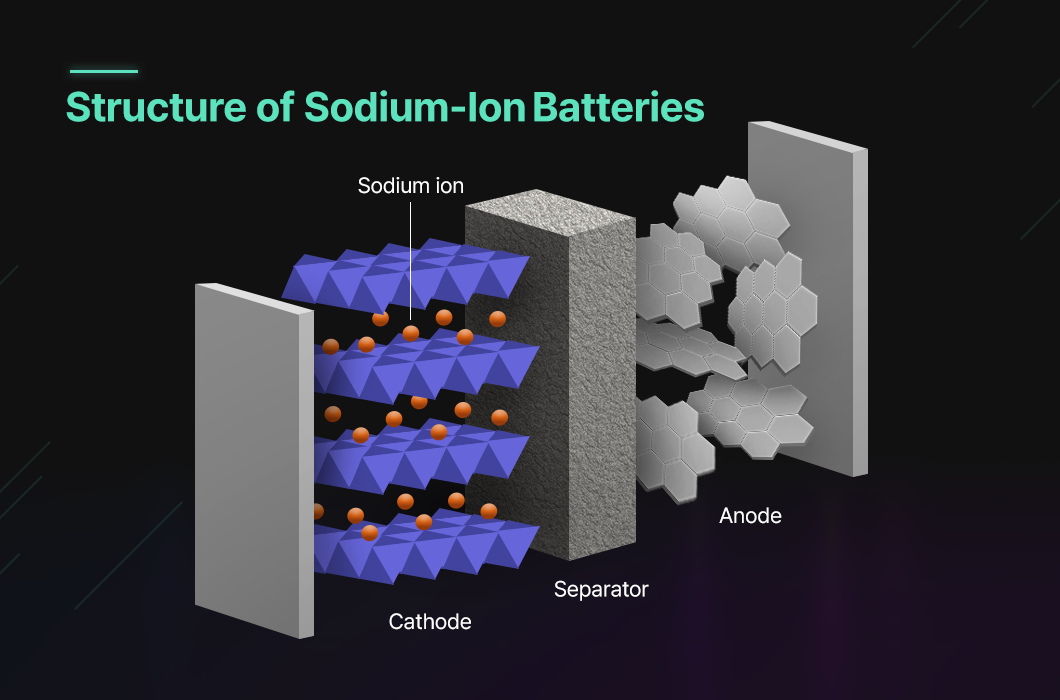
Like conventional lithium-ion batteries, sodium-ion batteries are also composed of a cathode, an anode, an electrolyte, and a separator.
Looking at the structure of sodium-ion batteries, the cathode mainly consists of layered sodium transition metal oxides (NaTMO₂), polyanionic compounds, and Prussian blue derivatives. For the anode, carbon-based materials such as hard carbon and soft carbon are commonly applied. The electrolyte usually includes an organic liquid electrolyte containing dissolved sodium salts, which dissociate into sodium ions and anions in a state capable of electrochemical reaction. These ions shuttle between the electrodes, enabling current to flow.
As such, sodium-ion batteries share a similar basic structure and operating principle with lithium-ion batteries, but use electrode materials suited to sodium’s properties. These material differences also affect the two batteries’ performance, cost, and the applications each is best suited for.
When Did Research on Sodium-Ion Batteries Begin?
Interest in sodium-ion batteries dates back a long time, with basic research beginning around the similar period as lithium-ion batteries. Sodium itself was identified in 1807, when British chemist Sir Humphry Davy first isolated the element through electrolysis. Later in the 1970s, researchers proposed inserting lithium ions into the layered structure of titanium disulfide (TiS₂) to induce electrochemical reactions, initiating efforts to apply this principle to batteries. In the 1980s, it was discovered that inserting sodium ions into the same TiS₂ structure also enabled highly efficient and reversible electrochemical reactions at room temperature. This finding demonstrated that sodium could likewise drive electrode reactions, marking the important milestone in sodium-ion battery research.
During the same decade, the electrochemical properties of lithium cobalt oxide (LiCoO₂) were first reported, prompting research on layered oxides (NaₓCoO₂) involving sodium. These studies confirmed the potential of sodium as a layered structure-based electrode material, capable of moving within a layered electrode structure to drive charge and discharge reactions.
Strengths of Sodium-Ion Batteries: An Emerging Contender in Next-Generation Energy Storage
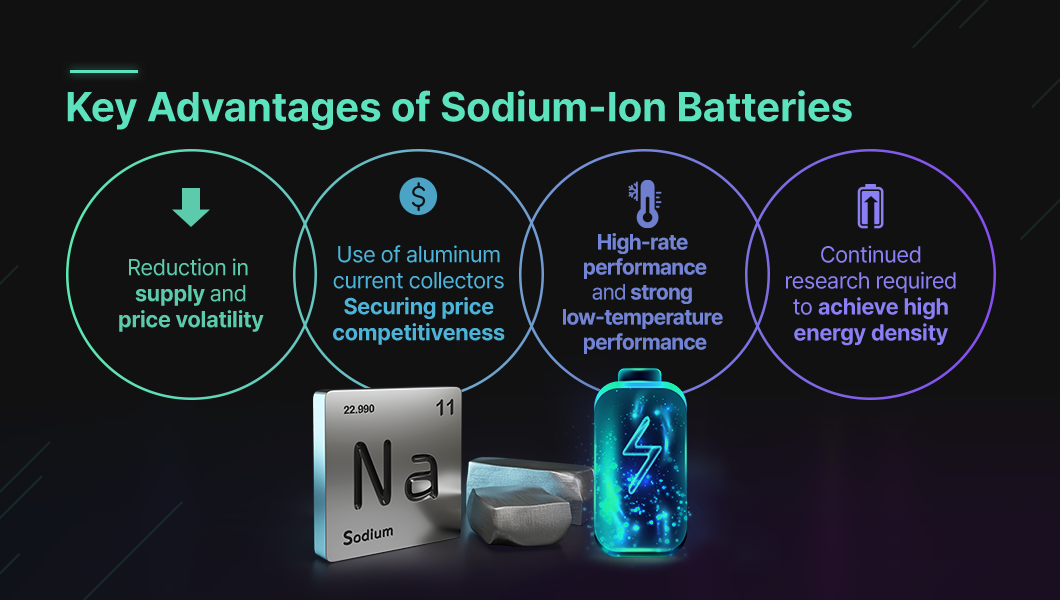
1) Reduction in Supply and Price Volatility: Sodium is the fifth most abundant element on Earth and is widely distributed across the world in the form of rock salt or seawater salts. Because raw materials can be sourced from a wide range of regions, supply chain risk is low, and sodium’s raw material cost is less than one-hundredth of lithium’s. Leveraging sodium’s abundance and relatively low cost in this way can help mitigate raw material supply risks and price volatility, and lower battery material costs overall.
2) Achieving Cost Competitiveness: Another property of sodium also enhances its price competitiveness. While lithium-ion batteries use copper as the anode current collector, sodium-ion batteries can use the more affordable aluminum, since sodium is not reactive with it.
3) High-Rate Performance and Strong Low-Temperature Performance: Sodium-ion batteries are known to maintain stable performance in low-temperature environments when certain electrode materials and electrolytes are applied. Research has shown that they retained about 90% of their initial room-temperature capacity even at –20 °C. By contrast, lithium-ion batteries under the same conditions dropped to around 60–70% of their capacity. As a result, the battery industry expects that applying sodium-ion batteries to electric vehicles could mitigate performance degradation in winter. Sodium-ion batteries are also known for their high-rate performance – the ability to charge and discharge relatively large currents in a short amount of time – which is considered another key strength of the technology.
4) Continued Research Required to Achieve High Energy Density: Lastly, sodium-ion batteries have the potential to achieve high energy density. Sodium belongs to the alkali metal group like lithium, and its key properties—such as ionic radius, weight, and standard reduction potential—are similar to those of lithium compared to other elements. These similarities allow relatively easy application of lithium-ion battery cell structures and design methods to sodium-ion batteries, which makes them highly regarded.
How Do Sodium-Ion Batteries Differ From Lithium-Ion Batteries?
Sodium-ion batteries use sodium ions during charging and discharging, while lithium-ion batteries use lithium ions. Although the two share a similar basic operating principle, the different ions and electrode materials they use lead to differences in energy density, raw material supply, low-temperature performance, and price competitiveness.
| Category | Sodium-Ion Battery | Lithium-Ion Battery |
|---|---|---|
| Charge/discharge carrier ion | Sodium ion (Na+) | Lithium ion (Li+) |
| Common cathode material | Sodium transition-metal oxides, Prussian blue derivatives, polyanionic compounds | NCM, NCA, LFP, etc. |
| Common anode material | Carbon-based materials such as hard carbon and soft carbon | Graphite, silicon-based materials |
| Anode current collector | Aluminum can be used | Copper is mainly used |
| Key advantages | Cost competitiveness, high-rate performance, low-temperature output, potential for high energy density | High energy density, stable production and supply ecosystem |
That said, a battery’s actual performance can vary depending on the combination of cathode and anode materials, electrolyte, and cell design.
Technological Challenges in Commercializing Sodium-Ion Batteries
Sodium-ion batteries have many advantages and are expected to become a key next-generation battery with continued research and development. So, where should research focus?
1) Improving Energy Density
The first challenge to overcome for commercialization is improving energy density. A sodium atom is more than 3.3 times heavier than a lithium atom, which means it offers lower capacity per unit weight of electrode material. Furthermore, sodium has a higher standard reduction potential at -2.71 V, compared to lithium’s -3.04 V, leading to lower operational voltage in the same structure. These factors collectively result in a gravimetric energy density of about 140–160 Wh/kg for sodium-ion batteries, which is somewhat lower than that of lithium-ion batteries.
2) Ensuring Electrode Structural Stability During Charging and Discharging
Because sodium ions have a larger radius than lithium ions, their intercalation into and deintercalation from electrode materials can cause structural changes. When this charge–discharge process is repeated, it can reduce the stability of the electrode material and affect both the battery’s lifespan and performance.
In addition, sodium ions’ larger size makes it difficult for them to be stored stably within the narrow interlayer structure of graphite, the anode material commonly used in lithium-ion batteries. For this reason, researchers are studying hard carbon — which has wider interlayer spacing than graphite — as an anode material for sodium-ion batteries.
3) Improving the Initial Charge-Discharge Efficiency of Hard Carbon
Improving the initial charge–discharge efficiency of hard carbon is also essential. Hard carbon used in sodium-ion batteries typically shows 80–90% initial charge–discharge efficiency, which is lower than that of graphite used in lithium-ion batteries.
During the first charge, some sodium ions are consumed in reactions such as interfacial layer formation and are not released again during discharge, resulting in irreversible capacity. This reduces the amount of sodium ions actually available for use and can lower the cell’s energy density. As a result, research is underway into material structure and surface control to improve not only the capacity, but also the initial charge–discharge efficiency of hard carbon.
4) Enhancing the Stability of Sodium Transition-Metal Oxides
Enhancing the stability of sodium transition-metal oxides, a cathode material for sodium-ion batteries, is another key research challenge. Some sodium transition-metal oxides are sensitive to moisture in the air.
In humid environments, sodium ions inside the material can leach out excessively, degrading electrochemical performance. On the surface, the oxides may also react with moisture to form transition-metal oxides or hydroxides. These reactions can alter the electrode’s properties and lead to reduced battery performance, making material research on sodium transition-metal oxides an emerging priority.
Roadmap for Sodium-Ion Battery Development by LG Energy Solution, a Pioneer in Next-Generation Batteries
LG Energy Solution has identified next-generation batteries as a key growth engine in the secondary battery sector and has devoted itself to advancing technology development. In March 2025, LG Energy Solution unveiled its sodium-ion battery roadmap at InterBattery 2025, a secondary battery conference held at COEX in Seoul.
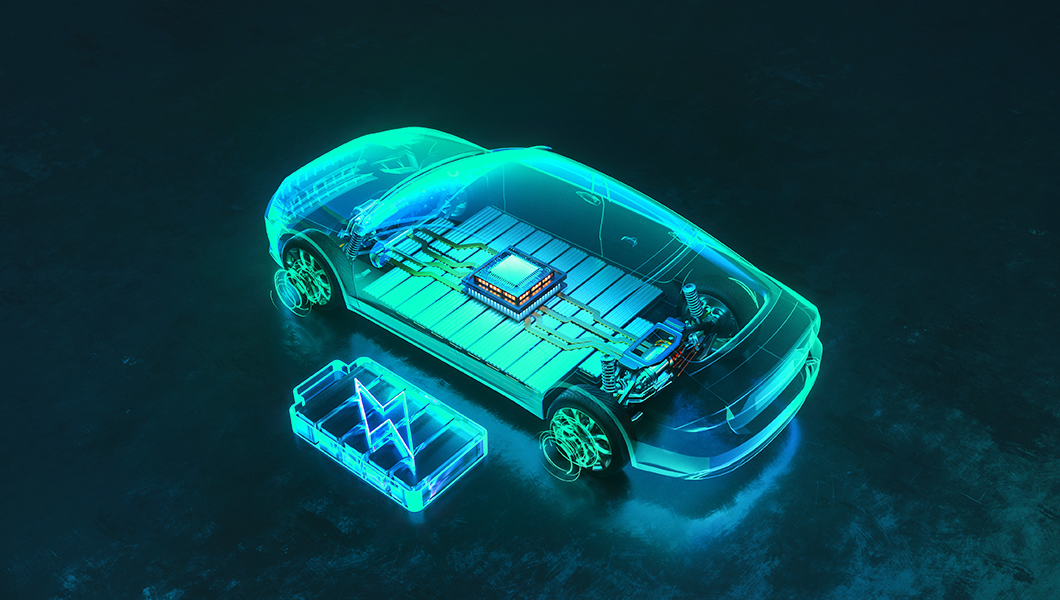
Considering their high-power characteristics, first-generation sodium-ion batteries targeted either the replacement of lead-acid batteries or the development of 12/24V products for automotive applications and the backup power market for uninterruptible power supply (UPS) * systems and energy storage systems (ESS). These products require stable output over short bursts and performance that holds up in low temperatures — conditions that play to the strengths of sodium-ion batteries. Looking ahead, the company plans to raise energy density to around 450 Wh/L and expand into Affordable EV batteries as well.
In addition, LG Energy Solution plans to introduce a dry electrode process for sodium-ion battery manufacturing, replacing the conventional wet-coating process. Because the dry electrode process reduces the solvent-based coating and drying steps involved, it simplifies the production process and helps improve both production efficiency and cost-effectiveness. LG Energy Solution is also pursuing a strategy of leveraging its existing lithium-ion battery production lines to manufacture sodium-ion batteries.
Key Q&A
Q. What is a Sodium-Ion Battery?
A sodium-ion battery is a rechargeable battery that stores and releases electricity as sodium ions (Na⁺) move between the cathode and anode. It is also known as a Na-ion battery.
Q. What are the Key Advantages of Sodium-Ion Batteries?
By using abundant, low-cost sodium as a raw material, sodium-ion batteries can achieve strong cost competitiveness and supply stability. They also deliver excellent high-rate performance and low-temperature output, and hold the potential to achieve high energy density as well.
Q. How Do Sodium-Ion Batteries Differ From Lithium-Ion Batteries?
The two batteries share a similar basic operating principle, but differ in the ions and electrode materials used. Sodium-ion batteries mainly use a hard carbon anode material and an aluminum current collector, giving them an edge in price and low-temperature output.
Q. What Challenges Must Be Solved to Commercialize Sodium-Ion Batteries?
Energy density needs to be improved, and the stability of the electrode structure must be secured during charging and discharging. The initial charge–discharge efficiency of hard carbon and the moisture stability of sodium transition-metal oxides also need to be improved.
Q. What Is LG Energy Solution’s Roadmap for Sodium-Ion Battery Development?
LG Energy Solution is targeting commercialization of sodium-ion batteries by 2027, with applications in 12V/24V batteries, UPS systems, and ESS. Looking further ahead, the company plans to expand into EV batteries, based on an energy density of around 450 Wh/L and a dry electrode process.
So far, we’ve looked at how sodium-ion batteries work, their key strengths, and the technical challenges to overcome for commercialization. Backed by abundant raw materials, sodium-ion batteries can offer strong price competitiveness, and their strengths in high-rate performance and low-temperature output are drawing attention for potential use across a range of applications, including automotive 12V/24V batteries, UPS systems, and ESS.
LG Energy Solution plans to continue advancing its technology to improve the energy density and manufacturing competitiveness of sodium-ion batteries, with an eye toward eventually using them in EV batteries as well. Stay tuned as LG Energy Solution continues to expand the possibilities of sodium-ion batteries in the next-generation battery market!