There is ongoing innovation in battery manufacturing technology with the progress in industries such as electronics and EVs. Governments and battery manufacturing companies around the world are striving to develop next-generation batteries capable of replacing lithium-ion batteries. So, what types of next-generation batteries are there?
Q. What are considered to be next-generation batteries?
Next-generation batteries refer to future battery technologies that can complement or replace lithium-ion batteries.
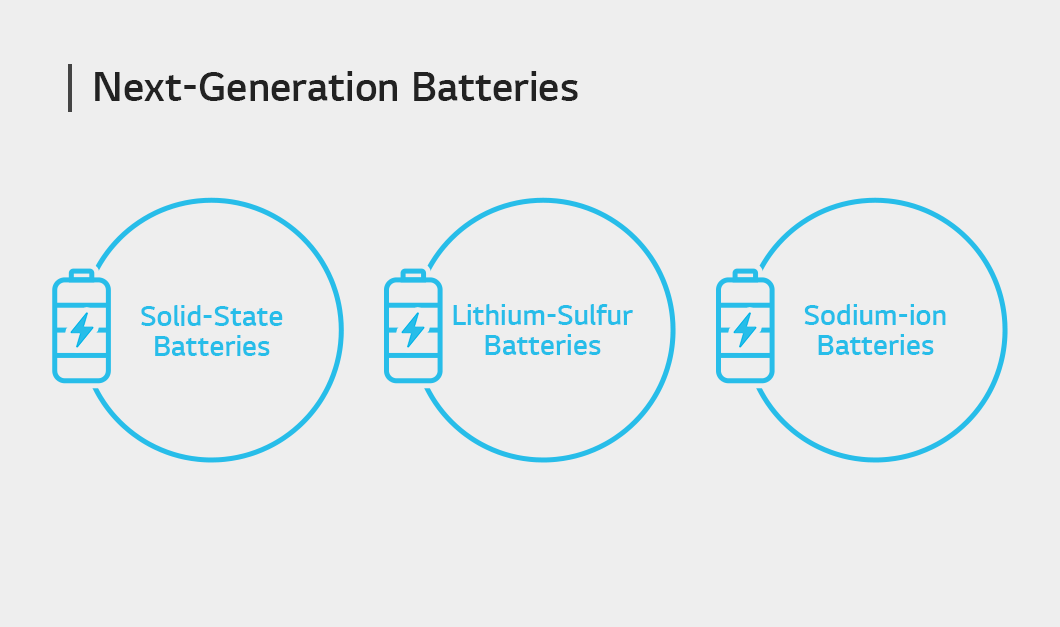
Lithium-ion batteries are currently dominant in the battery market. The next-generation batteries can be alternatives to replacing a significant portion or the majority of these lithium-ion batteries.
In addition, next-generation batteries are expected to offer higher energy density and power output, improved safety, and stronger price competitiveness compared to lithium-ion batteries. Representative examples include solid-state batteries, lithium-sulfur batteries, and sodium-ion batteries.
Q. What are the features of solid-state batteries?
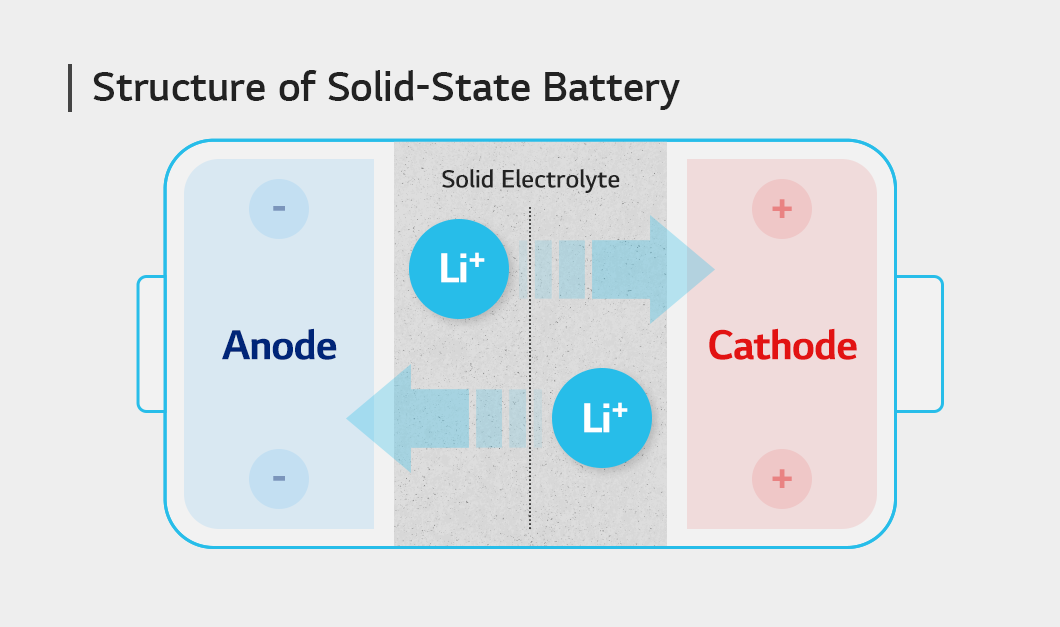
Among the components of a lithium-ion battery, the electrolyte, which facilitates the movement of lithium ions, possesses liquid properties. It is therefore often referred to as an electrolyte solution, and a separator is placed between the cathode and anode to prevent direct contact.
A solid-state battery is a battery with a solid electrolyte. Since a solid electrolyte has a hard structure, it itself can work as a separator that keeps the cathode and anode apart. This helps reduce risks that may occur from contact between the cathode and anode and improves battery safety by maintaining its form even when subjected to external impacts.
Furthermore, as no separator is required, more active materials can be filled into that space. This allows higher energy density per volume when designing battery modules or packs for EVs.
With the potential to improve both safety and energy density, solid-state batteries are gaining attention as next-generation EV battery technology, and research and development are actively progressing.
Q. What are the features of lithium-sulfur batteries?
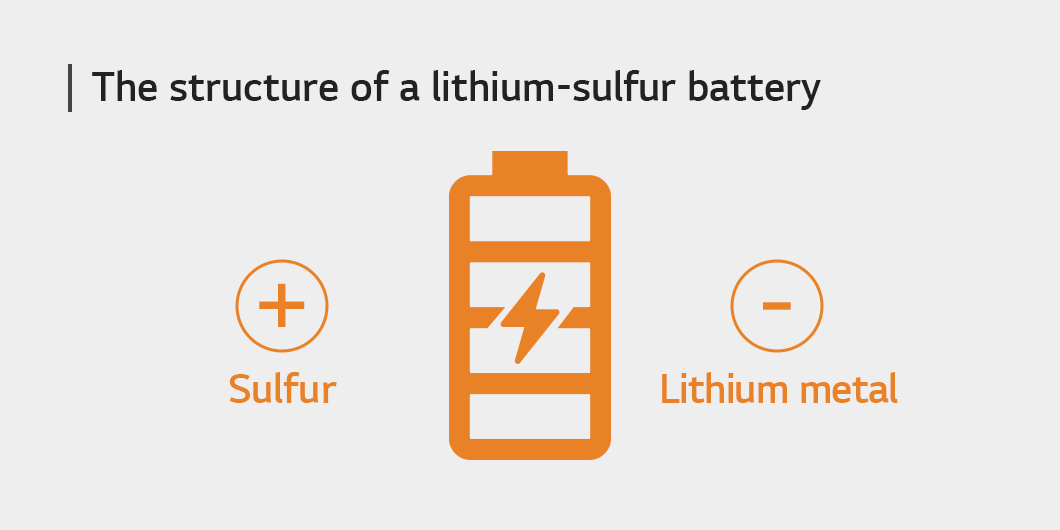
A lithium-sulfur battery is a battery that employs sulfur as a cathode material and lithium metal as an anode material. The expensive cobalt is primarily used as the cathode material in the current commercialized lithium-ion batteries. Lithium-sulfur batteries can substitute cobalt with the abundant and cost-effective material sulfur for cathodes.
Lithium-sulfur batteries can theoretically achieve an energy density of over 500 Wh/kg, making it possible to reach significantly higher energy density than lithium-ion batteries.
In addition, they reduce the use of rare metals such as cobalt and nickel, making them environmentally friendly and cost-competitive.
Due to their lightweight characteristics compared to conventional lithium-ion batteries, lithium-sulfur batteries are considered highly promising for future transportation applications such as drones and aircraft that require long-duration flight.
In 2020, LG Energy Solution and the Korea Aerospace Research Institute developed a high-altitude long-endurance solar-powered unmanned aerial vehicle equipped with lithium-sulfur batteries, successfully achieving a 13-hour test flight in the stratosphere.
*View: [Battery Pioneer] Lighter-weight and Longer-lasting Lithium-Sulfur Battery!
Q. What are sodium-ion batteries?
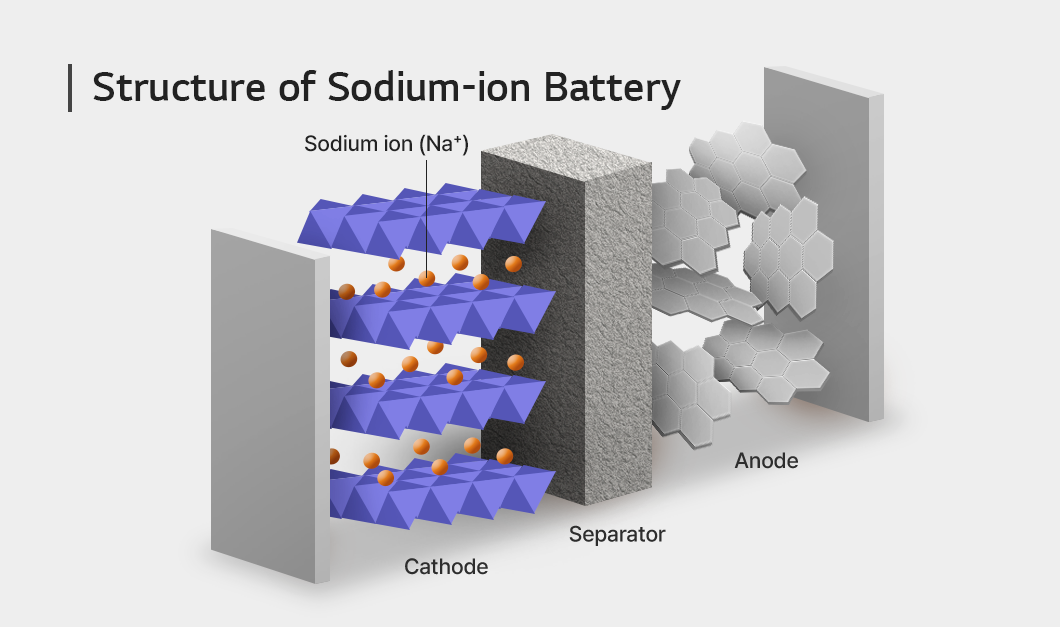
A sodium-ion battery is a battery in which sodium ions move between the cathode and anode to store and release electrical energy. Its operating principle is similar to that of lithium-ion batteries, but it uses sodium instead of lithium.
Cathode materials include sodium transition metal oxides, polyanionic compounds, and Prussian Blue derivatives. Anode materials include carbon-based materials such as hard carbon and soft carbon, and organic liquid electrolytes with dissolved sodium salts are used.
Sodium is abundant and widely distributed on Earth, often found in forms such as rock salt and seawater. This provides advantages in raw material supply stability and cost competitiveness. In addition, while lithium-ion batteries typically use copper as the anode current collector, sodium-ion batteries can use relatively cost-effective aluminum, offering further cost advantages.
They can also maintain relatively stable performance under low-temperature conditions depending on the electrode materials used. These characteristics make sodium-ion batteries a promising next-generation battery technology for applications such as EVs and energy storage systems (ESS).
Q. What is LG Energy Solution doing to develop future-generation batteries?
LG Energy Solution revealed its ambition to drive the development of next-generation battery technology and new businesses to achieve a sustainable future. We are currently conducting battery research in cooperation with prestigious global universities.
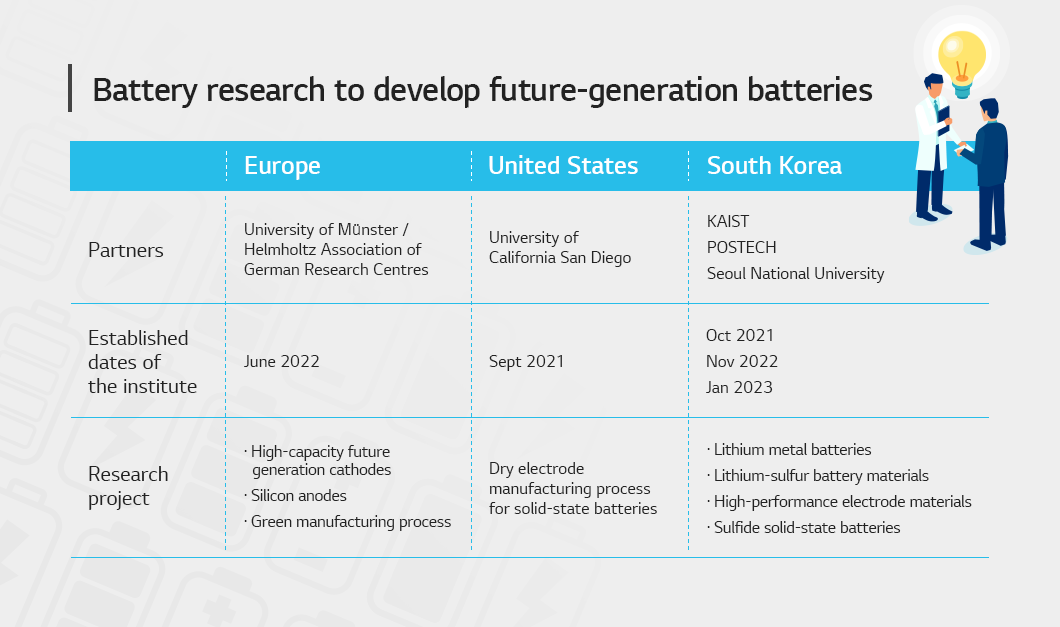
LG Energy Solution established the Frontier Research Laboratory (FRL) in collaboration with our global partners: the University of California San Diego, Münster Electrochemical Energy Technology of the University of Münster and Helmholtz Institute Münster of Forschungszentrum Jülich. At UCSD, research is being conducted on long-life solid-state battery technology capable of fast charging at room temperature, while at MEET, research focuses on next-generation cathode materials, silicon anode technology, and eco-friendly production processes.
In March 2026, the FRL jointly operated with UCSD and the Pritzker School of Molecular Engineering at the University of Chicago successfully demonstrated sulfur cathode technology based on solid-state batteries. In conventional liquid electrolyte batteries, sulfur compounds generated during charge and discharge can dissolve into the electrolyte, causing a polysulfide shuttle effect that makes it difficult to secure lifespan and stability. To address this issue, the research team introduced a solid-state battery structure using a solid electrolyte, achieving a capacity of around 1,500 mAh/g along with stable lifespan characteristics.
Furthermore, prestigious domestic universities such as KAIST, POSTECH, and Seoul National University are also conducting research on next-generation batteries. At KAIST, research on solid-state batteries, dry electrode manufacturing, and lithium-sulfur battery technologies is ongoing. POSTECH is currently involved in the development of fast-charging and long-lasting battery materials, high-performance electrode materials, and manufacturing technologies. Research collaboration with Seoul National University is focused on sulfide-based solid-state batteries and materials for lithium-sulfur batteries.
Key Takeaways
● Next-generation batteries refer to future battery technologies that can complement or replace lithium-ion batteries that are currently widely used.
● Representative next-generation batteries include solid-state batteries, lithium-sulfur batteries, and sodium-ion batteries, which are gaining attention for their high energy density, safety, and price competitiveness.
● LG Energy Solution is preparing for a sustainable future of the battery industry by developing next-generation battery technologies in collaboration with universities and research institutions around the world.
We have explored solid-state batteries, lithium-sulfur batteries, and sodium-ion batteries, which are gaining attention as next-generation batteries. Please stay tuned to see what forms next-generation batteries will take as they shape a more sustainable future.