As the year begins, CES 2026, the world’s largest IT and consumer electronics exhibition, was held in Las Vegas, USA, offering the first global outlook on the direction of the tech industry in 2026.
Held from January 6 to 9, the exhibition brought together approximately 148,000 participants and more than 4,100 companies from over 160 countries. Across an exhibition space of roughly 240,000 square meters (equivalent to 30 soccer fields), CES 2026 showcased core technologies spanning AI, robotics, mobility, energy, healthcare, and beyond—providing a comprehensive view of where future technologies are headed.
The Evolution of AI: From Experimental to Real-World AI
CES 2026 clearly demonstrated how far AI technology has progressed. While previous editions of CES focused on AI’s potential and possibilities, this year highlighted practical, real-world applications delivering tangible profitability and efficiency across industries.
These examples confirmed that AI has moved beyond proof-of-concept, establishing itself as a core technology with real impact across industrial sectors.
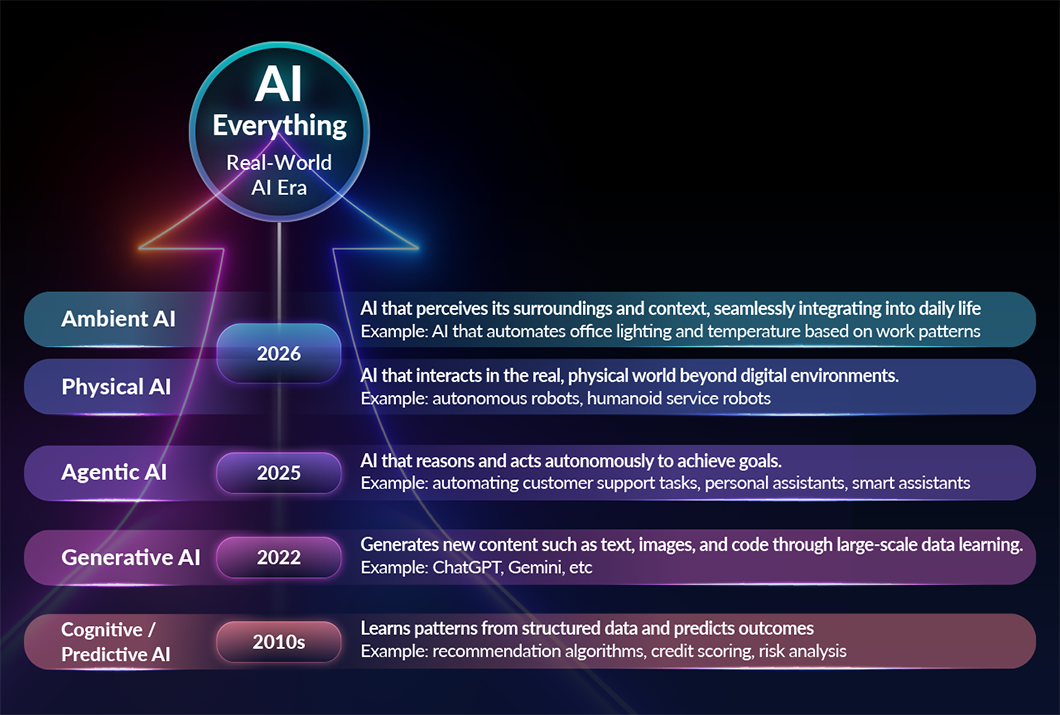
2026 is expected to mark a turning point in which AI evolves from “experimental AI” into “real-world AI” that creates value on-site. Software-centric AI, led by technologies such as ChatGPT, is now advancing into the stage of Physical AI, capable of performing real-world physical actions across industries.
Physical AI, one of the most prominent themes at CES 2026, is increasingly enhancing operational efficiency by supplementing or replacing human labor. Across the exhibition floor, numerous examples showed AI actively deployed in robotics, mobility, manufacturing equipment, and infrastructure.
In manufacturing, AI analyzes process data in real time to control equipment and improve productivity. In the mobility and infrastructure sectors, AI perceives physical environments in real time and responds directly to changing conditions, helping enhance both operational efficiency and system stability.
Ambient AI: AI That Seamlessly Blends Into Everyday Life
AI is no longer just a tool or function. It is evolving into technology that naturally integrates into daily life and industrial environments. This shift is best represented by Ambient AI.
Ambient AI refers to “invisible AI” that automatically delivers context-aware services, without requiring user awareness or direct input. While generative AI and agent AI operate through user prompts and collaboration, Ambient AI works proactively, embedded within environments, recognizing situations and acting seamlessly.
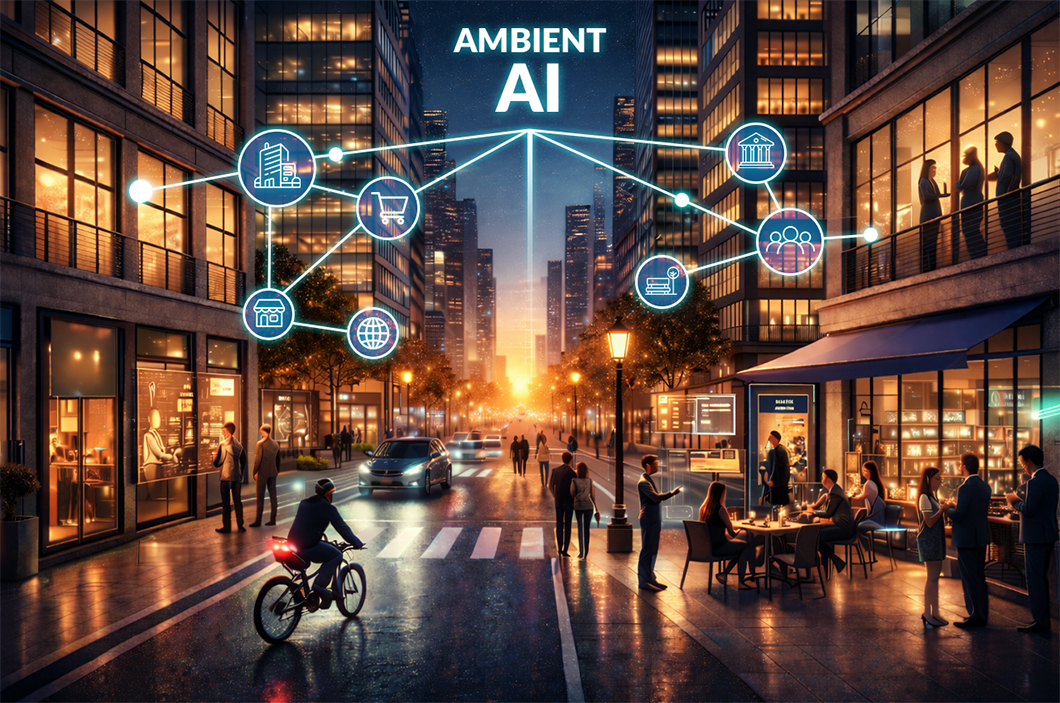
Ambient AI stood out clearly at CES 2026. AI technologies expanded beyond text to handle multimodal data, focusing on delivering user experiences that operate effortlessly in both daily life and industrial settings. For example, robot automation solutions combining edge AI and smart sensors perform optimized tasks in industrial environments without manual intervention. Meanwhile, the integration of digital healthcare and smart home appliances enables personalized health management and lifestyle support for consumers.
As Ambient AI gains prominence across both daily and industrial environments, performance increasingly depends on system connectivity and data-sharing capabilities. Rather than managing AI independently, companies are shifting toward open ecosystems and partnerships to solve complex challenges and create new value.
This evolution signals that AI is expanding beyond individual products or services into intelligent networks connecting homes, cities, offices, retail spaces, and industrial sites; delivering interconnected experiences across all aspects of life and industry.
Humanoid Robots Enter a New Era Through Physical AI
At CES 2026, AI-powered robots took center stage, capturing widespread attention. Physical AI, one of the exhibition’s core trends, refers to AI systems combined with robots, sensors, and mechanical devices to perceive, decide, and act within physical environments. Unlike traditional industrial robots that follow predefined commands, Physical AI-based robots detect environmental changes in real time and autonomously determine optimal actions.
Physical AI can be applied across smart manufacturing equipment, medical devices, autonomous vehicles, and beyond. Among these, humanoid robots are considered the most suitable platform for Physical AI implementation. Because sensors, actuators (robot joints), and computing power are integrated into a single body, humanoid robots enable AI to carry out the entire process of perception, decision-making, and action within real physical environments. In other words, this is the area where the defining characteristics of “Physical AI” are most intuitively embodied, moving beyond simply processing commands to understanding situations in the real world and acting on them autonomously. CES 2026 showcased a wide range of humanoid robots evolved through Physical AI.
● Hyundai Motor Group Unveils Next-Generation Humanoid Robot “Atlas”
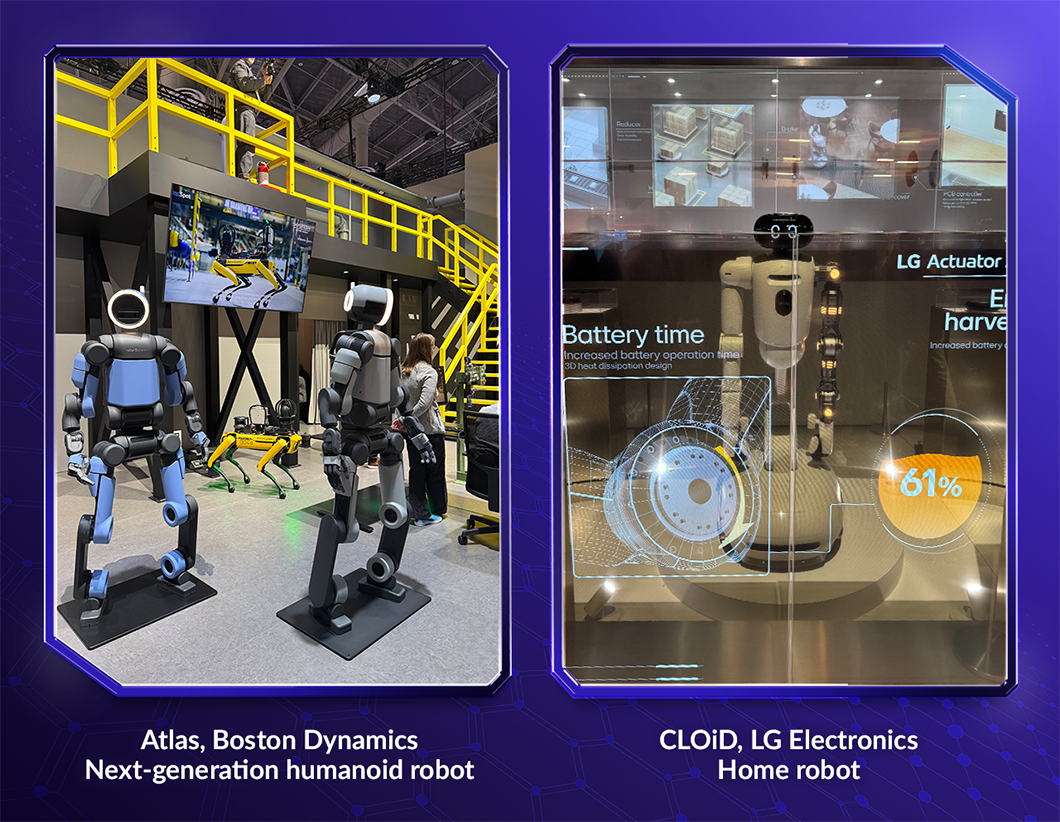
Hyundai Motor Group introduced the next-generation electric humanoid robot Atlas through its robotics affiliate Boston Dynamics. Powered by AI semiconductors developed in-house by Hyundai Motor Group, Atlas features a fully electric architecture and achieves highly flexible movements that exceed the range of human joints.
Atlas can perform tasks such as carrying heavy components, navigating spaces, and standing up from seated positions. With strong autonomous learning capabilities, the robot can learn most tasks, from material handling to precision assembly, within a single day. It can also independently return to charging stations when battery levels run low.
Boston Dynamics explained that Atlas was designed for real manufacturing environments, with enhanced adaptability and autonomous learning based on accumulated AI expertise. Hyundai Motor Group plans to deploy Atlas in manufacturing sites starting in 2028, gradually expanding its role to parts assembly by 2030.
● LG Electronics’ Home Robot “LG CLOiD” Makes Its Debut
Unveiled for the first time at CES 2026, LG Electronics’ home robot LG CLOiD combines AI-based perception and decision-making with precision motion technology to function as an intelligent partner in everyday living environments.
Designed to replicate human-like movement, CLOiD features arms structured similarly to human anatomy, enabling flexible movement across multiple directions. Each of its five fingers operates independently, allowing delicate tasks such as grasping and object manipulation, drawing strong interest from attendees.
● HL Mando Introduces Robot Joint Actuators for “Safe Robots”
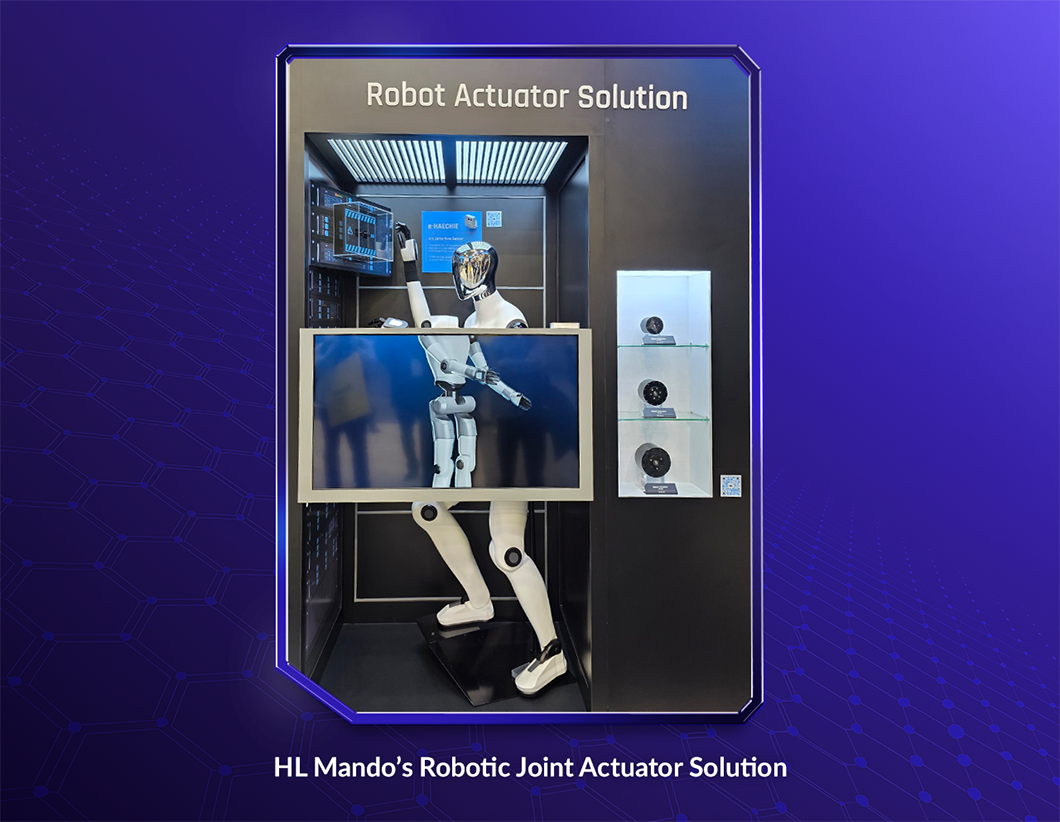
HL Mando presented its robot joint actuator solutions under the theme “Intelligence In Action.” Actuators, integrating motors, reducers, sensors, and controllers, are critical components that determine humanoid robot movement.
HL Mando showcased a full lineup covering arms, legs, torsos, and even finger joints requiring extreme precision. By applying automotive safety standards and validation processes to robotics, the company emphasized its ability to create safe robots capable of coexisting with humans.
Building a Physical AI Ecosystem for Everything That Moves
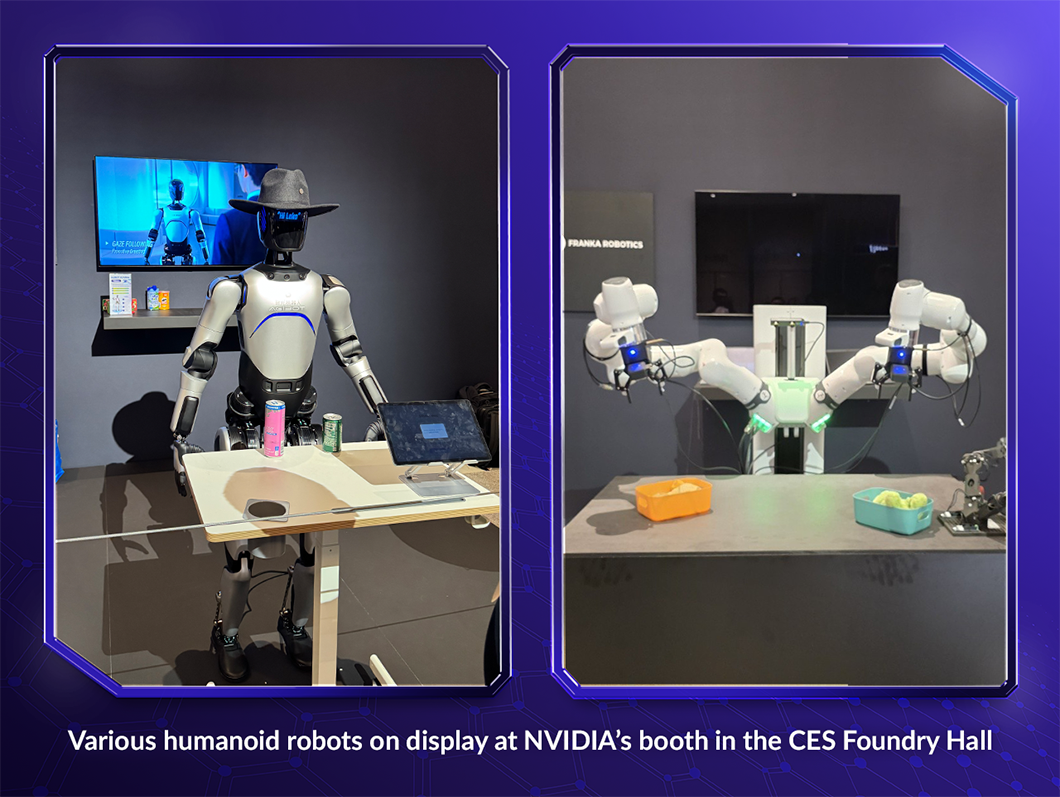
In the CES 2026 keynote, NVIDIA CEO Jensen Huang emphasized that a full-stack approach integrating AI models, computing, simulation, data, and software will accelerate robotics innovation across industries. NVIDIA unveiled its Physical AI strategy spanning humanoid and industrial robots, presenting a vision for a “Physical AI platform for everything that moves.” The company also plans to collaborate with global partners to apply Physical AI models and robotics full-stack solutions to real-world industrial and humanoid robot development.
By unifying virtual environment-based learning and validation, real-world data utilization, inference, and control within a single platform, NVIDIA aims to reduce development complexity and accelerate adoption. At the same time, the company is expanding a partner-driven robotics ecosystem by providing open models and development environments, enabling developers to reduce the burden of resource-intensive large-scale pre-training and instead focus on building robots tailored to specific industries and applications. Through this open-ecosystem approach, NVIDIA demonstrated the potential for Physical AI-powered robots to evolve beyond simple automation tools into intelligent partners capable of collaborating with humans and performing complex, advanced tasks in industrial settings.
The exhibition also highlighted the growing presence of Chinese robotics technology. Of the 598 robotics companies participating, 149 were Chinese, accounting for nearly 25 percent. This underscores intensifying competition in the global robotics industry and the need for companies worldwide to accelerate innovation and commercialization strategies.
Mobility Evolves Into Experience-Driven Smart Devices
The automotive industry, once defined by engines and mechanical performance, is now transforming into experience-centric smart devices powered by AI and software. At CES 2026, vehicles were showcased not merely as transportation tools, but as intelligent platforms integrating connectivity, user experience, and personalization.
Modern vehicles go beyond driving and autonomous functions. By learning user habits and preferences, they now provide tailored services and interact naturally with surrounding environments, often without conscious user input. Software-defined vehicles continue to evolve through updates, adding new features, improving the driving experience, and functioning as integrated digital networks that connect vehicles with external service ecosystems.
This shift is fundamentally changing how value is assessed within the mobility industry. Whereas competitiveness was traditionally defined by a company’s ability to manufacture high-quality vehicles, leadership is now expected to come from companies that deliver superior digital experiences through mobility and build ecosystems centered around the vehicle itself. CES 2026 showcased numerous examples of how companies are putting these strategies into practice.
● BMW Introduces AI-Powered “Intelligent Personal Assistant”
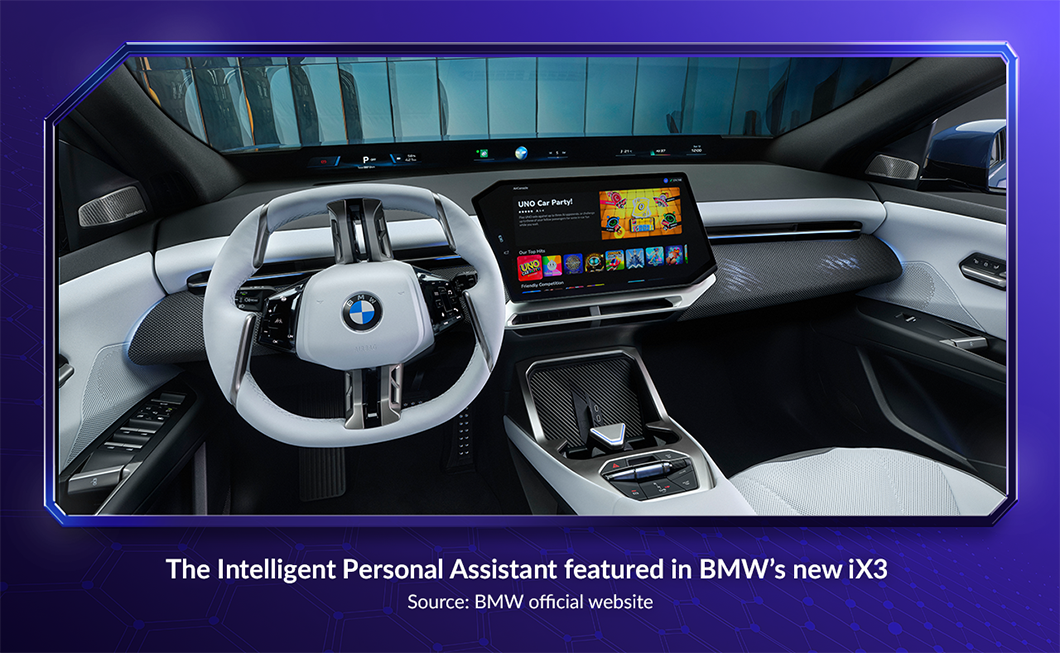
BMW unveiled its AI-based voice assistant, the BMW Intelligent Personal Assistant, capable of understanding natural language and generating contextual responses. Users can control vehicle functions by asking questions and receiving information and knowledge needed while driving. The assistant also supports complex, multi-step commands in a single sentence, elevating human-vehicle interaction.
BMW emphasized that the center of future automotive competition is shifting from hardware-centric electric vehicle (EV) performance to experience-driven electric platform competition driven by AI and software. Going beyond simply expanding its EV lineup, BMW emphasized its strategic direction to redefine the very meaning of the automobile.
● Sony Honda Mobility Redefines Creative Mobility with AFEELA
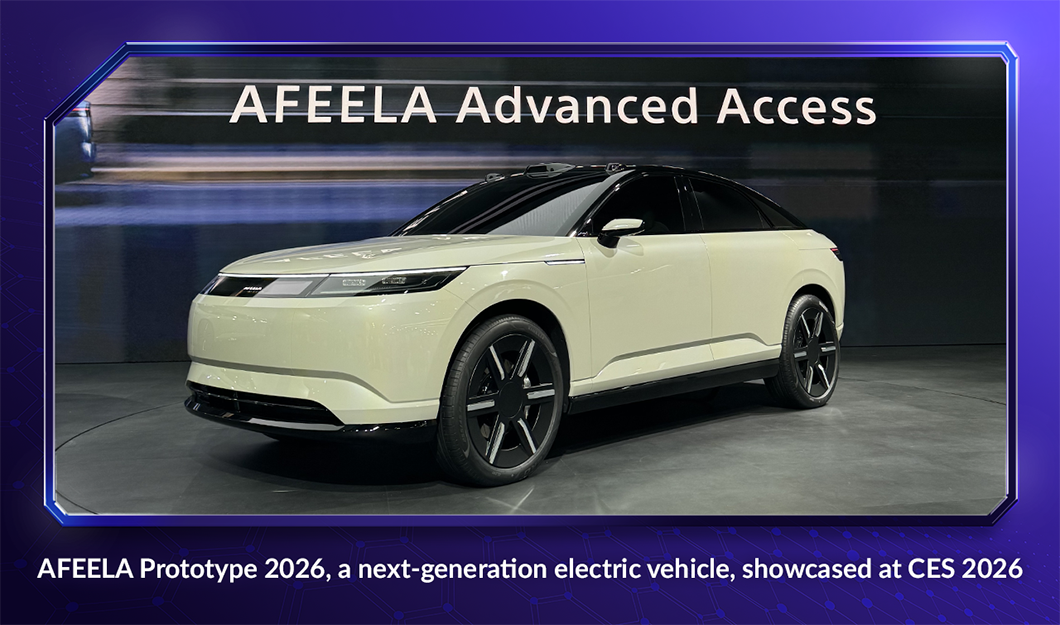
Unveiled for the first time at CES Sony Honda Mobility introduced its first mass-production EV, AFEELA 1, redefining vehicles as AI-powered personalized entertainment spaces. AFEELA 1 is the first vehicle to feature PlayStation Remote Play, allowing users to enjoy console gaming inside the car.
Equipped with 40 sensors and an ECU delivering 800 TOPS (tera operations per second) of computing power, the vehicle uses AI to analyze surroundings, driving conditions, and passenger behavior in real time, supporting autonomous driving and personalized services. Built on these technologies, AFEELA 1 goes beyond being a simple means of transportation, evolving into a “moving entertainment space” that actively interacts with the driver.
● LG Innotek Prepares for the AIDV Era with Integrated AI Mobility Solutions
LG Innotek showcased AI-based next-generation mobility solutions at CES 2026, spanning both autonomous driving and electric vehicles. Centered on its AIDV (AI-Defined Vehicle) strategy, which integrates hardware and software, the solutions enable AI to perceive and interpret both the interior and exterior of the vehicle in real time, delivering personalized experiences for drivers and passengers.
The company’s autonomous driving convergence sensing solution combines cameras, LiDAR, and radar with AI algorithms, allowing vehicles to independently determine driving paths even in complex urban and indoor–outdoor environments. In addition, solutions such as heated cameras that melt snow and frost, as well as active cleaning cameras that remove moisture and contaminants, leverage AI and sensor data to provide optimized driving conditions.
● LG Electronics Wins CES Best of Innovation Award for AI Vehicle Solutions
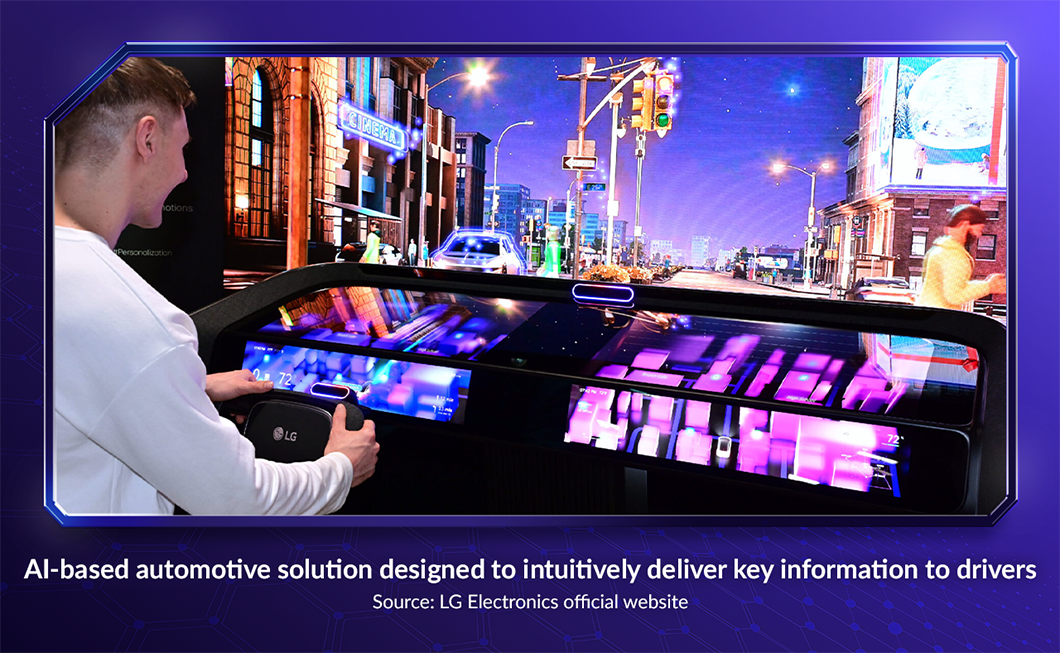
LG Electronics unveiled its AI-powered in-vehicle solutions at CES 2026, winning the CES Best of Innovation Award and presenting a new paradigm for mobility experiences. The solutions extend the vehicle interior, from the front passenger seat to the rear seats, into a safe, convenient, and fully personalized space, redefining the vehicle as an intelligent digital environment.
The Display Solution delivers essential information to the driver through a windshield OLED, creating an immersive in-cabin experience that goes beyond driving alone. The Vision Solution analyzes the gaze of the driver and front passenger to enhance safety, while also identifying objects of interest or advertisements and connecting them directly to purchase opportunities. Finally, the Entertainment Solution offers rear-seat passengers personalized experiences such as memory-based content linked to outside scenery, video calls, content recommendations, and sign-language interpretation. By applying AI across the entire vehicle, these solutions deliver a passenger-centric spatial experience and drew strong interest from visitors at CES 2026.
● LG Energy Solution Extends Battery Lifespan Up to Twofold with AI-Based Management
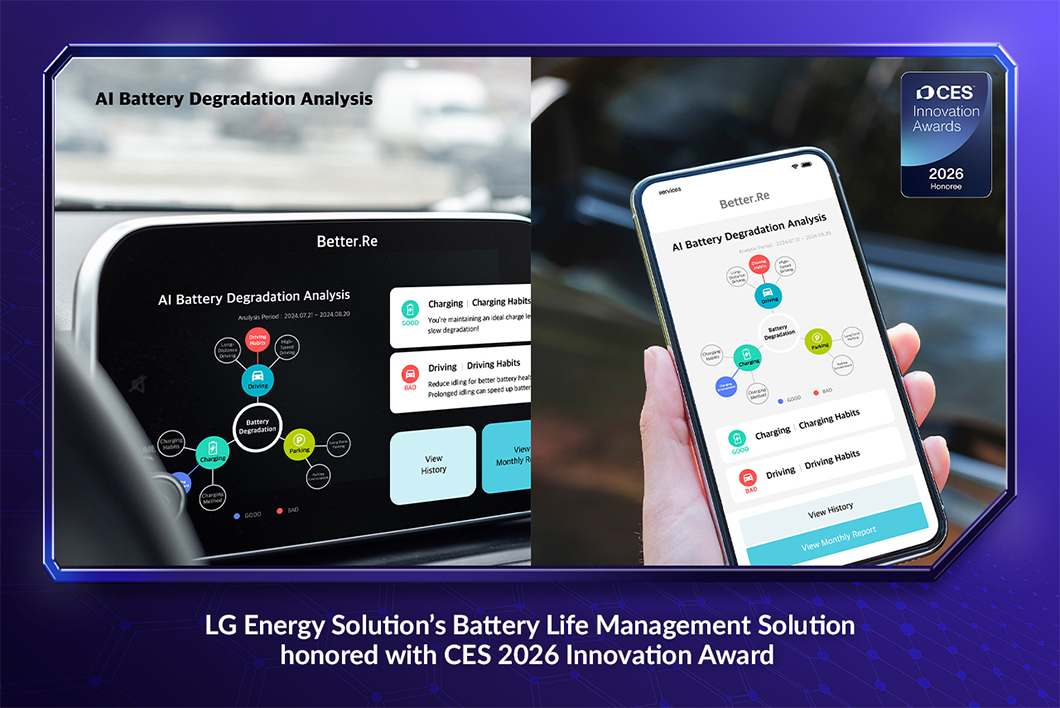
LG Energy Solution received a CES 2026 Innovation Award Honoree in the advanced mobility category for its battery life management solution Better.Re, becoming the first battery company to be recognized for innovation based purely on software technology.
Using AI algorithms, Better.Re analyzes drivers’ driving habits and more than 1.2 billion kilometers of driving data in real time, enabling battery lifespan to be extended by up to twofold. The solution also provides personalized driving guidance and real-time battery condition control, allowing for more efficient battery management. By simultaneously improving efficiency and sustainability, Better.Re has been recognized as an innovative solution contributing to the evolution of future mobility.
The Next Step in AI Strategy: Efficiency and Sustainability
At CES 2026, it became clear that AI is no longer simply being adopted within individual industries such as robotics, mobility, energy, and smart manufacturing. Instead, AI is increasingly breaking down boundaries between industries and driving the formation of new value chains. The exhibition also demonstrated how AI is moving beyond individual products and services to redefine entire industry ecosystems and business models.
As AI becomes firmly embedded in both daily life and industrial environments, ensuring technological efficiency and sustainability is no longer optional, but has become essential. At the same time, the continued advancement and stable operation of AI require secure access to energy resources capable of supporting large-scale data processing, computation, and data protection, making energy availability a critical prerequisite. As a result, strategic AI deployment that accounts for energy efficiency and long-term operational sustainability is now indispensable, and only AI strategies that integrate sustainability considerations will be able to secure future competitiveness.
Reflecting this shift, CES 2026 also spotlighted power and energy management technologies. Panasonic introduced AI-based data center infrastructure solutions targeting the data center market, featuring server-operation optimization, power-usage analysis, and improved cooling efficiency. These solutions aim to enhance both operational efficiency and stability while simultaneously reducing overall energy consumption.
Meanwhile, Korea Electric Power Corporation unveiled SEDA (Substation Equipment Diagnostic & Analysis system), an AI- and digital-technology-based predictive diagnostic solution for power transmission and transformation systems. By analyzing real-time sensor data from substation equipment and predicting potential failures, SEDA recommends optimal maintenance timing, helping secure both equipment safety and operational efficiency.
CES 2026 demonstrated that AI has evolved beyond a tool for technological innovation into a core element of a new value chain connecting industries and everyday life. Looking ahead, companies must move beyond simply applying AI technologies and instead pursue strategic utilization that ensures energy efficiency and sustainability, strengthening industrial competitiveness in the process.
※ The views expressed in this column are those of the author and do not necessarily represent the official position or strategy of LG Energy Solution.