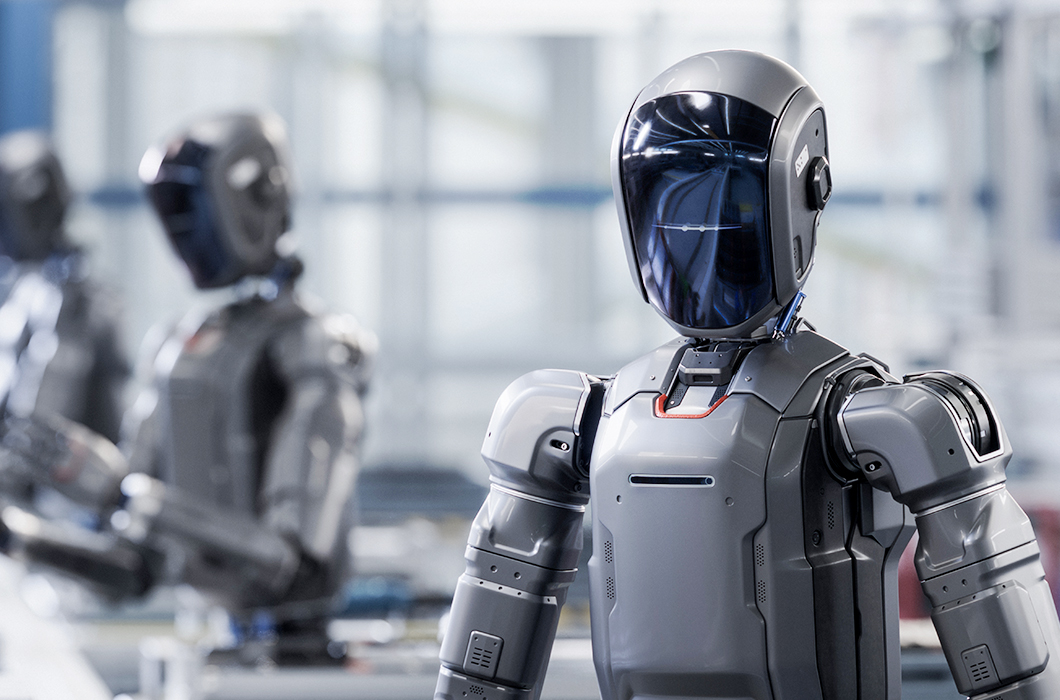
Humanoid robots drew major attention at CES 2026 (Consumer Electronics Show), the world’s largest consumer tech exhibition. From household robots that fold laundry and assist with chores to industrial robots deployed in factories, humanoid robots designed for a wide range of purposes were showcased throughout the event. This clearly showed that humanoid robots are becoming more integrated into our daily lives.
Humanoid robots are moving beyond technical validation and into real-world environments where they perform tasks alongside humans. As a result, batteries that enable safe and long-term operation are becoming increasingly important. In this article, we will take a closer look at what humanoid robots are and which batteries are gaining attention.
What Is a Humanoid Robot?
A humanoid robot is a robot with a human-like body structure, capable of walking, manipulating objects, and interacting with its surroundings. It combines traditional robotics with artificial intelligence, sensors, and algorithms. Rather than simply repeating predefined motions, it is designed to make decisions and move autonomously like a human.
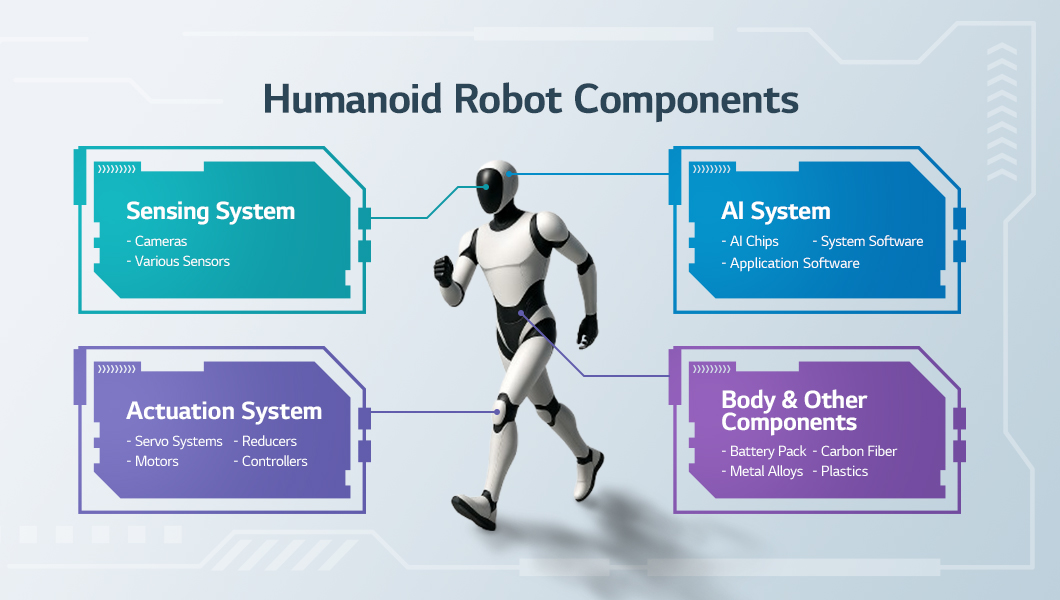
Humanoid robots consist of four main systems: △sensing systems, △artificial intelligence systems, △actuation systems, and △body and other components.
The sensing system collects external environmental data such as the position and movement of people and objects through cameras and various sensors. The artificial intelligence system processes this data using AI chips and software to make decisions. The actuation system consists of servo systems, motors, and reducers, enabling movement of the arms, legs, and joints. The body and other components include the mechanical structure along with the battery pack that supplies energy.
Based on these systems, humanoid robots are being developed in various forms adapted to the operating environment and mobility type, including wheeled, bipedal, and hybrid wheel–leg configurations. Each type can be selected depending on the environment and required movement characteristics.
Rapidly Growing Humanoid Robot Market
The humanoid robot market is experiencing rapid growth. According to SNE Research, the cumulative global deployment of humanoid robots is expected to increase from approximately 23,000 units in 2025 to 6.79 million by 2035, and 53.3 million by 2040.1
Adoption in industrial and logistics sectors is projected to rise from about 1% in 2030 to 25% by 2040. The research firm also projects that the total battery capacity installed in humanoid robots will reach 1.37 GWh by 2030 and approximately 138.3 GWh by 2040.2
Humanoid robots are now being adopted across a wide range of fields, including manufacturing, logistics, services, caregiving, education and research, as well as public safety and rescue. They are moving beyond research and early adoption and beginning to take hold in real-world environments. The market is now focusing on deployment timing, mass production, and expanding use cases.
Key Requirements for Humanoid Robot Batteries: Safety, High Energy Density, High Power Output
Amid this trend, perceptions of humanoid robots are also changing. They are no longer just machines, but systems that must operate safely alongside humans for extended periods. As a result, batteries have become a critical factor that determines overall performance.
The requirements for humanoid robot batteries can be summarized into three key areas.
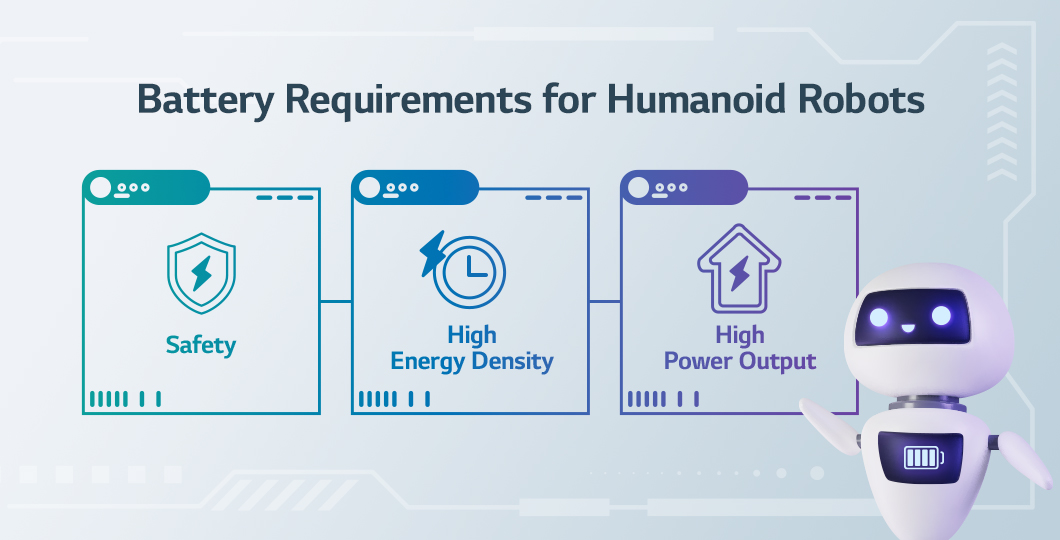
① Safety: The ultimate goal of humanoid robots is to operate in spaces shared with humans, such as homes and industrial sites. This requires considering multiple factors simultaneously, including control errors, reduced sensor reliability, and unexpected motion failures. If a failure occurs in the joint drive system, the malfunction could directly impact nearby people. For this reason, safety is the most critical factor. Batteries must ensure stable operation, precise thermal management, and the ability to detect abnormalities in advance.
② High Energy Density: Most humanoid robots today operate for only about 2 to 4 hours on a single charge. Given that industrial shifts typically last 8 to 12 hours, longer operating time is essential for practical deployment. Energy density, therefore, plays a key role. Since batteries are typically mounted in the torso, where space is limited, designs that minimize dead space and maximize energy storage at the cell level are gaining attention.
③ High Power Output: Humanoid robots require high instantaneous power to perform actions such as walking or lifting objects. Because dozens of joint motors and AI computations operate simultaneously, significant power is required. For this reason, batteries that can deliver stable high output are essential, especially for robots designed for complex and dynamic movements.
LG Energy Solution’s Humanoid Robot Battery Cells Built on Cylindrical Battery Leadership
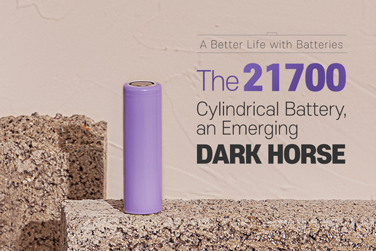
Then what kind of battery can meet these requirements? The form factor currently gaining traction for humanoid robots is the cylindrical battery.
Cylindrical batteries are structurally optimized for humanoid robots. Their robust can structure helps ensure a high level of safety. In addition, as a long-established form factor, they also benefit from standardized sizes and optimized manufacturing processes, enabling faster supply.
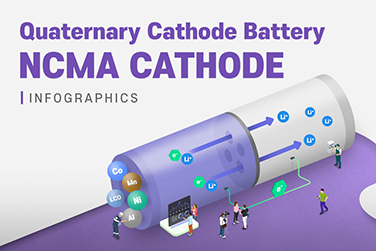
The choice of cathode material within this form factor is also a key factor that determines battery performance. Currently, ternary and quaternary batteries that can store more energy within the same weight and volume are gaining attention. Compared to LFP and other cathode chemistries, these materials are better suited to meet both runtime and power requirements under space constraints. In addition, depending on the application, high-nickel batteries with more than 90% nickel content are emerging as a key option.
LG Energy Solution established a cylindrical battery lineup based on the 2170 form factor early on, designed for humanoid robot applications. Leveraging NCMA batteries, the lineup offers differentiated energy density and power characteristics, allowing customers to select specifications according to operating characteristics and use environment.
The lineup is divided into the M Series, optimized for high energy density, long driving range, and long lifespan, and the H Series, featuring high energy density, high power output, and fast charging.
Representative cells for humanoid robots include M58 from the M Series and H51 and H52A from the H Series.
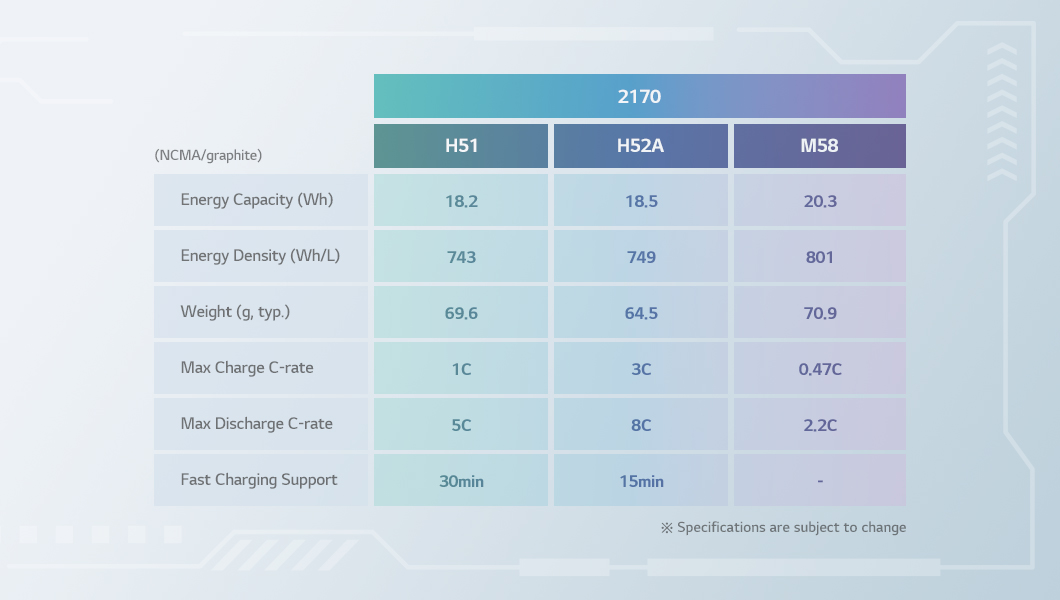
H51 offers a well-balanced combination of energy density, power output, and lightweight design, making it suitable for both continuous operation and short bursts of power. H52A is an ultra-high-power cell that supports a maximum discharge rate of 8C and fast charging in approximately 15 minutes, making it ideal for short-term high-power demands. M58, by contrast, prioritizes capacity and energy density, making it suitable for long-duration operation.
To maintain stable performance in real-world environments, battery management technology is also critical. LG Energy Solution applies safety technologies across the entire battery system, from cell to BMS to pack, to prevent issues in advance. Through its BMTS (Battery Management Total Solution), it diagnoses and predicts battery conditions, identifying early signs of abnormalities and degradation trends, while integrating pack-level TP (thermal propagation) prevention solutions to enhance safety.
Solid-State Batteries as the Next Step for Humanoid Robots: LG Energy Solution’s Technological Edge
As the humanoid robot market continues to grow rapidly, interest in next-generation batteries suited for this field is also increasing. Solid-state batteries are emerging as a promising option, as they are expected to meet key requirements such as a high level of safety, along with strong energy density and power output. Solid-state batteries use solid electrolytes instead of liquid electrolytes, eliminating the risk of leakage caused by external impact and providing high thermal stability. In addition, by replacing the separator with active materials, they offer the potential for even greater energy density.
*View [Battery Pioneer] Solid-State Batteries
According to market forecasts, the installed capacity of solid-state batteries for robots will grow from 0.04 GWh in 2030 to 76.1 GWh by 2040, reflecting expectations that they will play a key role across the robotics market.3
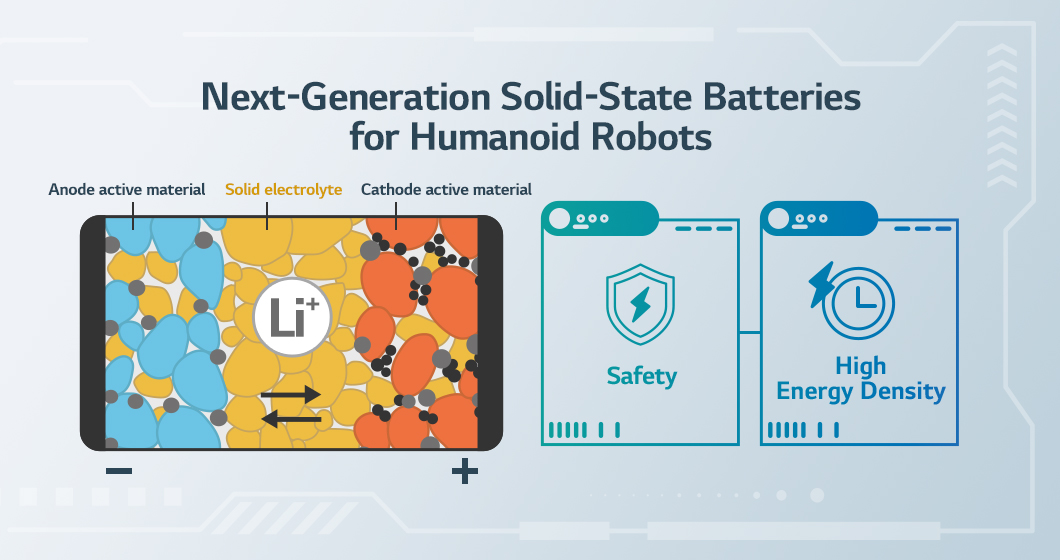
Solid-state battery technology has been one of the key R&D areas for LG Energy Solution. In 2021, through joint research with the University of California, San Diego (UCSD), the company developed a long-life solid-state battery capable of fast charging even at room temperature of around 25°C. The study employed a micro silicon anode to improve both cycle life and energy density.
LG Energy Solution is also researching the integration of solid-state batteries with anodeless battery structures. In this configuration, lithium metal is directly plated and stripped on the current collector, minimizing anode materials, thereby reducing cell thickness and improving space utilization. As a result, more energy can be stored within the same volume. When applied to solid-state batteries, this approach can further enhance both safety and energy density by reducing side reactions compared to liquid electrolyte systems.
So far, we have explored batteries for humanoid robots. In humanoid robots, batteries are not just an energy source, but a core element that enables robots to operate safely for extended periods alongside humans. In response, LG Energy Solution is addressing the needs of the humanoid robot market through a diverse battery technology portfolio, including cylindrical batteries.
Starting with its alliance with Bear Robotics, a company specializing in autonomous robot mobility platforms, formed in 2024, the company plans to expand its presence in the robotics market. Its cylindrical batteries have already been recognized by global customers and are currently being supplied to six leading robotics companies, while discussions on specifications and mass production timelines for next-generation models are ongoing.
LG Energy Solution will continue to expand its solutions, leveraging its accumulated battery technologies, supporting humanoid robots and a wide range of future applications.
- SNE Research. (2026). Technology Development Status and Market Outlook for Humanoid Robots and Robot Batteries (~2040). ↩︎
- SNE Research. (2026). Technology Development Status and Market Outlook for Humanoid Robots and Robot Batteries (~2040). ↩︎
- SNE Research. (2026). Technology Development Status and Market Outlook for Humanoid Robots and Robot Batteries (~2040). ↩︎