Two terms frequently come up when discussing EV batteries: high power output and high energy density.
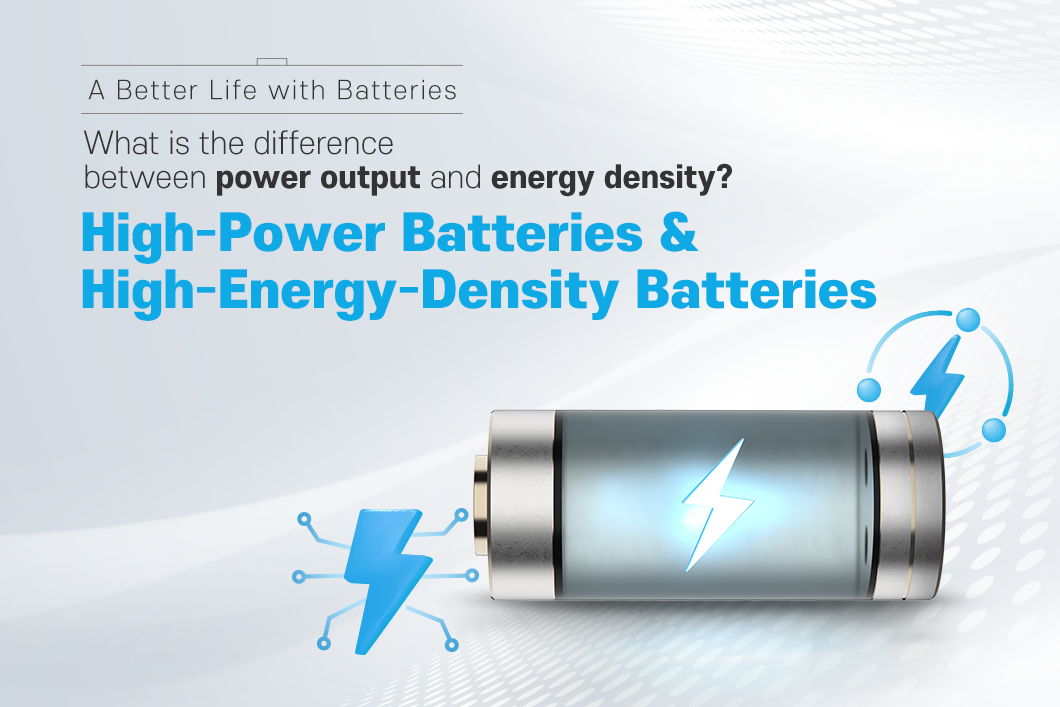
Although both terms are used to describe battery performance, they represent different metrics. High-power batteries excel at delivering strong power instantaneously, while high-energy-density batteries have the advantage of storing more energy and operating longer on a single charge. In this article, we will take a closer look at the differences between these two performance indicators.
What is Power Output?
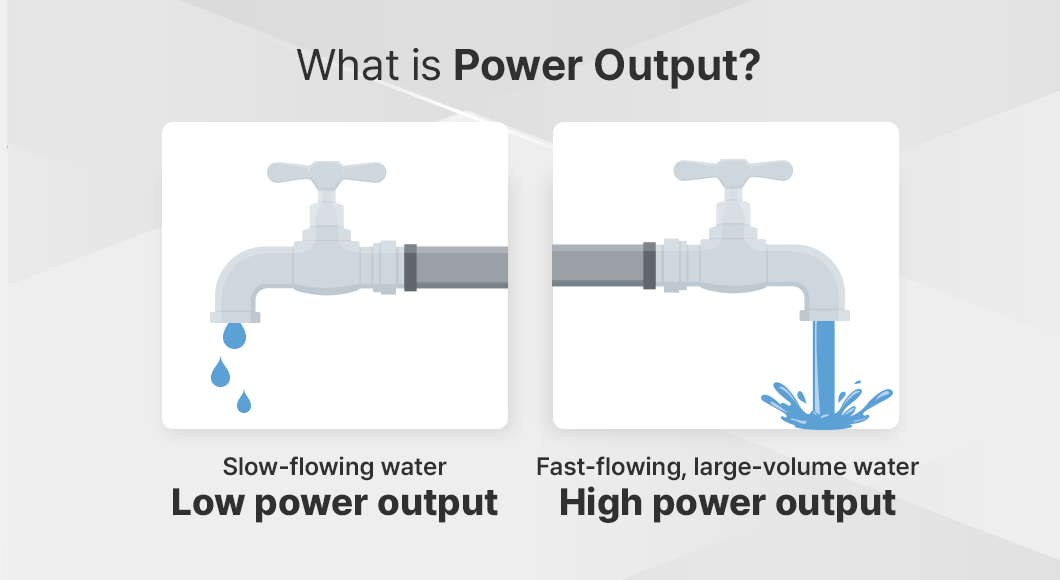
Power output indicates how much electrical power a battery can deliver at a given moment. In this context, power refers to the amount of electrical energy delivered per unit time. In other words, power output reflects how much power a battery can provide instantaneously.
Power output is calculated as: Power (W) = Voltage (V) × Current (A)
Its unit is watts (W) and it is determined by the relationship between voltage and current.
Voltage: the electrical force that enables the flow of electricity
Current: the amount of electricity flowing through a circuit
Accordingly, higher voltage and current result in higher power output from the battery.
High-Power Batteries and Power Density
Power density is a concept commonly associated with high-power batteries. It indicates how much power a battery can deliver per unit mass or volume. In general, power density is expressed in units such as watts per kilogram (W/kg) or watts per liter (W/L).
A higher power density means that a battery of the same size or weight can provide a higher burst of power. For this reason, it is used as an important performance indicator in applications that require strong instantaneous power, such as electric vehicles (EVs) and other mobility applications.
What is Energy Capacity?
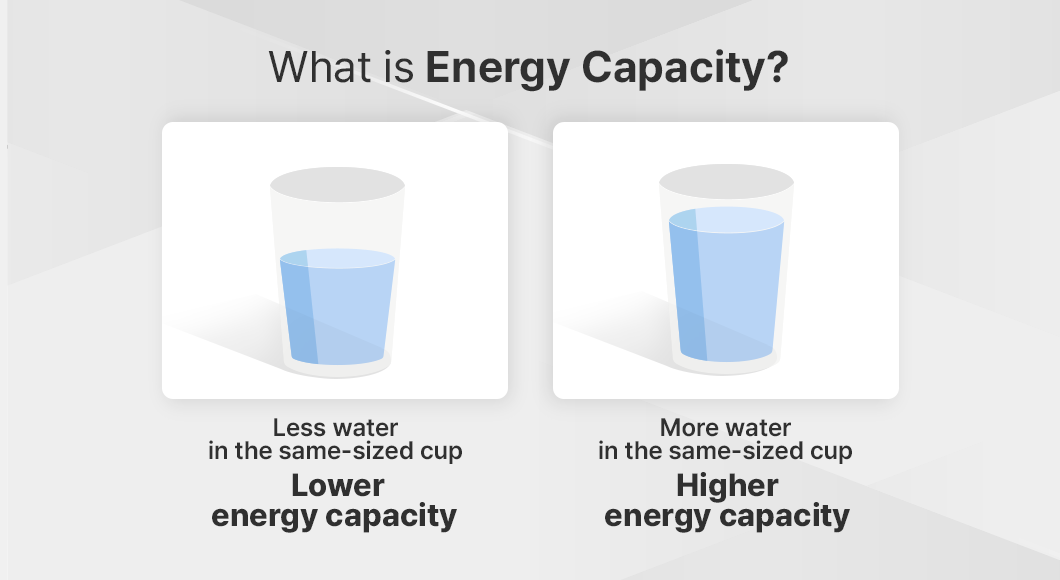
While power output refers to a battery’s ability to deliver instantaneous power, energy capacity indicates the total amount of energy it can store. In other words, it determines how much work a battery can perform and how long it can operate before being fully discharged.
Energy capacity is calculated as: Energy Capacity (Wh) = Voltage (V) × Capacity (Ah)
Capacity (Ah) represents the ampere-hour capacity of a battery. It represents the amount of current a battery can supply over a certain period of time. By multiplying voltage and capacity, the total amount of energy a battery can store is calculated.
For example, suppose a battery has a voltage of 3.1V and a capacity of 2.4Ah.
The energy capacity of this battery can be calculated as: 3.1V × 2.4Ah = 7.44Wh
This means the battery can theoretically deliver approximately 7.44W of power for one hour. As such, a larger energy capacity allows a battery to store more energy and operate a device for a longer period of time.
The Relationship Between Batteries and Energy Density
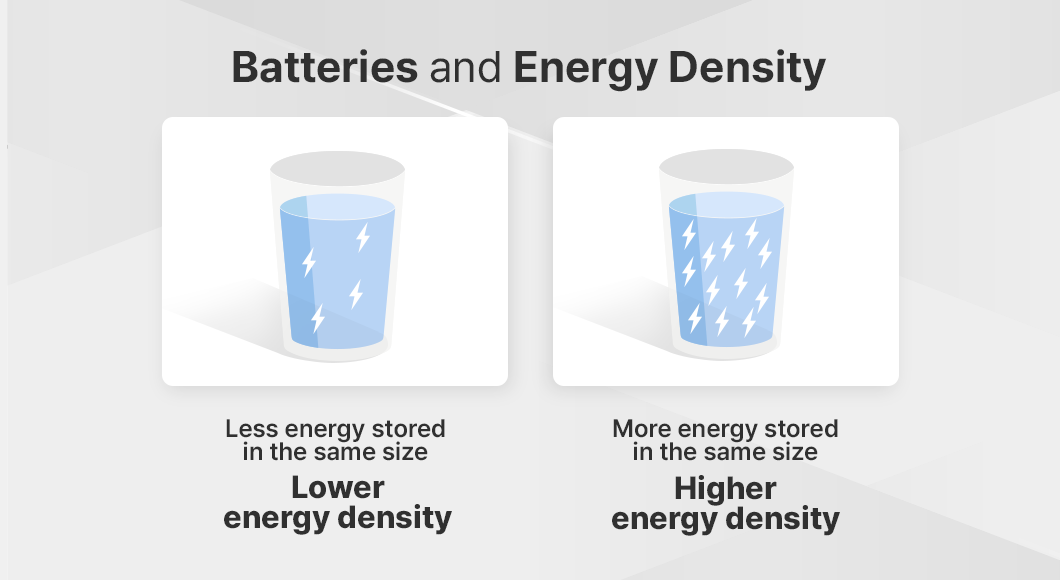
Energy capacity is closely related to energy density, which indicates how much energy can be stored relative to a battery’s weight or volume. In simple terms, it shows how efficiently a battery’s energy capacity is achieved within a given size or weight. Energy density is also divided into two categories: gravimetric energy density (Wh/kg) and volumetric energy density (Wh/L).
A battery with higher energy density can store more energy within the same size or weight, making it essential for extending EV driving range and the operating time of electronic devices. Because the same amount of energy can be stored with reduced size and weight, higher energy density also enables more efficient battery system design in limited spaces. In addition, it reduces the number of battery cells required, helping lower costs.
High-Power Batteries vs. High-Energy-Density Batteries
High-power batteries and high-energy-density batteries represent different criteria for evaluating battery performance.
| Category | Power Output | Energy Density |
|---|---|---|
| Key Characteristics | Higher Power Output → Greater Instantaneous Power | Higher Energy Density → Longer Operating Time |
| Key Metrics | Power density (W/kg, W/L) | Energy density (Wh/kg, Wh/L) |
High-power batteries are optimized to deliver large amounts of power over a short period of time. Featuring high power density, they play an important role in situations that require strong instantaneous output, such as rapid acceleration or uphill driving in EVs.
In contrast, high-energy-density batteries are designed to store more energy relative to their weight or volume. With their high energy density, these batteries enable stable power supply over long periods in applications such as EVs and IT devices.
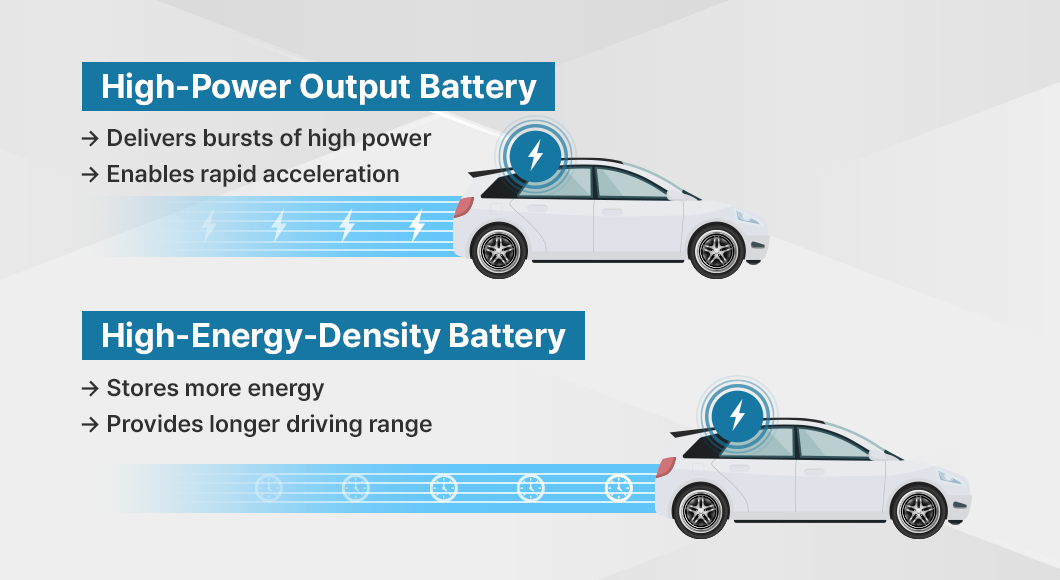
The difference between power output and energy density can be understood more easily through an automobile analogy. High-power batteries are similar to sports cars that can generate strong acceleration instantaneously. High-energy-density batteries are more like vehicles with large fuel tanks that can travel long distances on a single charge.
In summary, high-power batteries can deliver strong energy over a limited period of time, while high-energy-density batteries can store more energy and support longer operating times.
Battery Performance Indicators at a Glance
One of the first concepts to understand in battery performance is the distinction between power output and energy density.
High-power battery: a battery designed to deliver strong electrical power instantaneously
High-energy-density battery: a battery designed to store more energy and operate longer
Power output determines the “strength” of power, while energy density determines operating time.
As batteries are increasingly used across various applications, including EVs, energy storage systems (ESS), IT devices, and small electronic devices, technologies capable of achieving both high power output and high energy density are becoming more important. As battery technology advances, batteries capable of delivering stronger power and longer operating times are expected to emerge. For this reason, it is important to consider these two performance indicators together when evaluating battery performance.