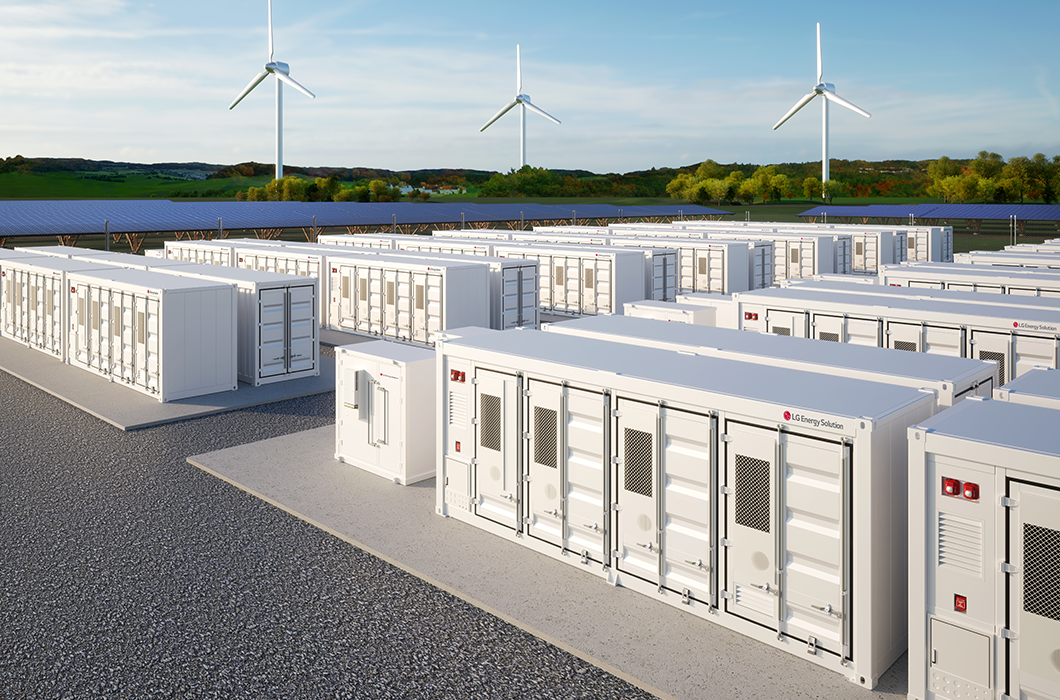
ESS units are being installed in a growing number of locations to stabilize power grids and make better use of renewable energy. As a result, verifying that an ESS can operate safely under real-world installation conditions is becoming increasingly important.
When an ESS is installed close to where people live, such as near apartment complexes or residential neighborhoods, it’s necessary to consider not only the safety of the system itself but also its impact on the surrounding environment. ESS units are often installed in groups with specified spacing between them, so the key is to confirm that an abnormal event in one unit does not affect adjacent units.
To this end, LG Energy Solution conducts the Large-Scale Fire Test (LSFT) under conditions that reflect real-world installation environments, to verify ESS safety based on data.
How Is ESS Safety Verified?
ESS safety cannot be fully assessed based on the performance of individual components alone, such as cells, modules, or racks. In the field, multiple components are combined inside an enclosure to operate as a single system, while multiple ESS units are installed together with specified spacing between them.
For this reason, evaluating ESS safety requires examining not only the internal structure and performance of the product but also the distance between enclosures and surrounding equipment. Depending on the installation site, an ESS may be placed near residential areas such as apartment complexes or other community facilities. It is therefore important to confirm that thermal impact originating in one unit does not spread to neighboring units or the surrounding areas.
Internationally recognized standards and test methods are available for verifying ESS safety in real installation environments. In the United States, NFPA 855, published by the National Fire Protection Association, is a safety standard for the installation of stationary ESS, and UL 9540A, developed by UL (formerly Underwriters Laboratories, a global safety science company) provides the test standard1 for verifying ESS safety.
UL 9540A and LSFT
UL 9540A is a standard that defines test procedures and evaluation methods for assessing the fire safety of Battery Energy Storage Systems (BESS) and the potential for thermal runaway propagation. The installation-level test performed at full scale under UL 9540A is known as the Large-Scale Fire Test (LSFT).
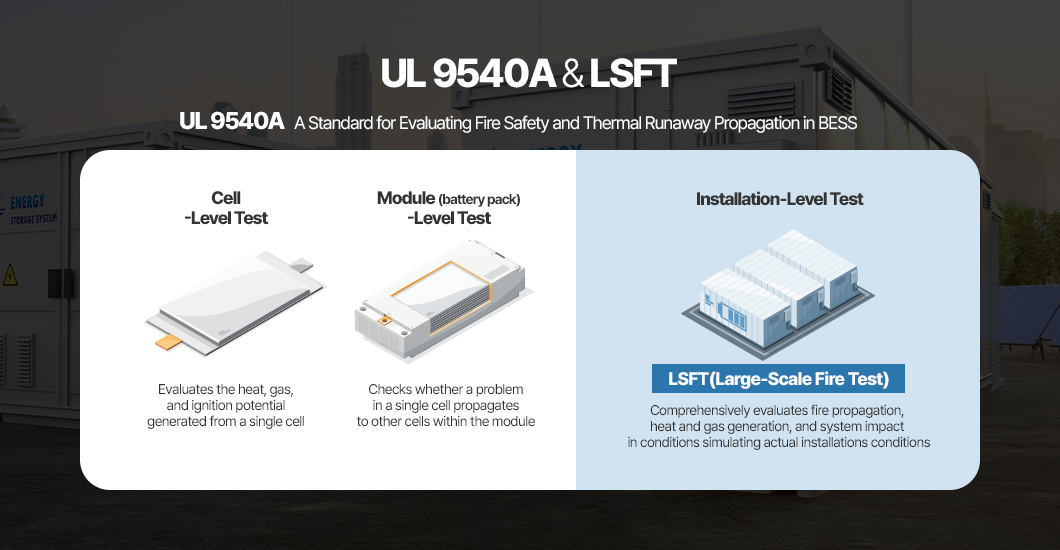
UL 9540A evaluates ESS fire safety at multiple levels, including the cell, module (battery pack), and installation levels.
Cell level: Evaluates temperature changes and heat generation patterns when thermal runaway occurs in a single battery cell. It also examines the types of gases released and whether they are flammable.
Module (battery pack) level: Evaluates how thermal runaway originating in a cell propagates within the module. It also assesses the amount of heat and gas generated and the potential for ignition or rapid combustion.
Installation level (LSFT): A large-scale fire test that evaluates the ESS at the installation level. It’s used to verify the effectiveness of fire protection systems and to assess the possibility of a fire in one BESS spreading to another, the separation distance between units, and the risk of reignition.
Evaluation generally proceeds at three levels, but a separate unit-level test may also be required for residential ESS or commercial and industrial ESS equipped with thermal runaway propagation prevention systems.
Why Is LSFT Important for Verifying ESS Safety?
LSFT matters because it enables ESS safety to be verified using data collected under actual installation conditions. The heat release rate, temperature changes, and propagation patterns obtained during LSFT serve as the basis for assessing the adequacy of separation distances between enclosures and the safety design. They also help confirm the role of fire protection systems and support the development of firefighting and emergency response plans. Furthermore, LSFT results provide objective evidence of ESS installation safety and can be used as a reference when authorities having jurisdiction review installation conditions.
So what exactly does LSFT check? The key is to verify that heat originating in one unit does not spread to its surroundings.
- Changes in the heat release rate (HRR) of the unit of origin and peak value
- Temperatures of modules inside adjacent ESS units
- Temperatures at the connections between the unit of origin and adjacent units
- Time-stamped records of key observations during the test
In other words, LSFT is a full-scale test that confirms whether the thermal impact from one unit spreads to the surrounding area.
How LG Energy Solution Verifies ESS Safety
LG Energy Solution develops ESS products with safety as its top priority. It has continuously verified safety from the cell to the system level in accordance with international standards. The latest LSFT was conducted as part of these ongoing safety verification efforts to assess potential impacts that could occur in a real-world installation environment.
LG Energy Solution performed the LSFT on its ESS solution “JF2 DC LINK.” The test followed this sequence: enclosure placement and preparation → ignition system installation → monitoring equipment installation → ignition and testing → data collection → external and internal inspection → results review.
Step 1) Enclosure Placement and Preparation
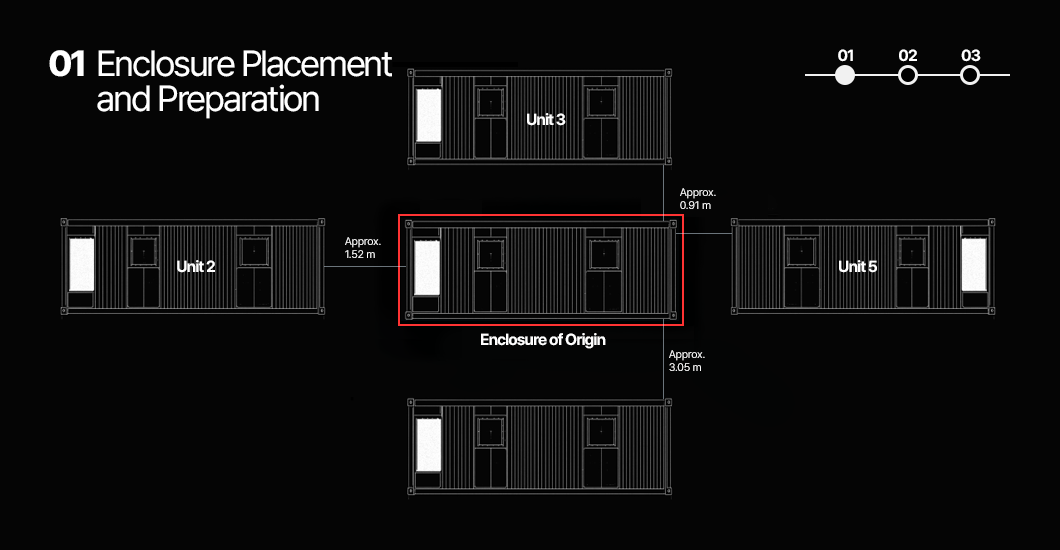
The State of Charge (SoC) of the test enclosures was set to 100% within 24 hours before the test, and the test was conducted with the enclosure doors fully open.
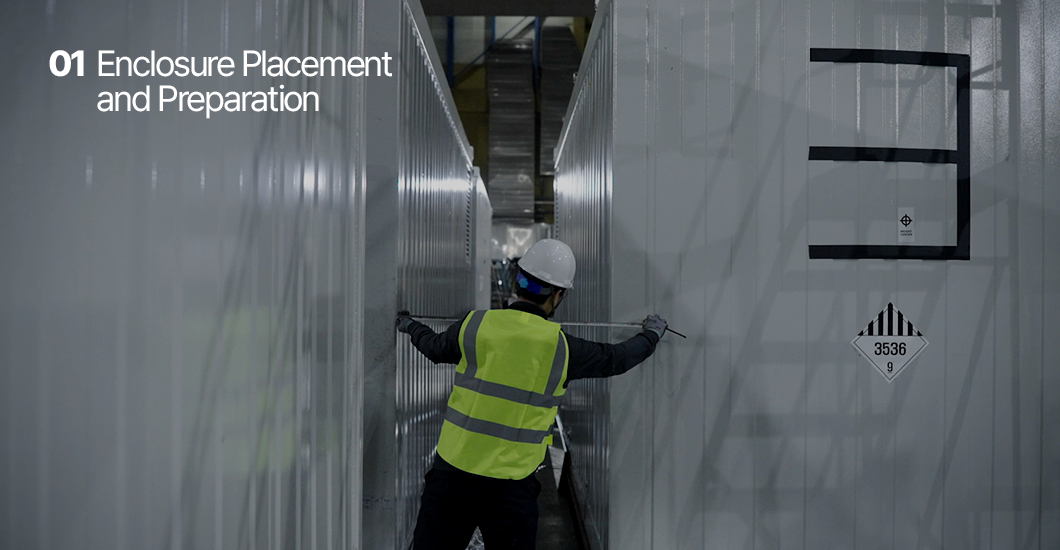
The Enclosure of Origin was placed at the center, surrounded by four target enclosures, bringing the total to five ESS enclosures. Separation distances between enclosures were set at approximately 1.52 m, 0.91 m, 3.05 m, and other specified distances to assess how thermal effects from one unit affect adjacent units.
Step 2) Ignition System Installation
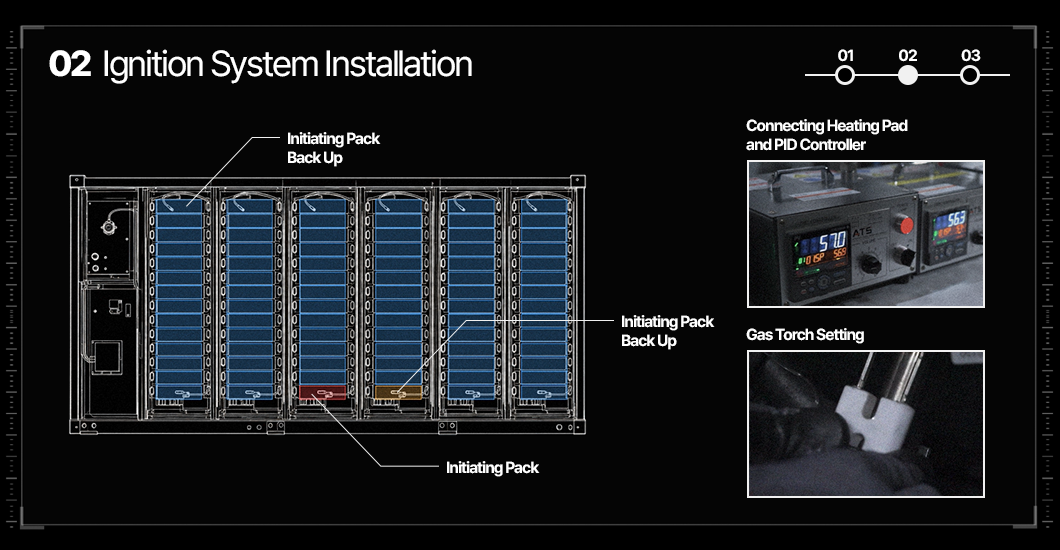
An ignition system was installed inside the Enclosure of Origin to induce fire conditions. Among the multiple charged packs (Live Packs) inside the enclosure, one was designated as the Initiating Pack, and a backup Initiating Pack was also prepared to ensure test reliability.
A Heat Pad and a Proportional-Integral-Derivative (PID) controller were then connected to the Initiating Pack to apply heat, and a gas torch was installed to initiate ignition inside the enclosure.
Step 3) Monitoring Equipment Installation
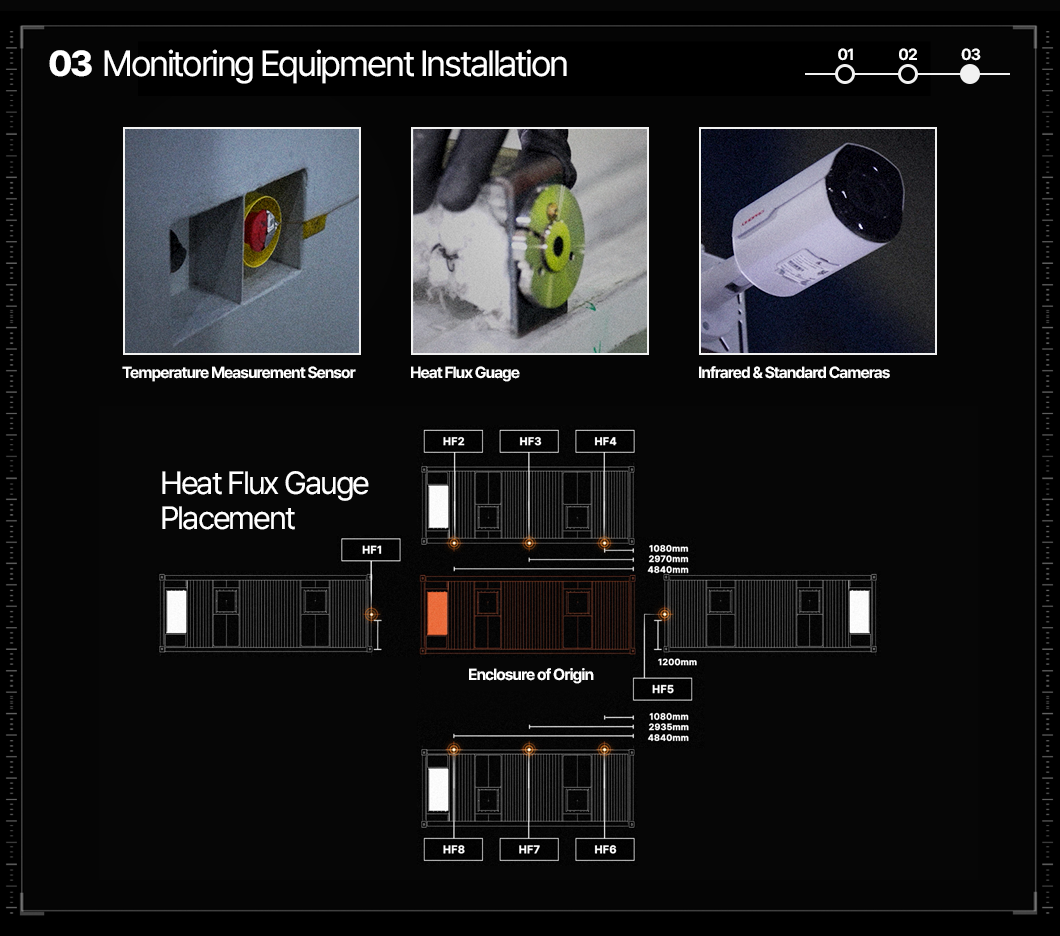
To collect data during the test, temperature sensors, heat flux gauges, infrared (IR) cameras, and standard cameras were installed. In particular, heat flux gauges were placed at key points around the Enclosure of Origin to quantitatively measure the thermal impact transferred to surrounding enclosures as the fire progressed.
Step 4) Ignition and Testing
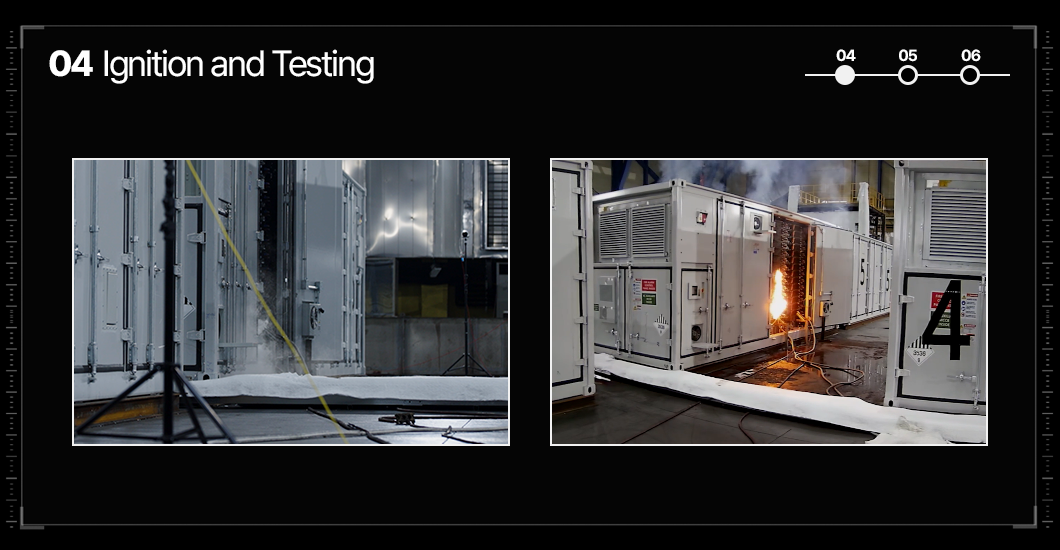
The ignition system was activated, and the test proceeded while monitoring how heat spread from the Enclosure of Origin.
Step 5) Data Collection
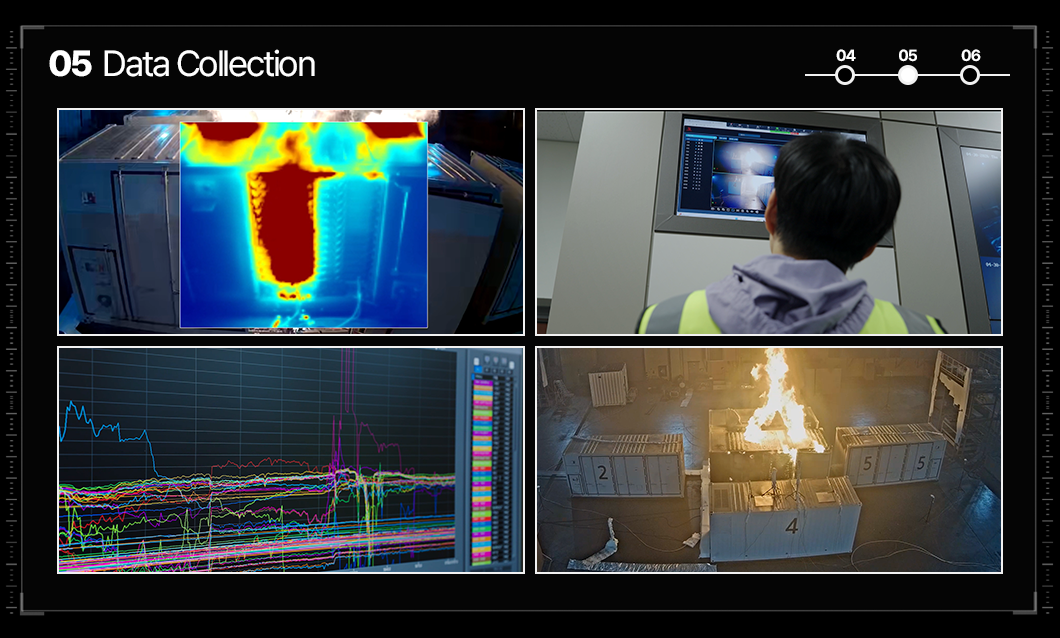
During the test, key data such as heat release rate and heat flux were continuously collected, while heat propagation patterns were also monitored. The fire was not extinguished immediately, and was allowed to burn until the unit of origin was fully consumed in accordance with ESS emergency response guidelines. Throughout this process, the test team monitored whether the fire spread to the surrounding target enclosures and how it eventually subsided.
Step 6) External and Internal Inspection
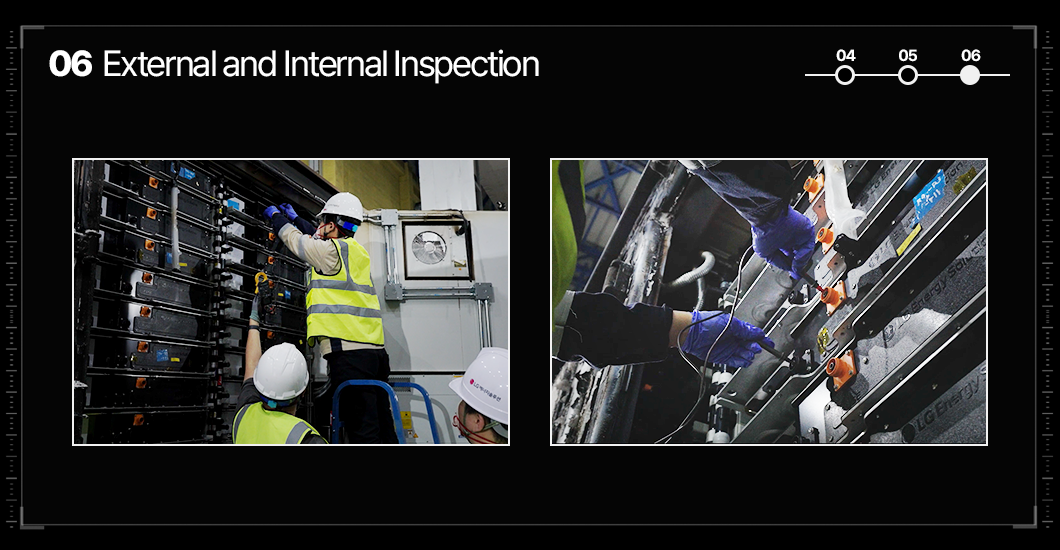
Once the test was completed and the site was confirmed to be safe, the condition of the test product was inspected step by step, from the overall enclosure to the internal cells, packs, racks, and container. This assessed whether the product had been damaged during the fire test and evaluated the electrical condition of the battery system.
What Were the Results of LG Energy Solution’s LSFT?
The heat release rate and voltage retention results from LG Energy Solution’s LSFT confirmed that the thermal impact from the unit of origin did not spread to the surrounding target units.
1) Heat Release Rate: The heat release rate indicates the amount of heat a fire releases per unit of time. It provides an indication of how rapidly a fire develops and its potential impact on surrounding equipment. The more sharply the heat release rate rises, the more likely the fire is to spread rapidly. That makes it key data for firefighting and emergency response planning.
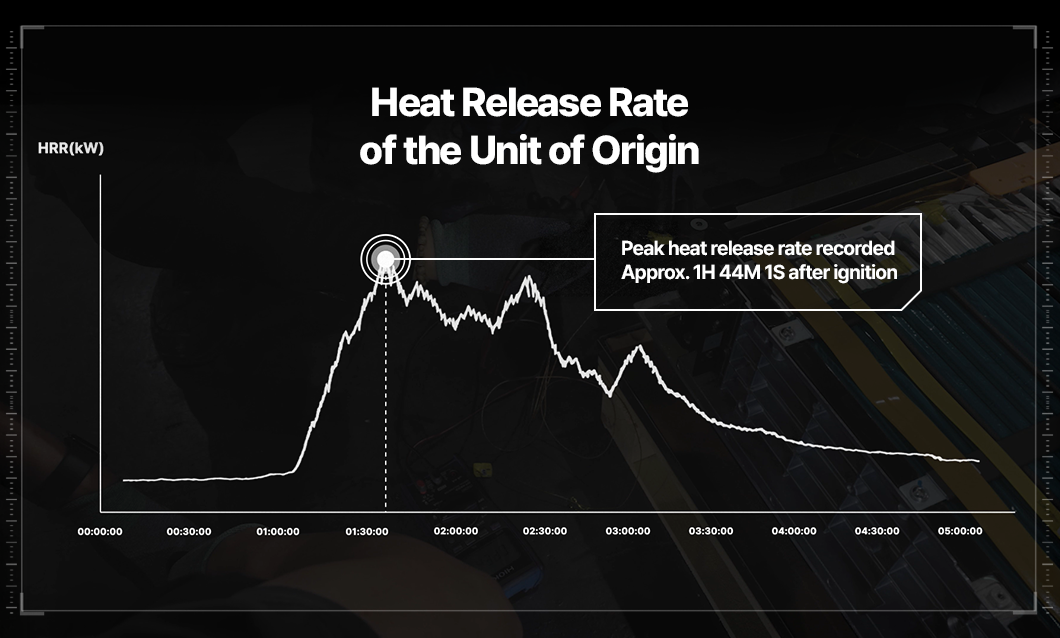
In the actual test, the heat release rate of the unit of origin peaked about 1 hour and 44 minutes after ignition. It stayed low initially, then rose sharply as the fire intensified, reaching its peak before fluctuating and gradually declining.
2) Voltage Retention Results: Voltage is an important indicator of a battery’s performance and safety. When a battery is subjected to a certain level of external heat, the electrolyte can decompose or the structure of the electrode interface can change, potentially affecting the battery’s voltage. Therefore, checking whether the voltage of surrounding units was maintained after the fire test provides a basis for assessing whether thermal impact had affected the electrical state and performance of neighboring batteries.
*View: Battery Glossary – Potential Window
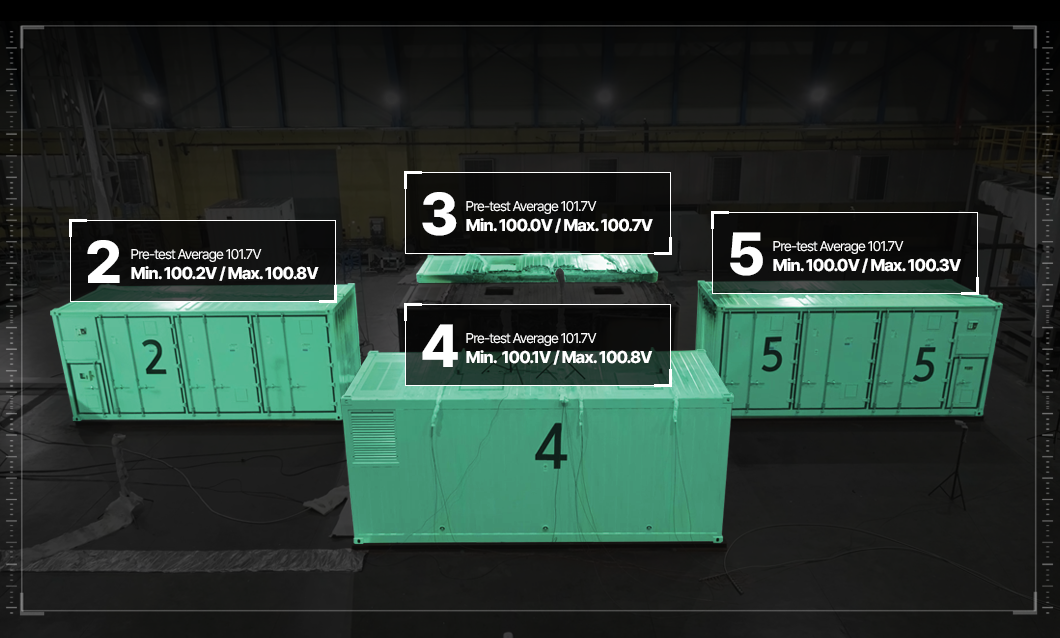
The average voltage before the test was 101.7 V. Among the surrounding units, Unit 2 maintained a voltage between 100.2 and 100.8 V, Unit 3 between 100 and 100.7 V, Unit 4 between 100.1 and 100.8 V, and Unit 5 within a range of approximately 100.0 to 100.3 V. As these results demonstrate, the voltages of the surrounding units remained stable even during the test.
LG Energy Solution’s LSFT was conducted in accordance with the sixth edition of UL 9540A, witnessed by UL, and verified against ESS fire safety codes and standards, including UL 9540, UL 9540A, IFC, and NFPA 855. Korea Conformity Laboratories (KCL) also participated in the test. For the separation distances between enclosures, Fire & Risk Alliance (FRA), a third-party fire protection consultancy, prepared an analysis report and obtained a Professional Engineer stamp.
This verification is meaningful because it is based not only on test data but also on international standards and reviews by external expert organizations. It provides a more objective basis for explaining the safety of JF2 DC LINK under actual installation conditions, and it can also be used for future installation design, separation distance assessments, and approval processes conducted by authorities having jurisdiction.
Key Q&A
Q. What is an LSFT?
A. The Large-Scale Fire Test (LSFT) is a full-scale fire test conducted under conditions simulating real-world installation environments to verify the fire impact of an ESS.
Q. What is UL 9540A?
A. UL 9540A is a test standard that evaluates thermal runaway and the potential for fire propagation in Battery Energy Storage Systems (BESS).
Q. What is the relationship between UL 9540A and LSFT?
A. UL 9540A evaluates ESS safety across multiple levels—including the cell, module, and installation levels—with the LSFT corresponding to the full-scale installation-level test.
Q. Why is LSFT important for verifying ESS safety?
A. LSFT is important because it enables the verification of whether a fire and thermal impact originating in one unit spread to adjacent units or surrounding equipment under actual installation scale and conditions.
Q. What were the results of LG Energy Solution’s LSFT?
A. Through the LSFT of its JF2 DC LINK, LG Energy Solution monitored the heat release rate of the unit of origin and the voltage retention of surrounding units, verifying that the thermal impact from the initiating enclosure did not spread to neighboring units.
Safety is a core value of utmost importance to LG Energy Solution. Through the Large-Scale Fire Test (LSFT), LG Energy Solution verifies under real-world installation conditions whether the thermal impact originating from one unit spreads to adjacent units. Going beyond this, the company continues its verification efforts to ensure ESS safety across systems, software, and services. Moving forward, based on data-driven verification and real-world testing, LG Energy Solution will further advance its safety verification framework to ensure ESS can operate reliably across various installation environments, including locations close to residential areas!
- Standards: Technical definitions and guidelines for equipment designers, manufacturers, operators, and others. ↩︎