LG Energy Solution has been publicly identified as a battery supplier for Tesla’s ESS (Energy Storage System) business, a global EV and energy company. On March 14 and 15, the U.S. government officially disclosed the collaboration project between Tesla and LG Energy Solution through the outcome report of the Indo-Pacific Energy Security Ministerial and Business Forum (IPEM). Given that OEMs (Original Equipment Manufacturers) do not often publicly disclose their battery suppliers, this announcement is being regarded as a meaningful signal in the battery market.
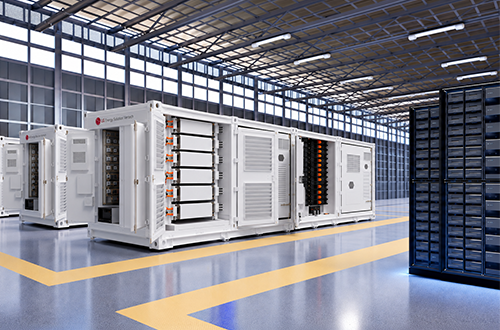
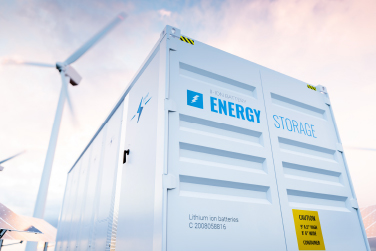
This partnership is especially significant because it is in the ESS sector. ESS is an energy storage system that stores electricity and supplies it when needed, consisting of various components such as cells, BMS, modules and packs, as well as containers. Therefore, not only individual battery performance, but also system-wide design and operational capabilities are important.
Since large-scale ESS facilities must operate stably for many years, they require not only individual battery performance but also overall system design and operational capabilities, as well as a stable supply system. In other words, deciding which battery manufacturer to partner with in the ESS business is the result of a comprehensive review of the manufacturer’s various capabilities, including advanced technology, manufacturing, operations, and systems.
LG Energy Solution being publicly disclosed this time as Tesla’s ESS battery supplier is also because it has secured strong trust from customers based on its unmatched battery technology and stable supply capabilities.
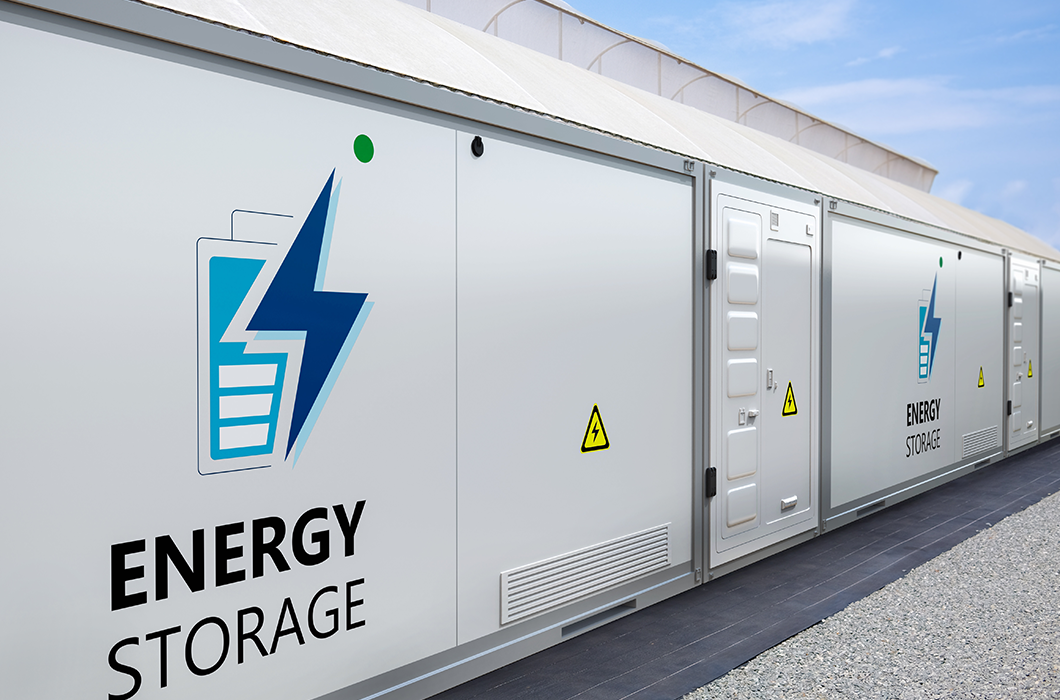
Production Capability, Localization, Technology: Why LG Energy Solution?
LG Energy Solution has continuously secured the core capabilities required in the ESS business. In particular, it has built the foundation of its ESS business around three pillars: production capability, localization strategy, and product technology. Through this, it has secured both stable supply and technological competitiveness at the same time. As a result, global customers can receive optimized products tailored to their businesses and needs.
① Securing Large-Scale Supply Capability Based on North American Production Hubs
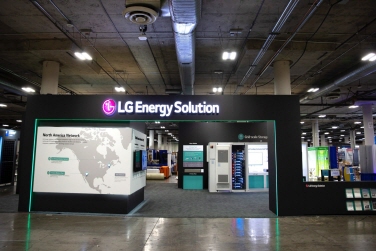
Since ESS is applied to large-scale projects such as data centers, power grids, and renewable energy, the ability to supply large volumes of products at the required time is critical. LG Energy Solution has proactively secured ESS production capability by establishing a total of five production hubs in North America. Major production sites are as follows.
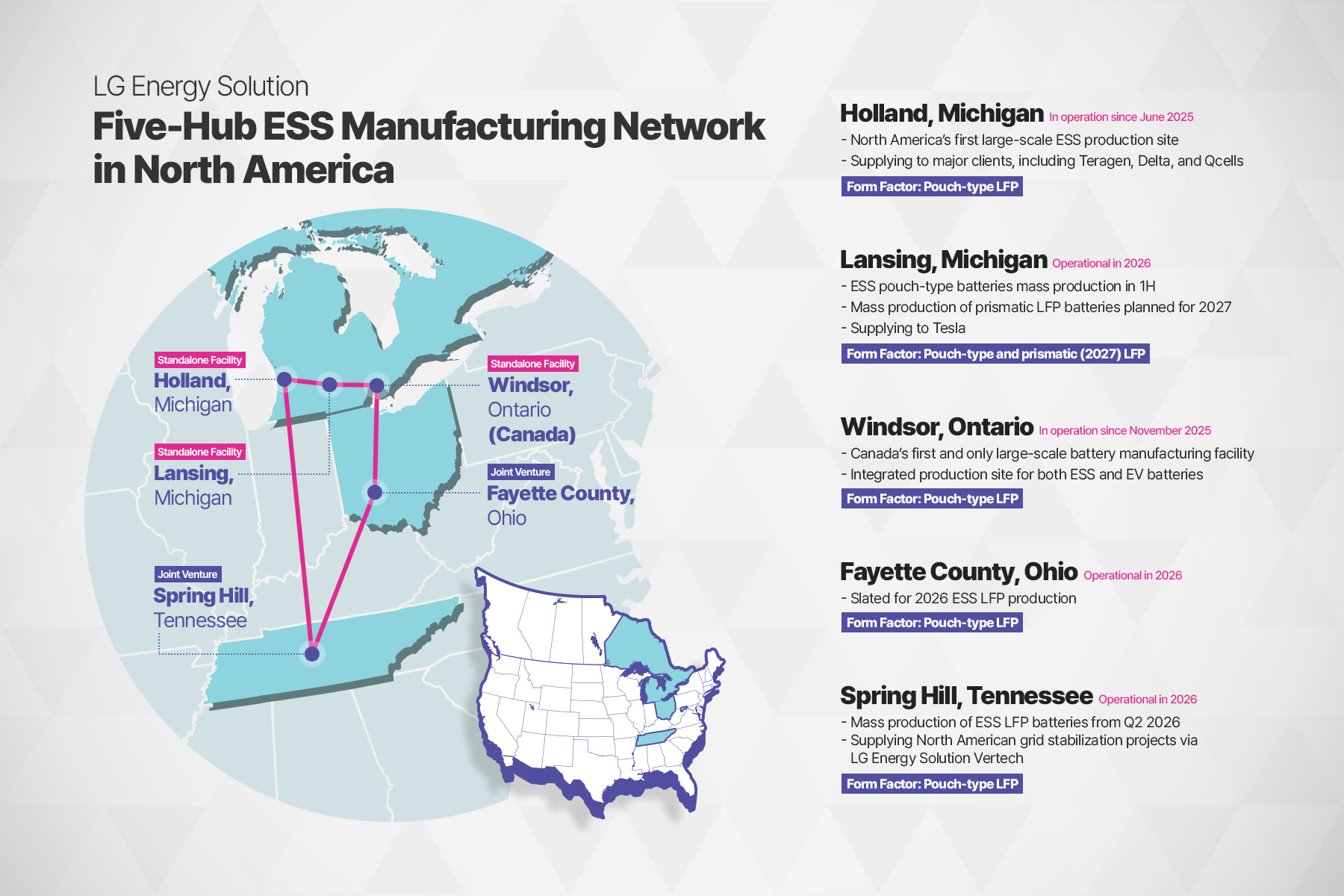
- Holland Plant, Michigan, U.S.
- Lansing Plant, Michigan, U.S.
- Ultium Cells Joint Venture Plant, Tennessee, U.S.
- Honda Joint Venture Plant, Ohio, U.S.
- NextStar Energy, Ontario, Canada
LG Energy Solution is expanding ESS product manufacturing at each production site and continuing supply to major customers based on this foundation. In particular, the Holland plant in Michigan is North America’s first large-scale ESS battery mass production site, and it continues supply based on a stable production system. The NextStar Energy plant in Ontario, Canada, also rapidly stabilized yield in the early mass production stage and recorded the achievement of surpassing 1 million cells produced in just three months after operation began.
LG Energy Solution operates its five North American production hubs under an integrated manufacturing system that produces both EV batteries and ESS batteries. Through this, it flexibly adjusts its production portfolio according to changes in market demand and responds quickly to growing ESS demand.
In addition, in 2026, it plans to expand production capability in the ESS business to approximately 60GWh (more than 50GWh in North America), while pursuing orders of approximately 90GWh. ESS business sales are also planned to grow to about three times the 2025 level.
Through this production base, LG Energy Solution is securing the large-scale ESS supply capability required in the ESS market.
② Localization Strategy for Responding to the Global Market
Recently, in the ESS market, the importance of systems capable of local production and supply has grown further due to regionalization of battery supply chains and changes in policy environments. In particular, because ESS projects differ by region and country in grid structure, regulations, and certification standards, an operational system capable of responding to each market’s requirements beyond simple product supply is necessary.
In this environment, LG Energy Solution has established a structure linking production and supply based on North American production sites and secured a system capable of responding to regional requirements. Based on its capability to mass produce and supply LFP batteries locally, it is stably supporting global customers’ ESS projects.
Its ESS cooperation with Tesla is a representative example showing this competitiveness. Batteries installed in Megapack 3 are planned to be produced from 2027 at the Lansing plant in Michigan, U.S. Batteries produced at the Lansing plant will be supplied in a manner that satisfies regulations and conditions suitable for local ESS batteries.
In this way, LG Energy Solution is implementing a stable supply system centered on local production sites.
③ LG Energy Solution’s ESS Technology Expanded from Battery to System
For ESS, it is important to secure both safety and economic efficiency, and in response to these needs, the application of LFP (Lithium Iron Phosphate) batteries is rapidly expanding. Based on high thermal stability and cost competitiveness, LFP batteries have characteristics suitable for ESS environments requiring long-term operation.
Amid this trend, LG Energy Solution developed ESS batteries that secure safety, long cycle life, and energy density simultaneously based on advanced LFP chemistry technology and cell design capability.
In particular, LFP pouch-type batteries applying lamination and stacking processes secured up to 12% higher energy density compared with existing products, and strengthened system stability by uniformly controlling heat release. In addition, through long-life characteristics enabling up to 15,000 charge-discharge cycles, they were designed to maintain stable performance even in long-term operating environments.
It also applied CTP technology to simplify system structure while improving energy density, and integrated cooling and safety design to secure both operational efficiency and stability. On the safety front, SRS technology strengthened separator durability to suppress internal short circuits and was designed to enable stable operation even in high-temperature and high-load environments.
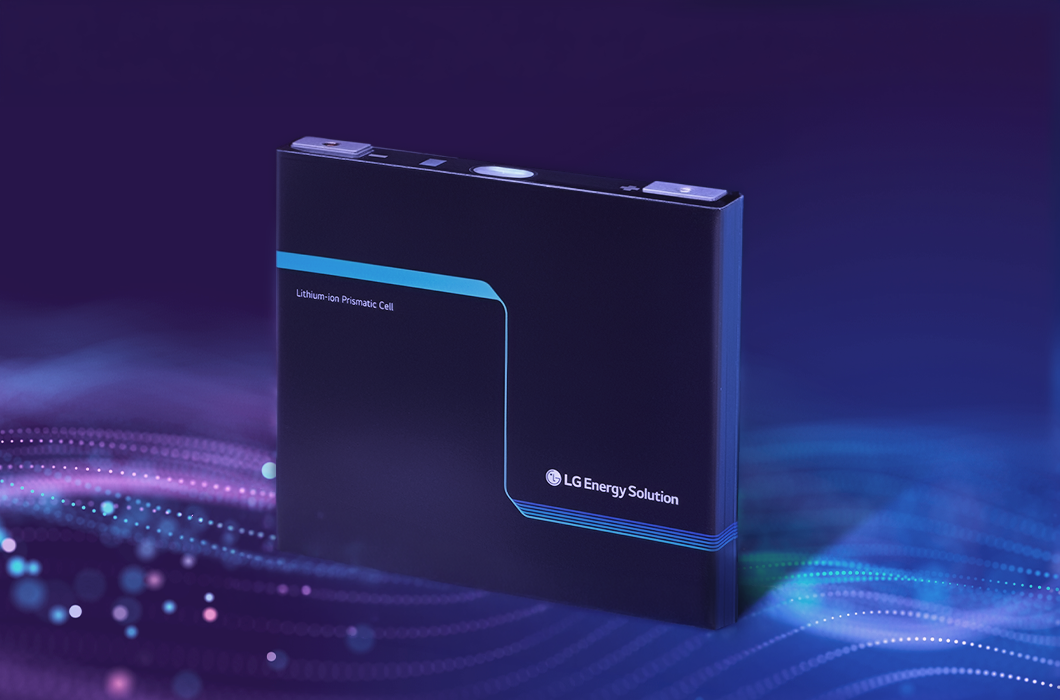
Based on these technologies, LG Energy Solution is producing high-performance ESS batteries. In particular, at the Lansing plant in Michigan, along with mass production of pouch-type batteries, it plans to gradually expand its product lineup to include prismatic LFP batteries as well.
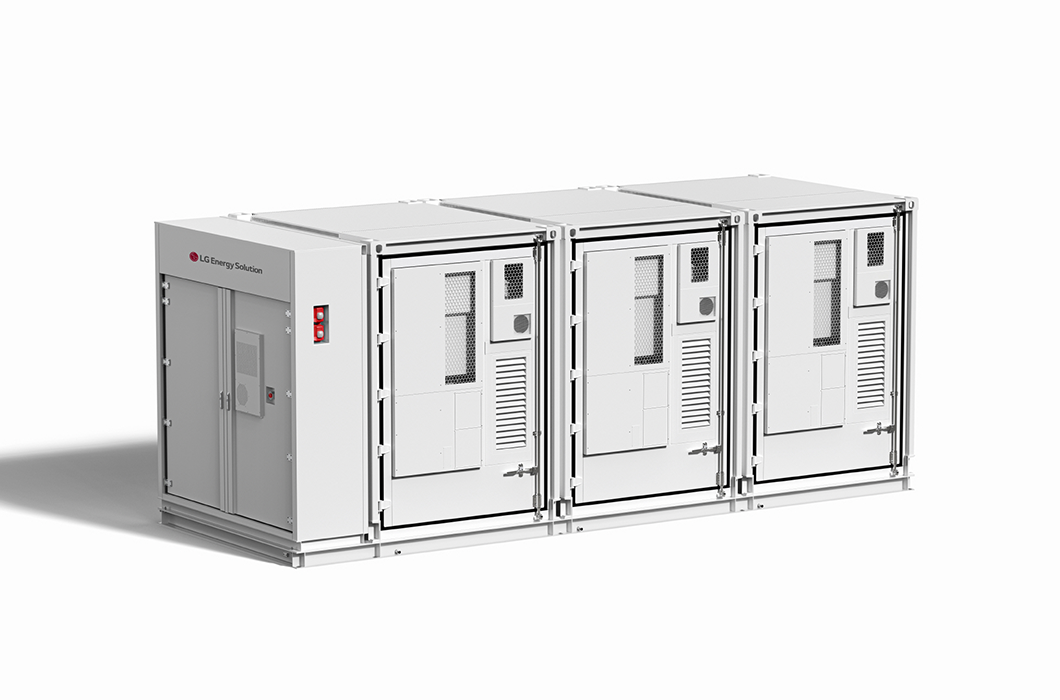
Furthermore, LG Energy Solution is building a business structure that goes beyond battery supply to include system design and operation. Centered on Vertech, its North American ESS SI entity, it has an integrated system covering battery supply, system construction, operation, and maintenance. Total ESS solutions provided by LG Energy Solution Vertech also include data analysis and real-time monitoring using AEROS, ESS specialized software, helping optimize ESS according to customer needs.
In this way, based on LFP battery technology and system integration capability, LG Energy Solution is securing both ESS safety and long-term operational stability.
Key Q&A
Q. What is ESS?
ESS is an energy storage system that stores electricity and supplies it when needed.
Q. Why is system competitiveness important in the ESS business?
Because ESS is a system business that combines not only batteries but also various technologies such as BMS, thermal management, fire response, etc.
Q. What are LG Energy Solution’s major ESS collaboration cases?
It is scheduled to supply batteries for Tesla’s ESS product, Megapack 3.
Q. What is LG Energy Solution’s ESS competitiveness?
It has secured competitiveness across the ESS business based on production capability, North American localization strategy, battery technology, and integrated system operation capability.
Competitiveness in the ESS market goes beyond simple battery performance and depends on how production bases, product competitiveness, and system capabilities are combined. LG Energy Solution is securing these in a balanced manner and expanding its presence in the ESS market. Please keep watching LG Energy Solution’s moves as it leads the ESS market proactively!