Auto China 2026 Declares the Era of Intelligent Mobility
Auto China 2026 (The 2026 Beijing International Automotive Exhibition), held from April 24 to May 3, offered a compelling look at the paradigm shift reshaping the global mobility industry. Drawing leading automakers and component suppliers from across the globe, the event showcased a total of 1,451 vehicles. Among these, a remarkable 181 models made their world premiere, solidifying the exhibition’s standing as the world’s largest automotive event.
The significance of this record-breaking exhibition extended beyond its sheer scale. It confirmed that the fundamental rules of competition in the automotive industry have undergone a profound transformation. Electrification, once the defining focus of the industry just a few years ago, has now become a baseline prerequisite. The center of gravity has shifted decisively toward AI- and software-driven intelligence, marking a new phase in the evolution of mobility.
Across the exhibition floor, robotaxis, flying cars known as eVTOLs (electric vertical takeoff and landing aircraft), humanoid robots, and AI concept vehicles coexisted seamlessly within the same space. This coexistence symbolically demonstrated how the mobility industry has evolved beyond competition centered on driving range as a means of transportation. Instead, it has transformed into a technology ecosystem where the development and operation of advanced AI systems and data networks form the core value proposition.
A particularly notable dynamic at this exhibition was the evolving relationship between global OEMs and Chinese companies. Major international automakers unveiled a wide range of new models featuring the native integration of localized Chinese AI and autonomous driving technologies, while Chinese OEMs announced AI mobility ecosystem strategies targeted at the global market. The convergence of these two trends within a single venue clearly demonstrated how the landscape of leadership in the global mobility industry is changing.
In the sections that follow, we take a closer look at how leading global technology companies are turning mobility ecosystem innovation into reality through the changes observed at Auto China 2026.
From Automotive Manufacturing to Ecosystem Design: Chinese OEMs Evolve into AI Big Tech Companies
Auto China 2026 clearly demonstrated how Chinese OEMs are rapidly moving beyond the identity of traditional vehicle manufacturers and transforming into AI-driven technology companies. No longer focused solely on hardware production, they are evolving into platform operators that design expansive mobility ecosystems connecting AI, autonomous driving, vehicle operating systems (OS), robotics, and aerial mobility. We take a closer look at the multifaceted future strategies of these local companies as they expand the value of transportation and reshape the entire value chain.
- Geely Auto Group: Transforming into an AI Big Tech Company via the ‘One Geely’ Strategy
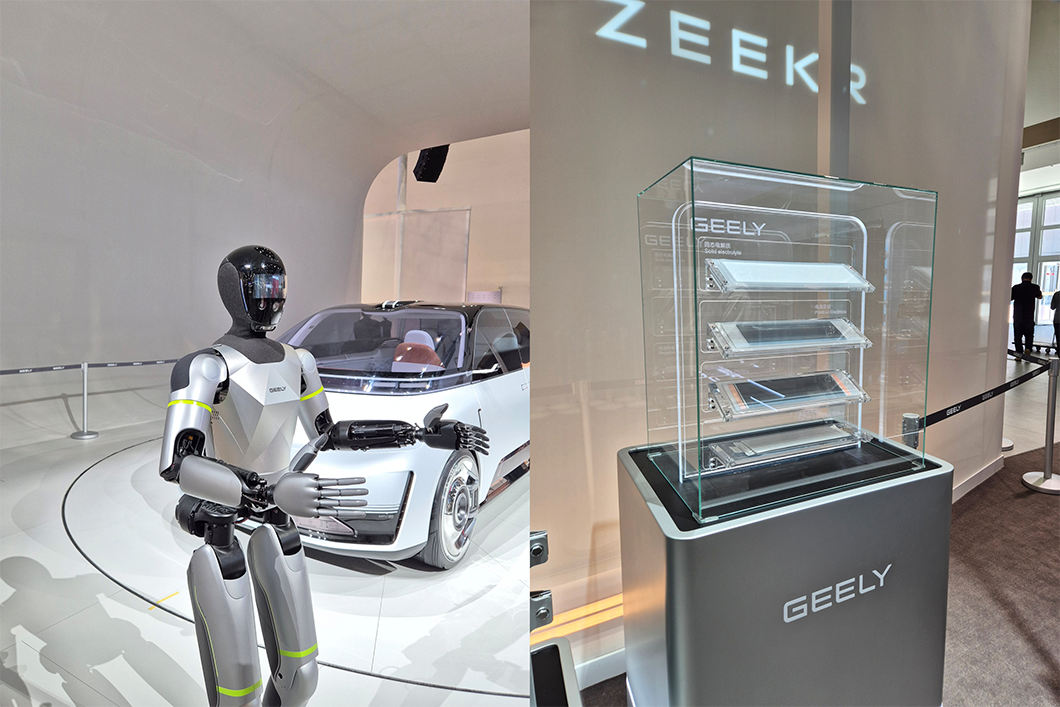
At this exhibition, Geely Auto Group shifted its focus away from launching individual vehicle models, choosing instead to showcase its comprehensive technology ecosystem. The centerpiece was the EVA Cab, China’s first purpose-built robotaxi prototype. Engineered with the world’s first 2160-line LiDAR and an EEA 4.0 architecture underpinned by quantum-grade security, the vehicle underscored a dual competitive edge in autonomous driving reliability and data security. By simultaneously unveiling a humanoid robot, all-solid-state batteries, an AI digital chassis, and a 900V high-voltage hybrid platform, Geely formally declared its transformation from a conventional automaker into an intelligent mobility platform company.
- XPENG: Bypassing L3 for L4 Autonomy — Demonstrating Full-Stack Technical Capabilities across Terrain and Air
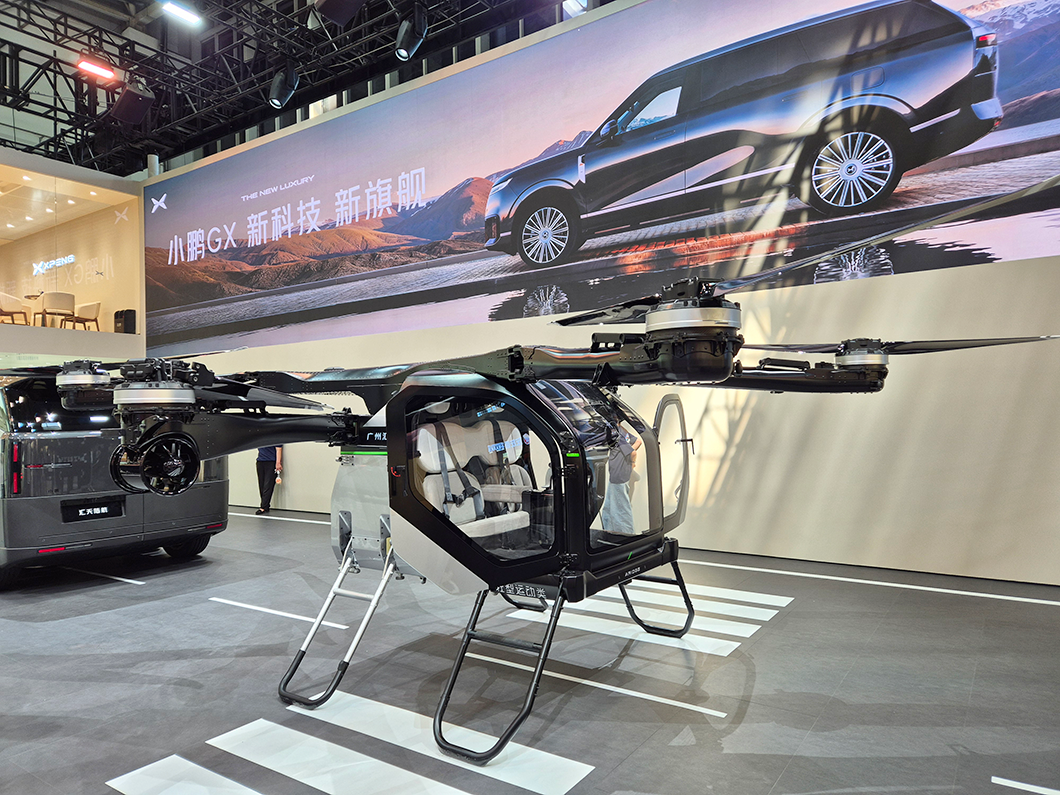
XPENG reinforced its ambition to lead the low-altitude aerial mobility market by unveiling a full-scale flying car (eVTOL) integrated onto a six-wheel electric SUV platform, designed for modular detachment, takeoff, and landing on demand. The company also made its autonomous driving ambitions tangible. Utilizing its next-generation Vision-Language-Action (VLA) 2.0 intelligent driving architecture, unveiled this March, XPENG declared an aggressive roadmap to skip the transitional Level 3 phase entirely — advancing directly from Level 2 to highly capable Level 4 autonomy. This mobility portfolio spanning both ground and air vividly demonstrates that XPENG is evolving from an EV manufacturer into a full-stack mobility technology company.
- Xiaomi EV: An “AI Smart Device” Extending the Smartphone Ecosystem into Mobility
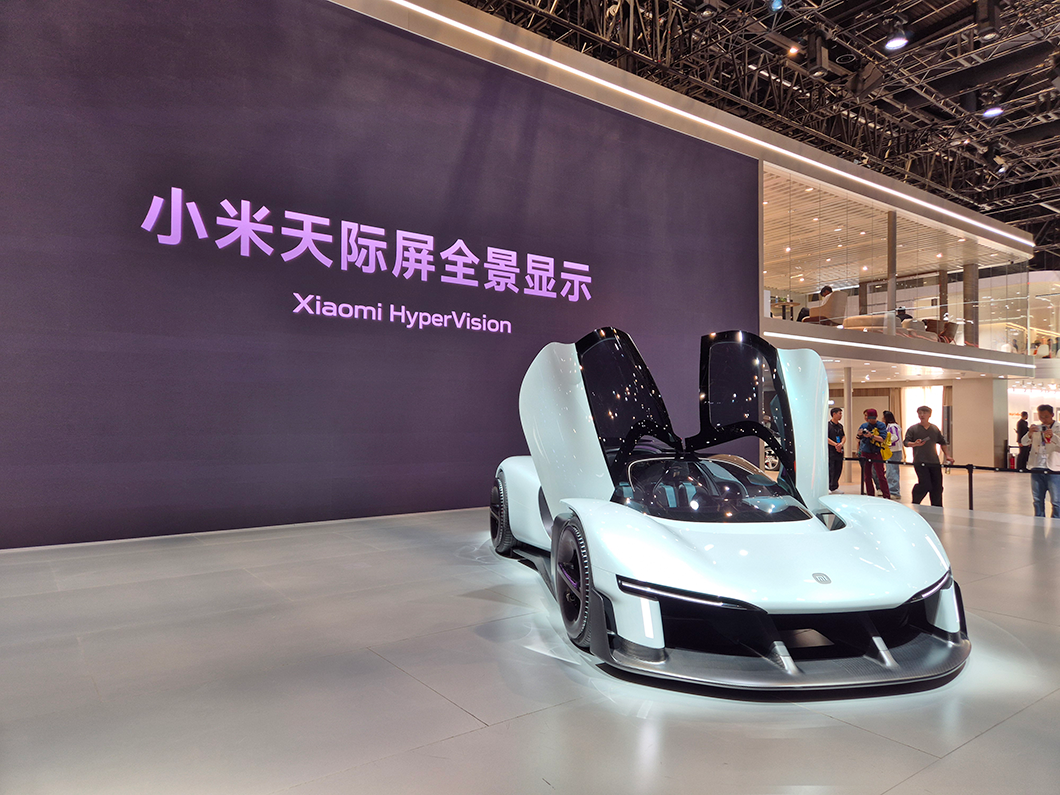
Xiaomi redefined the automobile as an “AI Smart Device” that is seamlessly connected with smartphones, home appliances, and AI platforms. The company introduced features that enable in-vehicle AI to execute everyday tasks like restaurant reservations and coffee ordering, while simultaneously analyzing the driver’s stress and fatigue levels to automatically adjust lighting, music, and the cabin environment. In particular, its Vision Gran Turismo concept car — which assists driving by detecting heart rate and physical changes in real time through biometric sensors — demonstrated how vehicle AI is evolving beyond mere convenience to enhance driving safety and deliver a highly personalized driving experience.
Global OEMs Deepen Localization as Chinese Technology Becomes Core to Vehicle Architecture
Meanwhile, one of the most significant structural shifts highlighted at Auto China 2026 was the growing adoption of Chinese solutions by global automakers in core vehicle domains that serve as the vehicle’s “brain,” including autonomous driving decision-making systems, vehicle operating systems, and electric propulsion systems. This suggests that local partnerships, once limited to sharing production and distribution networks, have evolved into collaborations that jointly shape the vehicle’s fundamental technological competitiveness.
- Hyundai Motor: Close-Knit Local Collaboration in China
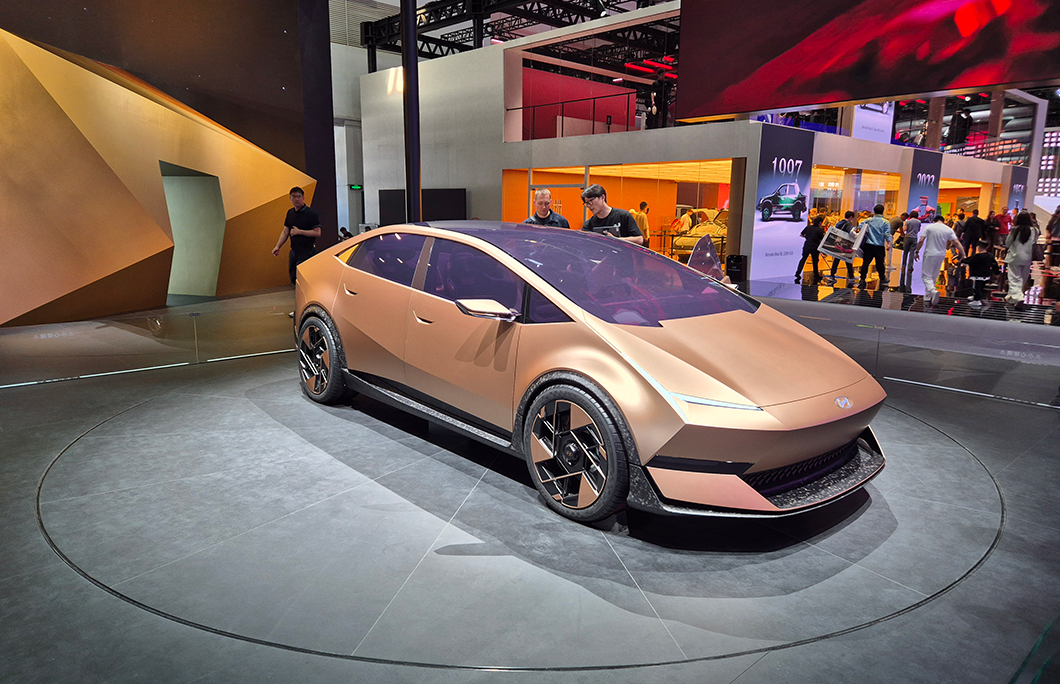
Hyundai Motor Company positioned the IONIQ V, its first strategic mass-production electric vehicle tailored specifically for the Chinese market, at the forefront of its showcase. Equipped with a dedicated EV platform co-developed with local partner BAIC Motor and Level 2 ADAS from Chinese autonomous driving company Momenta, the IONIQ V is a model designed to directly target the Chinese market. This marks a deliberate move beyond the traditional local assembly and production model, reflecting an advanced localization strategy that embeds Hyundai directly within China’s top-tier technology ecosystem in its bid to compete in the country’s autonomous driving market. Building on the IONIQ V, Hyundai plans to accelerate its market entry by progressively extending locally-sourced technologies across future models — including the IONIQ E, a midsize SUV, an MPV, and extended-range electric vehicles (EREVs).
- Toyota: Deepening Its Local Technology Partnerships in China
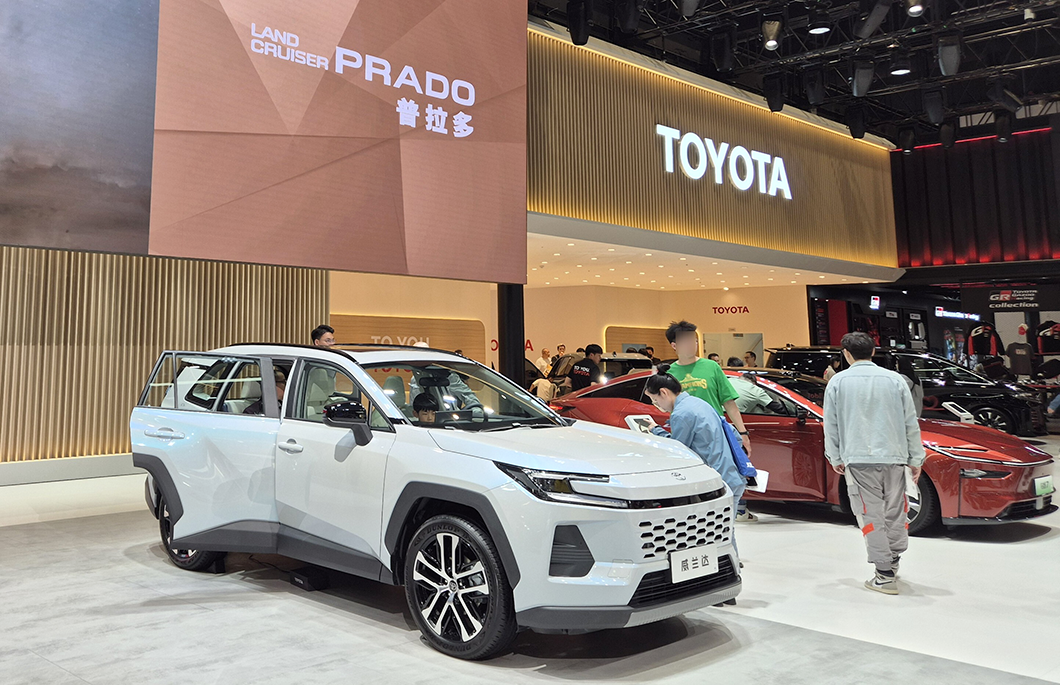
Following the signing of “Partnership 2.0” between GAC and Toyota in June 2025, Toyota has been actively expanding its collaboration with local Chinese technology suppliers. The bZ7, a China-exclusive electric sedan developed through its joint venture with GAC, features Huawei’s DriveONE electric propulsion system, a HarmonyOS-based smart cockpit, and Momenta’s ADAS. This reflects an evolution in Toyota’s partnership model, moving beyond traditional collaboration toward a framework in which the vehicle’s core user experience and AI-driven driving systems are developed in close coordination with China’s technology ecosystem.
- Volkswagen: “In China, For China” Strategy
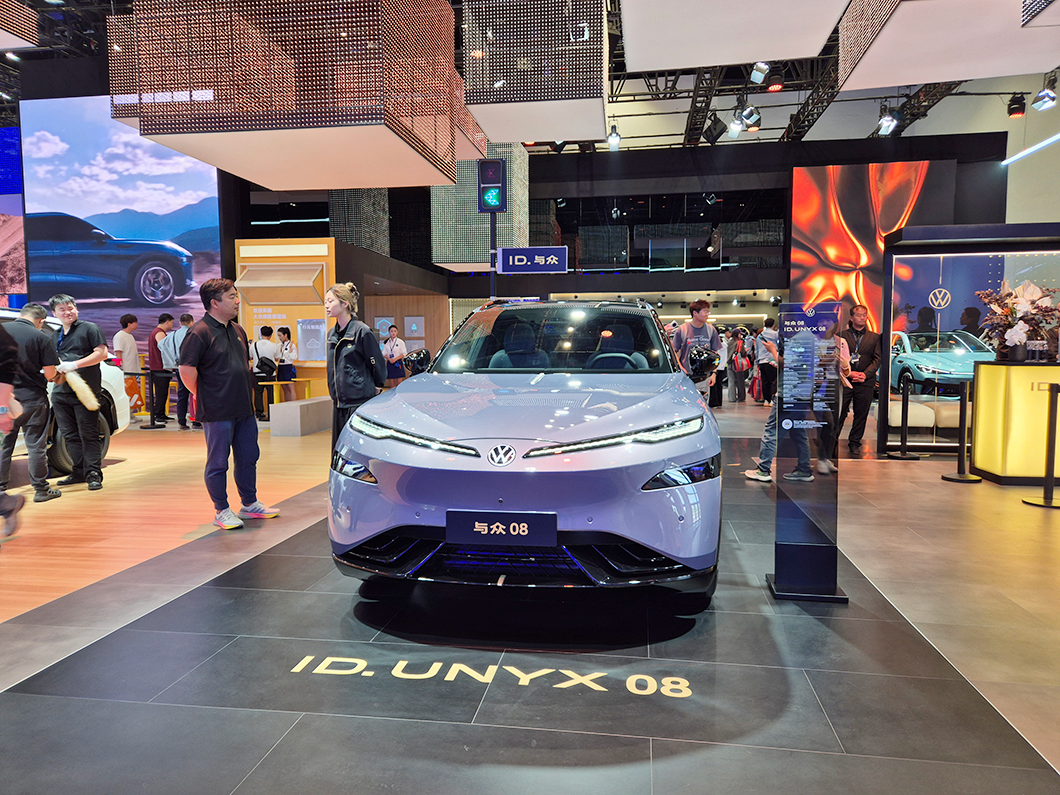
Volkswagen highlighted its “In China, For China” strategy, detailing a comprehensive integration into China’s local technology ecosystem. The automaker unveiled the ID. UNYX 09, a battery-electric sedan co-developed with XPENG, alongside the ID. AURA T6, a model equipped with its localized China Electronic Architecture (CEA) and an ADAS suite developed by CARIZON, the joint venture between CARIAD China and Horizon Robotics. Furthermore, Volkswagen exhibited the ID. UNYX 06 and ID. UNYX 07 featuring Huawei’s Advanced Driving System (ADS) technology, demonstrating an aggressive expansion of its collaborative footprint across the Chinese AI and autonomous driving landscape.
Global Expansion of Chinese Software: Reshaping Industry Standards Through Strategic Alliances
Beyond adopting local solutions inside China, global OEMs are increasingly integrating Chinese autonomous driving and software capabilities into their broader ecosystems. Chinese firms specializing in AI software, advanced driver assistance systems (ADAS), and vehicle operating systems (OS) are rapidly cementing their positions as core technology partners for leading global automakers. These collaborations do more than secure market share within China—they are actively redefining industry standards in the global race for AI-driven mobility.
- Huawei: Evolving into a Mobility OS Ecosystem Architect through a “Tier 0.5” Strategy
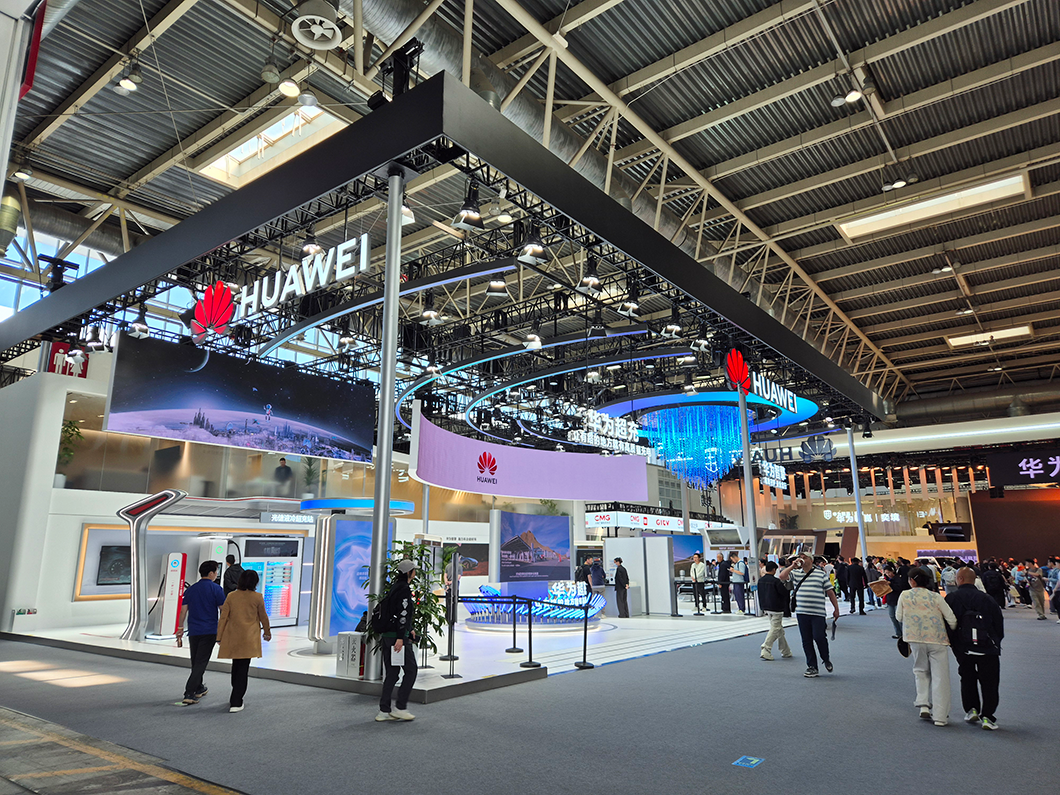
Huawei is rapidly scaling its mobility ecosystem strategy by actively collaborating with partner brands around its proprietary vehicle operating system and autonomous driving platforms. A particularly notable development is the acceleration of its “Tier 0.5” strategy through HIMA (Harmony Intelligent Mobility Alliance), a collaborative automotive alliance established with partner OEMs, where Huawei plays a leading role across product planning, autonomous driving, operating systems, and sales. This shift signifies an evolution beyond the traditional role of a Tier 1 supplier, expanding Huawei’s influence into a platform business that designs the vehicle’s core software architecture and overall user experience. At this year’s exhibition, Huawei further showcased its proprietary mobility software ecosystem through a large integrated booth featuring HIMA, Qiankun, and its major partner brands.
- Momenta’s Rise: The Chinese Autonomous Driving Software Provider Chosen by Global OEMs
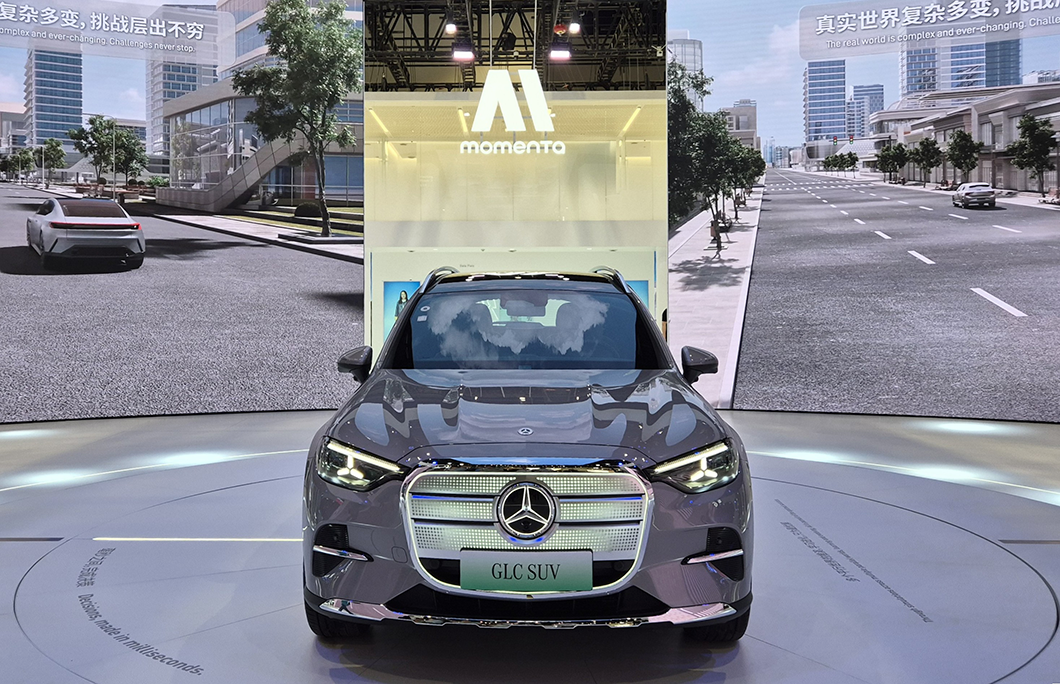
The rapid emergence of Chinese autonomous driving company Momenta as a key technology partner for global automakers was another notable trend at this year’s exhibition. Mercedes-Benz applied MB.Drive Assist Pro to the new S-Class, while BMW equipped its China-exclusive iX3 with a Momenta-based ADAS. Hyundai Motor also adopted Momenta’s solution for the IONIQ V, and Toyota selected Momenta’s autonomous driving system for its China-focused electric vehicle, the bZ7. This illustrates how global OEMs are strengthening collaboration with local AI and autonomous driving technology companies to enhance their competitiveness in the Chinese market, while also indicating that Chinese autonomous driving software providers are establishing themselves as major technology suppliers in the global automotive industry.
The Next Stage of Mobility Shaped by AI
Auto China 2026 marked a symbolic turning point, demonstrating that the basis of competition in the mobility industry is shifting from “how well a vehicle moves” to “how effectively it connects, makes decisions, and learns.” As automakers evolve into AI big tech companies and software emerges as a new gatekeeper within the supply chain, change has become essential for companies seeking to capture rapidly evolving market opportunities and secure broader, more sustainable technological leadership. Across the automotive value chain, industry players must now move beyond competition centered on fragmented proprietary technologies. Instead, they must reassess strategic partnership structures and supply agreement frameworks for a new, interconnected industry ecosystem—one shaped by areas such as compatibility with autonomous driving platforms and vehicle operating systems, as well as data integration with AI systems.
※ The views expressed in this column are those of the author and do not necessarily represent the official position or strategy of LG Energy Solution.