Energy as a Service (EaaS), which provides integrated power and energy operations as a service, is gaining attention as a business model that reduces the burden of owning and operating energy infrastructure while enabling users to access the entire electricity supply and management process in a service-based format.
Building on this trend, BaaS is emerging as a more advanced concept that treats batteries as assets and maximizes their value across the entire lifecycle. In this article, we take a closer look at how BaaS is reshaping battery usage and transforming the structure of the service industry.
*View Battery Glossary – EaaS (Energy as a Service)
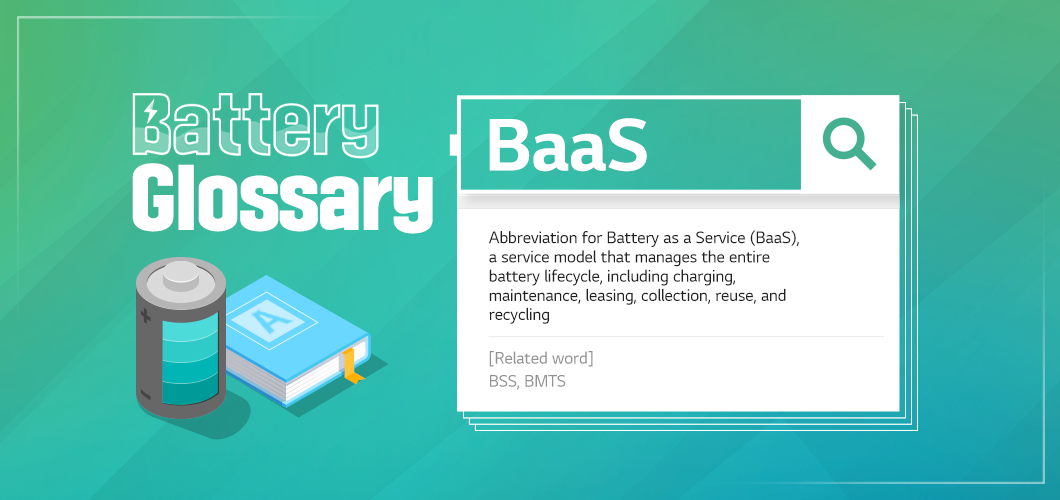
What is BaaS?
BaaS, short for Battery as a Service, refers to a service model that manages the entire battery lifecycle, including charging, maintenance, leasing, collection, reuse, and recycling. Initially, BaaS began as a model in which batteries were provided through subscription, leasing, or swapping without ownership. More recently, it has expanded into a broader resource management–based business model that covers the entire process, encompassing performance monitoring, data management, as well as reuse and recycling.
BaaS is also becoming a key service model for improving resource efficiency and advancing sustainability. The growing global demand for carbon neutrality is making it increasingly necessary to treat batteries not as consumables but as sustainable resources. Discussions around regulations to promote battery circularity, especially in the EU, are gaining momentum. The digital Battery Passport1, set to be introduced in 2027, is expected to strengthen lifecycle data management. Against this backdrop, BaaS is becoming increasingly important, as it enables integrated management of battery status and history across the entire lifecycle.
*View Battery Glossary – Battery Passport
Types of BaaS
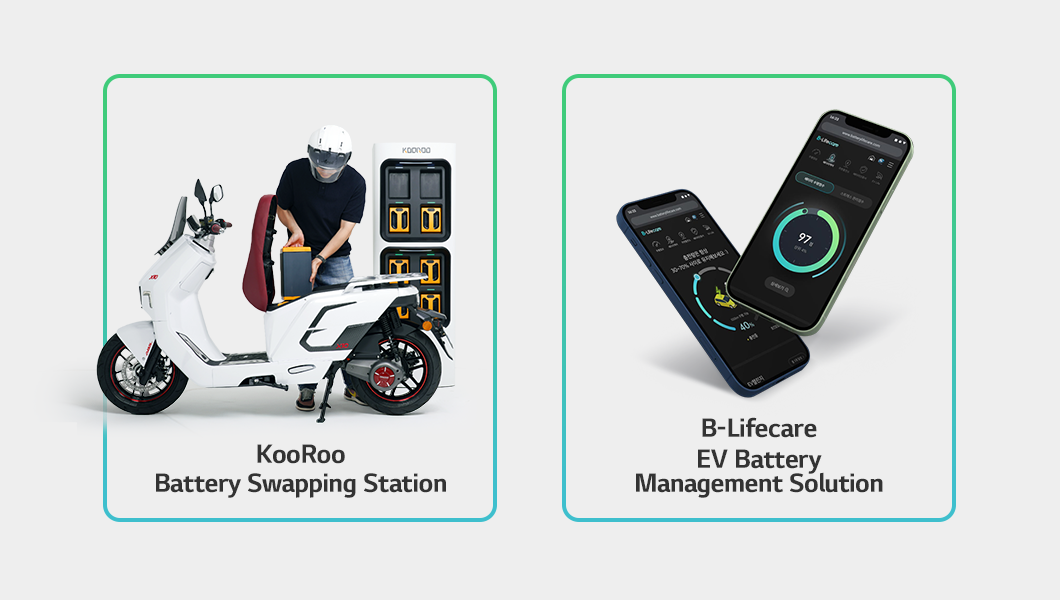
① Battery Swapping: When a battery is depleted, it can be replaced with a fully charged one at designated battery swapping stations (BSS). While DC fast charging typically requires more than 30 minutes to complete, BSS-enabled mobility allows for immediate battery replacement. This improves operational efficiency and minimizes charging downtime during long-distance travel. In addition, users receive inspected batteries at every swap, and collected batteries can be integrated into reuse and recycling processes, making this model meaningful for lifecycle management.
② Battery Monitoring and Diagnostics: This service uses cloud systems and a battery management system (BMS) to collect and analyze key data, such as voltage, temperature, state of charge (SoC), and state of health (SoH), in real time. It helps optimize battery performance, detect potential risks such as overcharging and over-discharging in advance, and enables data-driven maintenance strategies. Users can intuitively check battery conditions through mobile applications, while accumulated data can be used to enhance battery reliability in used EV transactions.
③ Integrated Lifecycle Management: This model manages batteries as circular assets, aiming to operate the entire lifecycle from production and usage to collection, disposal, reuse, and recycling within a single, integrated system. After EV use, batteries can be repurposed for applications such as energy storage systems (ESS) depending on their remaining capacity. If reuse is not feasible, critical minerals are recovered and reintroduced into battery manufacturing through recycling. By integrating battery condition and history data into a single platform, this model maximizes battery value and utilization efficiency. It represents a core concept of the circular battery economy and aligns with global initiatives such as the Digital Battery Passport.
④ Battery Subscription and Leasing: In this model, users purchase an EV without owning the battery and instead pay a usage fee to lease it. Battery ownership remains with the manufacturer or service provider, while users access batteries through subscription or leasing arrangements. This helps reduce upfront vehicle costs, as batteries account for a significant share of total EV pricing. Because manufacturers manage batteries directly, this model also supports lifecycle optimization, maintenance, collection, and recycling, offering advantages in convenience, resource efficiency, and sustainability.
Key Benefits of BaaS
So what value does BaaS offer to users and the industry as a whole?
① Lower upfront costs and expanded accessibility: With the battery separated into a service model, users can purchase products without bearing battery costs. This lowers the initial cost burden and naturally expands access to EVs and battery-based products.
② Reduced risks in performance, lifespan, and residual value: Since service providers take responsibility for battery maintenance, management, and replacement, users face fewer concerns about declines in performance, lifespan, and residual value, and can use batteries more reliably.
③ Maximized battery asset value through data: By continuously monitoring battery condition and predicting its lifecycle, battery performance is maintained at an optimal level. Users can benefit from more efficient and cost-effective battery usage, while service providers can leverage batteries as manageable assets.
④ Improved resource efficiency and reduced carbon emissions: End-of-life batteries are recovered and directed to reuse and recycling, forming a closed-loop system. This reduces the need for new battery production while minimizing resource consumption and waste, contributing to a more sustainable battery ecosystem.
⑤ Transition to a service- and platform-based industry structure: The industry is evolving beyond simply selling batteries toward service models based on subscription, operations management, data, and software. This shift enables manufacturers and service providers to establish more stable revenue structures while fostering a new battery-centered platform ecosystem.
LG Energy Solution’s BaaS Ecosystem
LG Energy Solution is expanding its business into data- and platform-driven models based on its battery manufacturing capabilities to build a BaaS ecosystem.
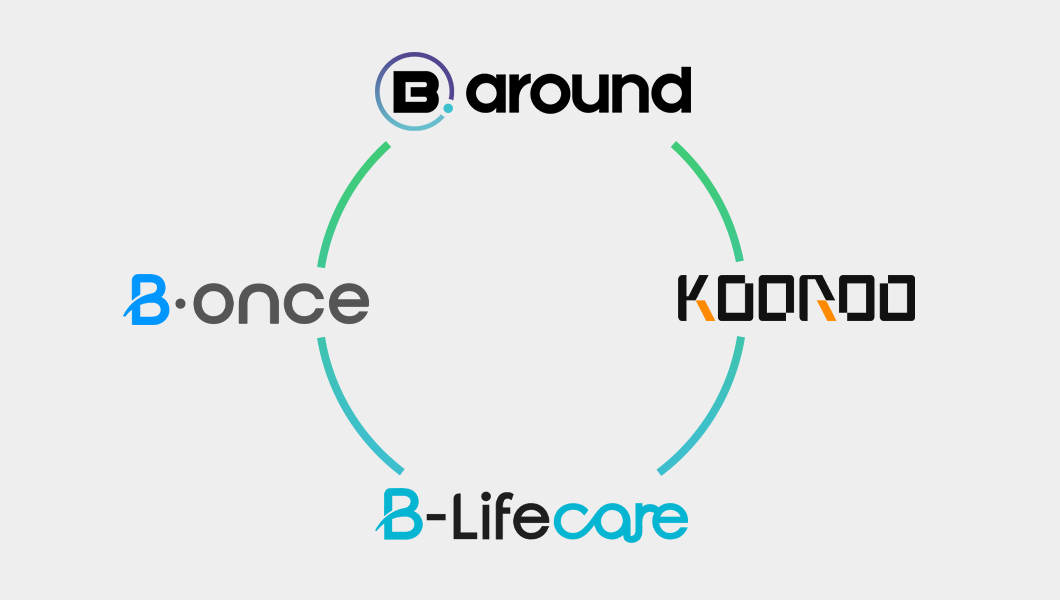
① KooRoo: LG Energy Solution’s battery swapping service for electric two-wheelers. Users can replace depleted batteries with fully charged ones in about 20 seconds at nearby dedicated stations without going through a charging process. LG Energy Solution manages battery production and maintenance, reducing the burden on users, while a cloud-based BMS enables real-time monitoring to ensure optimal battery condition and a safe driving environment. In addition, battery packs that meet certified safety standards ensure high compatibility and reliability.
② B-Lifecare: Korea’s first EV battery management solution, offering a data-driven, customized battery lifecycle management service that analyzes users’ driving and charging patterns. Through dedicated devices and a cloud-based data platform, it provides advanced indicators such as real-time driving range, energy efficiency changes, and battery stress levels. Users can maintain battery health and increase residual value, while accumulated data serves as a key asset for future BaaS business models.
③ B·once: A one-time battery evaluation service that precisely and conveniently measures remaining lifespan and performance through a single inspection, without removing the battery. Leveraging LG Energy Solution’s big data and industry-leading algorithms, it delivers fast diagnostics and highly reliable evaluation reports. This enables objective verification of battery value in used EV transactions and helps create a more trustworthy secondary battery market.
④ B.around: An advanced integrated service platform based on LG Energy Solution’s Battery Management Total Solution (BMTS), combining cloud and AI technologies. It goes beyond conventional BMS to precisely diagnose and predict battery condition, safety, and lifespan. By analyzing accumulated data in real time, it systematically manages the entire lifecycle from usage to maintenance, reuse, and recycling. As a total solution provider, LG Energy Solution delivers optimized solutions for software-defined vehicle (SDV) environments and offers differentiated value in the era of the Battery of Things (BoT).
So far, we have explored the concept of BaaS. It has evolved beyond subscription, leasing, and swapping to encompass services that manage the entire battery lifecycle, emerging as a business model that opens up new possibilities in the battery industry.
At the center of this transformation, LG Energy Solution will continue to build the BaaS ecosystem built on its battery technology.
- Battery Passport: A digital system that tracks, integrates, and manages battery information across the entire lifecycle. ↩︎