You may have heard the concept of aaS (as a Service). It refers to a business model in which consumers do not directly own software or platforms but instead subscribe to and use them through cloud-based services. While aaS has traditionally been associated with software vendors and IT companies, this model is now rapidly expanding into the energy sector. In this post, we explore EaaS (Energy as a Service), an emerging trend in the energy industry.
What Is EaaS (Energy as a Service)?
EaaS (Energy as a Service) is an integrated energy service model that goes beyond simply supplying electricity, encompassing energy production, storage, trading, and operational optimization. The core of EaaS lies in reducing customers’ burden of directly owning and operating energy facilities while enabling them to access comprehensive energy usage and management services.
The rapid rise of EaaS is rooted in technological advancements across the power industry and the increasing integration of renewable energy into the electricity market. The expansion of distributed energy resources and the adoption of ESS have enabled small-scale, region-based power operations. Meanwhile, the widespread deployment of digital technologies and smart meters has created an environment where large volumes of energy data can be collected and analyzed in real time.
As renewable energy penetration accelerates, energy operations have become increasingly complex. In response, industries have begun seeking alternatives that reduce management burdens and lower costs. Rather than managing separate contracts with multiple energy suppliers, demand has grown for integrated solutions that combine various digital services into a unified platform. As a result, the EaaS model, in which energy operations are entrusted to a third party, has gained attention.
Types of EaaS Services
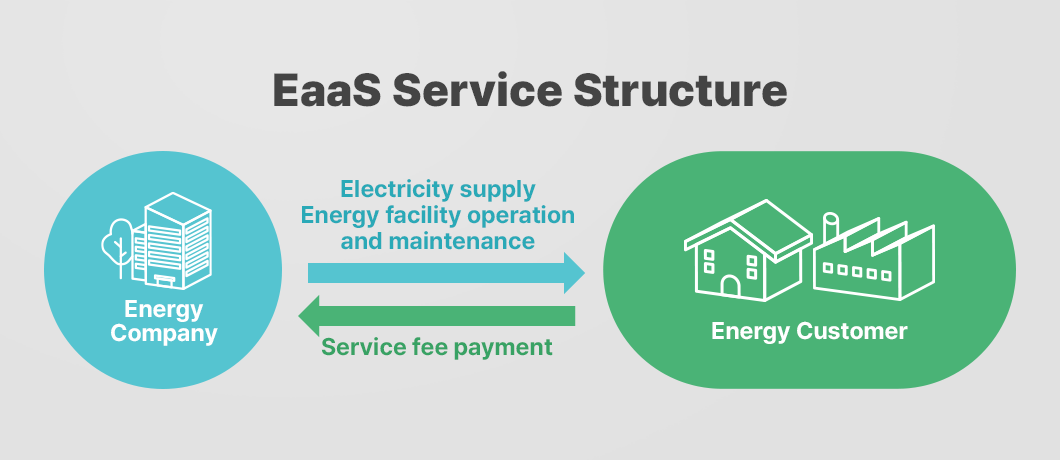
EaaS enables customers to access energy services by paying service fees instead of directly purchasing and operating energy facilities. Customers typically pay based on usage or according to the terms of a contract.
For example, an EaaS provider and a customer may enter into an agreement to install and operate a renewable energy system. In this case, the financing, installation, and maintenance of the renewable energy facilities are handled by the EaaS provider, while the customer pays only for the electricity generated and consumed. If excess electricity is produced, the surplus power is supplied to the grid.
Expected Benefits of EaaS
How does EaaS differ from traditional energy usage models?
Reduced Initial Investment Costs: EaaS reduces the burden of high upfront investment by allowing customers to use energy systems without directly purchasing or installing them.
Improved Operational Efficiency: EaaS solutions specifically designed to improve energy efficiency enable precise energy management. This not only reduces carbon emissions but also lowers overall energy demand, helping alleviate grid congestion and providing system-level benefits.
Expanded Access to Advanced Technologies: Through the EaaS model, customers can adopt advanced technologies such as ESS and AI-based operational solutions without large initial investments. As a result, companies can implement new technologies more quickly and respond flexibly to changing market conditions.
Reduced Operational and Management Burden: Because the EaaS provider operates and maintains energy systems, customers require less direct involvement in energy management. This reduces internal staffing and operational burdens and allows organizations to focus more on their core business activities.
LG Energy Solution’s EaaS Based on AI and ESS Technologies
Leveraging its AI capabilities and extensive experience in operating ESS and renewable energy systems, LG Energy Solution is actively developing its EaaS business. One representative example is its power brokerage service.
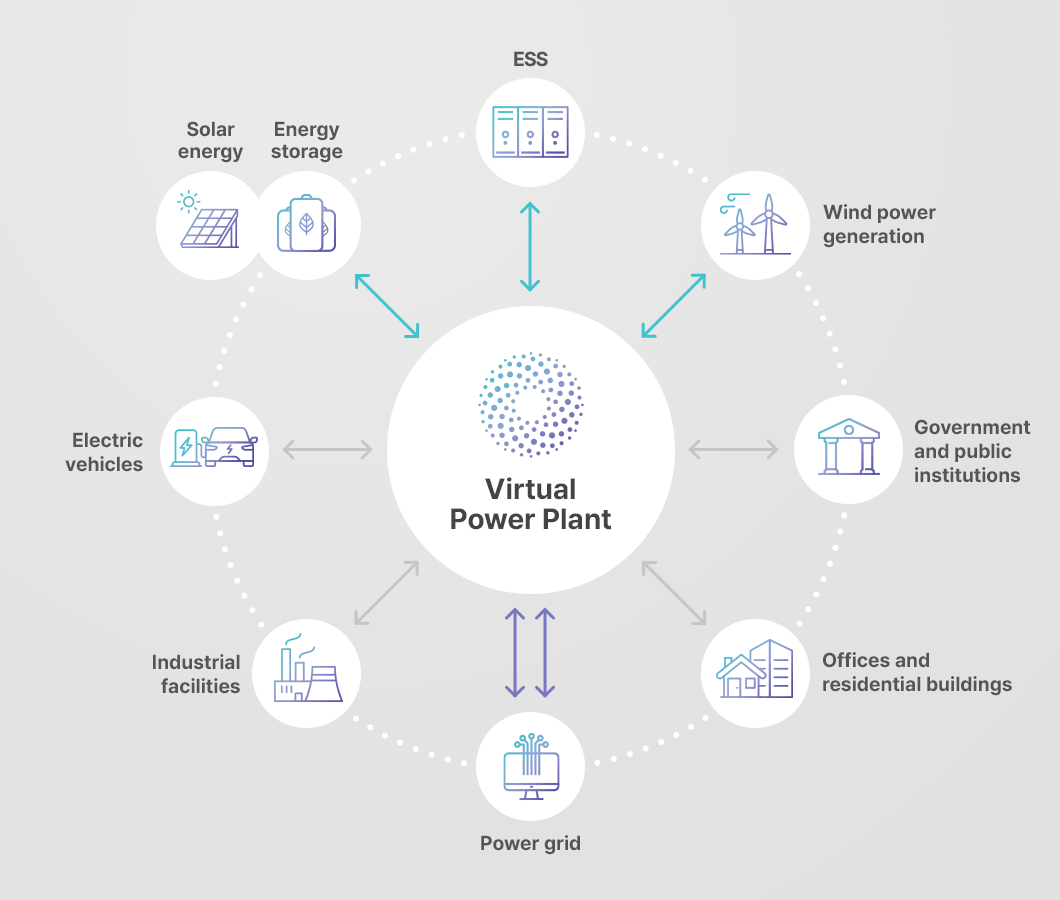
This service connects renewable energy power plants with the electricity market through an ESS- and ICT-based Virtual Power Plant (VPP) platform. A VPP aggregates distributed energy resources and manages them as a virtual power plant, analyzing supply and demand in real time to forecast generation and optimize electricity dispatch.
LG Energy Solution has the capability to integrate and operate energy resources, including solar, wind, and ESS, across a range of scales. This capability is built on the experience and operational know-how gained from managing diverse energy assets in different environments. Drawing on these strengths, the company has established South Korea’s first and largest standalone ESS connected to the distribution network. This system corrects generation forecast errors caused by weather fluctuations in real time and enhances grid stability.
Additionally, LG Energy Solution applies an AI/ML-based forecasting solution that processes weather and generation data in two stages, optimizing operations by accounting for seasonal and geographical characteristics. Through its ICT-based integrated management platform, customers can monitor real-time revenues, review bidding results, and analyze data. Operational strategies are tailored to each customer’s energy usage patterns and business environment. Specialized personnel dedicated to energy market and regulatory changes proactively respond to evolving conditions, minimizing operational risks.
Currently, LG Energy Solution serves as the leading power broker in the Jeju renewable energy pilot bidding program. It was also the first in South Korea to establish a standalone ESS power plant connected to the distribution network. Through various demonstration projects, including ESS-based nighttime overload mitigation, the company is driving grid stabilization and regulatory improvement.
We have explored the concept of EaaS and seen how LG Energy Solution is expanding next-generation energy service models.
Next time, we will explore BaaS (Battery as a Service), a concept closely related to EaaS.