The battery is one of the critical factors determining EV performance. To fully leverage battery performance, it is important to identify usage methods optimized for individual users by considering various factors, including user characteristics, the usage environment, and surrounding conditions.

The key system that makes this possible is the Battery Management System (BMS). LG Energy Solution is developing a BMS that enables precise battery diagnostics using its extensive data and AI technologies. In this episode of Making Every Possibility, we meet Yong-chul Sung, who leads innovation in BMS technology development.
Q. Could you introduce yourself and explain the technology?
Hi. I am Yong-chul Sung and I am with the Lithium Plating Diagnostics Team in the BMS R&D Group.

The BMS I work on is a system installed in EVs and ESSs that measures and controls battery current, voltage, and temperature. Its role is to monitor and diagnose battery conditions in order to deliver optimal prescriptions. Simply put, it is the doctor for batteries.
*View Battery Glossary – BMS (Battery Management System)
Q. What are the roles of the BMS?
The BMS monitors the battery to estimate remaining capacity and performance. It also allows efficient battery use through cell balancing*, which reduces voltage differences among cells, as well as charging and discharging control. In addition, it plays a key role in ensuring safety by detecting abnormal signs.
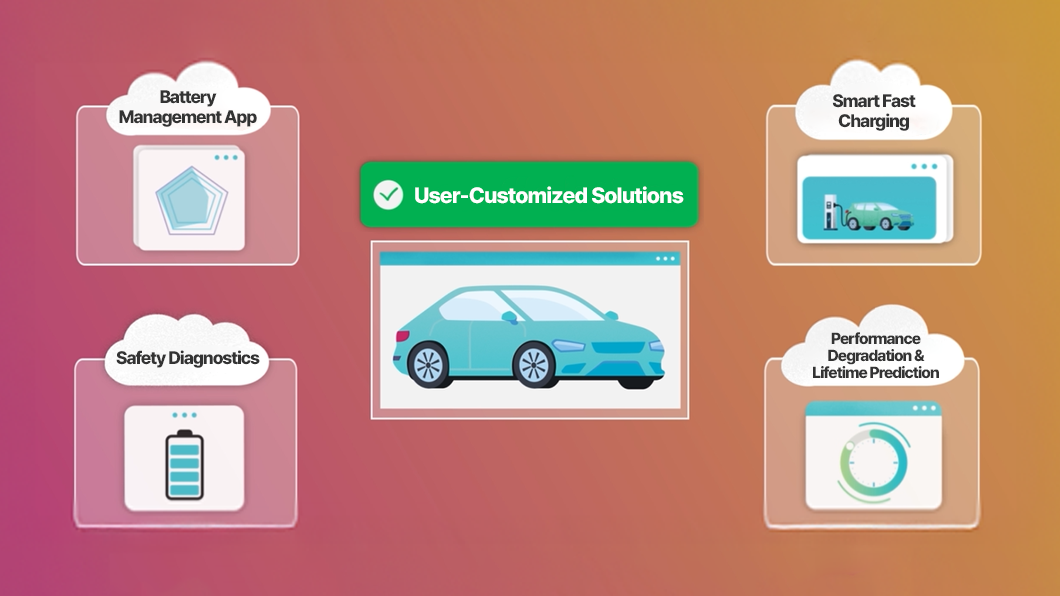
As a result, the BMS diagnoses battery conditions quickly and accurately, supporting the safe and efficient use of energy. Furthermore, it provides tailored solutions for customers based on their driving patterns.
*View A Better Life with Batteries – Achieving Energy Balance through Cell Balancing
Q. Can drivers check battery conditions by themselves?
Yes. Drivers can check the battery conditions themselves using B-Lifecare*, a service launched by LG Energy Solution in 2021. By connecting a data-collection device to their vehicle, they can access information on battery performance and life.
*View B-Lifecare, The Beginning of Smart Electric Vehicle Battery Management
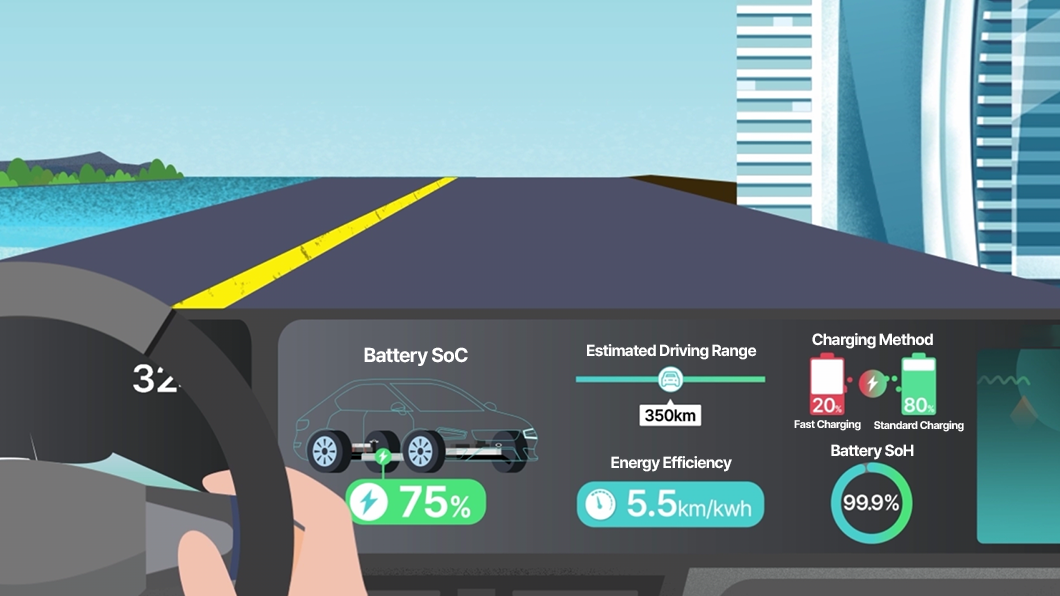
This service delivers essential information, including driving range, energy efficiency, and driving time. It enables users to assess battery life by analyzing their driving and charging habits. Additionally, it offers information on battery efficiency under different weather conditions as well as nearby charging stations, enhancing convenience for drivers.
Q. What differentiates LG Energy Solution’s BMS?
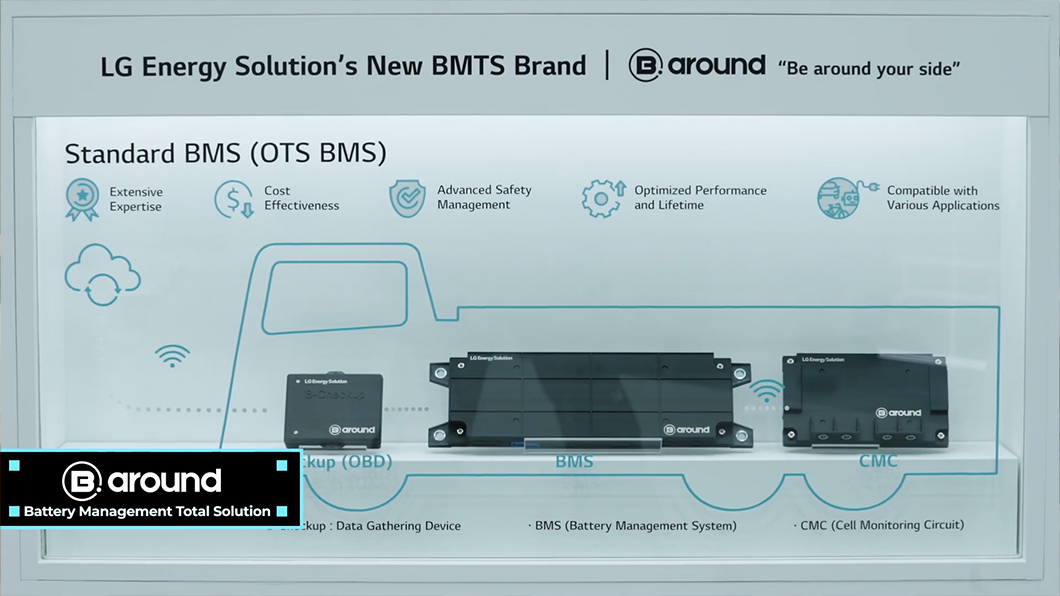
LG Energy Solution boasts the world’s largest BMS patent portfolio, with more than 8,000 patents. In particular, the company has developed its BMS based on empirical data from analyses of 130,000 cells and 1,000 modules. And in late 2024, it unveiled Battery Management Total Solution (BMTS), built on these technological capabilities. BMTS is a solution that integrates AI-based software technology into the BMS. With BMTS, it is possible to conduct precise analyses of complex data beyond simple monitoring, enabling more proactive and intelligent battery management.
*View Battery Glossary – BMTS (Battery Management Total Solution)
Moreover, the company is pursuing the industry’s first commercialization of an SoC-based BMS, having signed a formal joint-promotion agreement with Qualcomm in late 2024. This project will enable faster and more accurate diagnosis of battery conditions, with computational capabilities up to 80 times greater than those of conventional technologies. Going forward, it plans to introduce future-oriented battery management services through continued partnerships.
*View Battery Glossary – SoC (State of Charge)
Q. How does the BMS detect battery abnormalities?
The BMS must be capable of precisely diagnosing potential issues by detecting subtle signals or characteristics in advance to enhance safety. LG Energy Solution has conducted extensive experiments and collected and analyzed large volumes of data to identify abnormalities. Through this process, the company has developed highly sophisticated diagnostic logic.
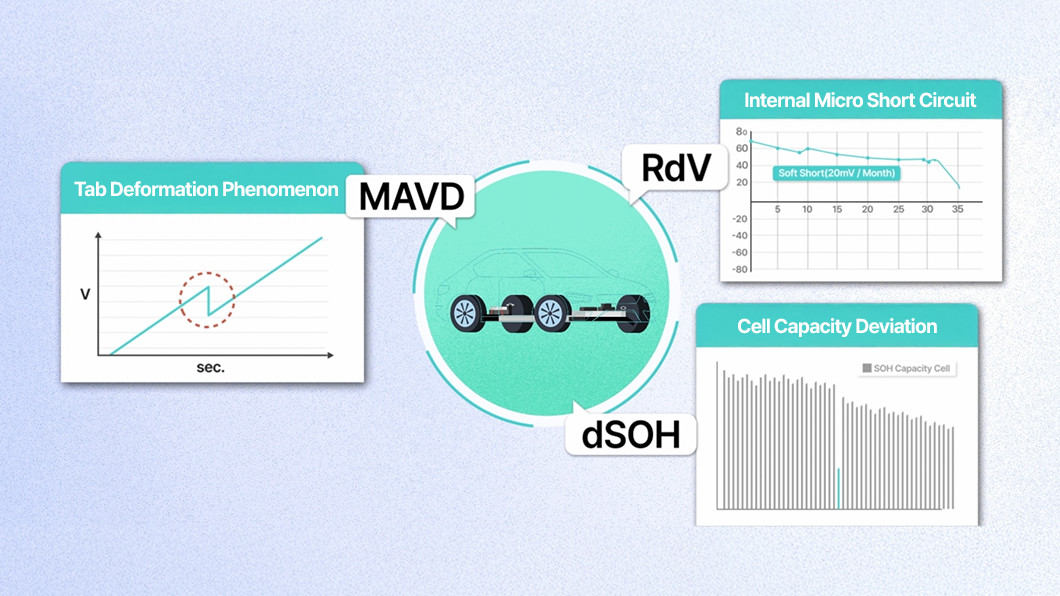
As a result, safety diagnostic software technologies such as Moving Average Voltage Deviation (MAVD), Relaxation Deviation Voltage (RdV), and Delta State of Health (dSOH) have been implemented in the BMS. With these advanced technologies, LG Energy Solution’s BMS boasts a detection rate of over 90 percent, one of the highest in the industry.
Q. Can BMS go beyond EVs and be applied for other areas?

The BMS is being applied beyond EVs and ESSs to a wide range of fields, including the medical, aerospace, and military sectors. It is expected to be more widely adopted to enhance battery safety and efficiency and to manage the entire battery lifecycle, particularly in preparation for the “Battery of Things” era, where all devices are connected to batteries.
We have looked at how the BMS enables safer and more efficient battery use. LG Energy Solution will continue to advance BMS technology leveraging precise data to create a safer and more efficient battery-use environment.
If you are interested in learning more about how LG Energy Solution is moving beyond the BMS and developing BMTS, click the link below!