■ Research published in Nature Communications highlights joint innovation with the University of Chicago and UC San Diego’s Frontier Research Lab
■ All-solid-state battery architecture prevents polysulfide dissolution, enabling high-capacity sulfur cathode performance
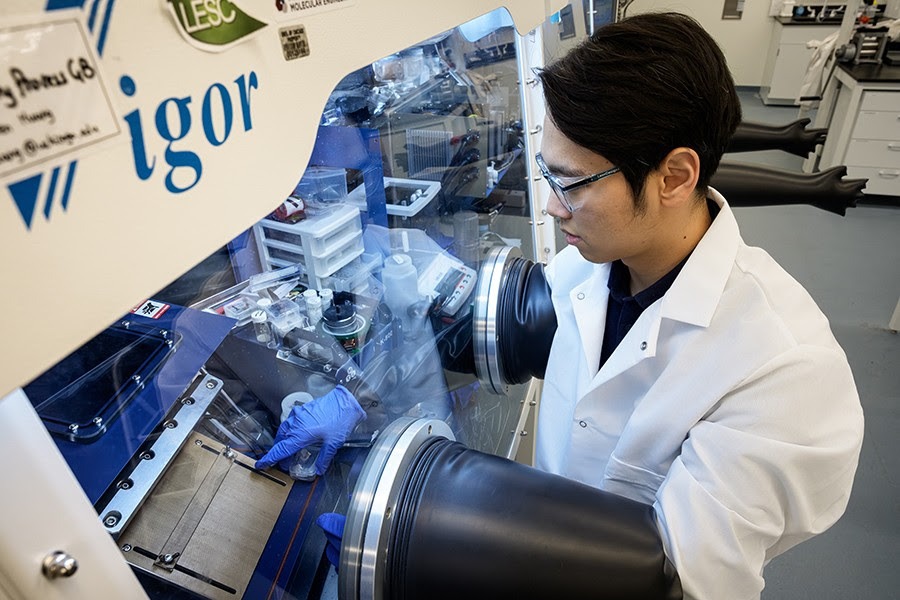
(AI-assisted translation for informational purposes)
SEOUL, March 5, 2026 – LG Energy Solution announced today that it has successfully demonstrated a high-capacity battery utilizing sulfur as a cathode material through an all-solid-state battery architecture, presenting new possibilities for next-generation high-energy-density batteries.
The research, conducted in collaboration with Professor Shirley Meng’s research team at the University of Chicago, was published on February 27 in Nature Communications, a leading international journal in the field of energy research.
The study represents a key research achievement from the Frontier Research Lab (FRL), jointly operated by LG Energy Solution with the University of California, San Diego (UC San Diego) and the Pritzker School of Molecular Engineering at the University of Chicago.
Sulfur has long been considered a promising candidate for next-generation cathode materials due to its low cost, abundant availability, and exceptionally high theoretical capacity of approximately 1,675 mAh/g. However, conventional battery systems using liquid electrolytes have faced a major challenge known as polysulfide dissolution, in which sulfur compounds generated during charge and discharge processes dissolve into the electrolyte, leading to rapid performance degradation and limited cycle life.
To address this issue, the joint research team adopted an all-solid-state battery structure that replaces liquid electrolytes with solid electrolytes. This approach effectively suppresses polysulfide dissolution and enables stable electrochemical performance.
As a result, the researchers achieved a capacity of approximately 1,500 mAh/g while maintaining stable cycling performance. Importantly, the performance was verified not only in coin-cell testing but also in pouch-type cell configurations, demonstrating the potential for practical battery applications.
“This achievement confirms the potential of sulfur cathodes to expand energy capacity beyond conventional lithium-ion batteries,” said an LG Energy Solution representative. “Through continued collaboration with leading academic institutions, we will further advance next-generation battery technologies by strengthening safety, energy density, and cost competitiveness.”
Professor Shirley Meng, who led the research, is scheduled to speak at The Battery Conference at InterBattery 2026, where she will share insights into the future development of all-solid-state batteries and next-generation battery technologies.