One of the key factors that determines battery performance and safety is how stably the electrodes are stacked. To address this, LG Energy Solution has developed its proprietary AZS (Advanced Z-Stacking) process by combining the Z-Stacking method with Lamination and Stacking (L&S) technology. Compared to conventional Z-Stacking, the AZS process enables more precise and safer electrode stacking.
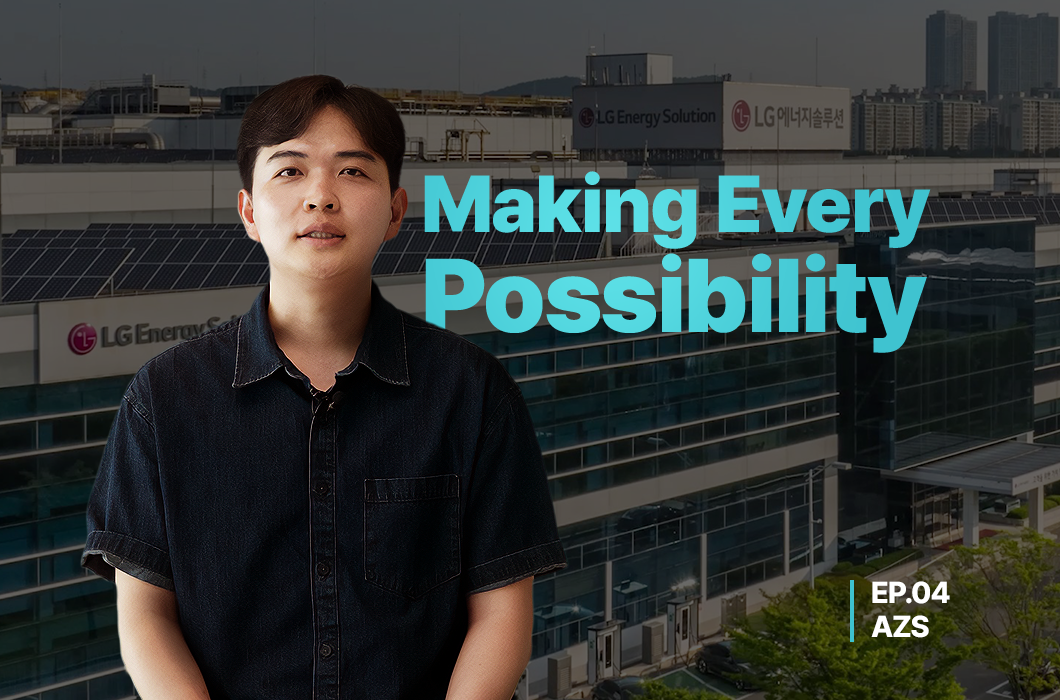
In this installment of Making Every Possibility, we spoke with Bogyu Kim of LG Energy Solution’s AZS Process Technology Team, who is involved in the development and mass production of the AZS process, to learn more about the distinct features of AZS technology and its future potential.
Q. Please introduce yourself and tell us about the AZS process.
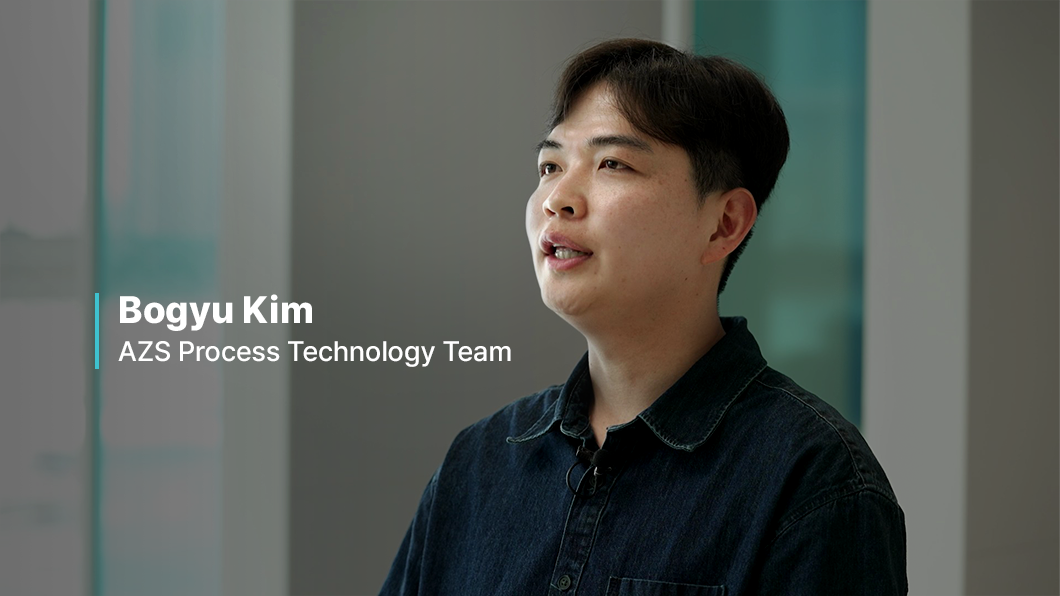
Hello, I am Bogyu Kim from LG Energy Solution’s AZS Process Technology Team. I work on the DNC process, which includes drying, notching, and cutting, as well as the AZS process.
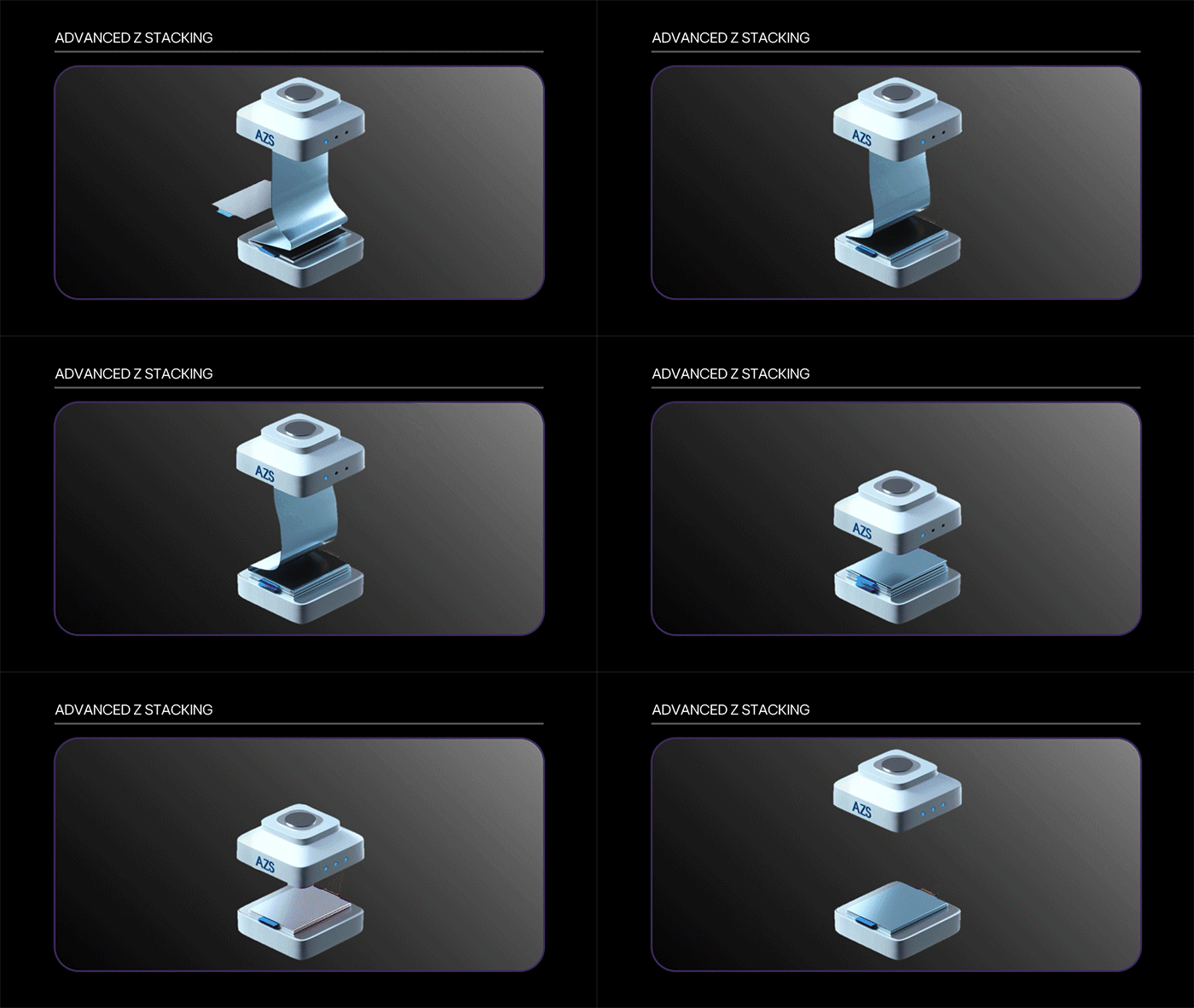
AZS is a technology that integrates the Z-Stacking method with the advantages of L&S. You can think of it as placing cut cathode and anode sheets between separators folded into a Z shape, then stacking and bonding them together.
Q. Could you explain the difference between the L&S process and the AZS process in simple terms?
Let me explain the difference using paper as an example. Assume the gray paper represents the separator, the blue paper the anode, and the red paper the cathode.
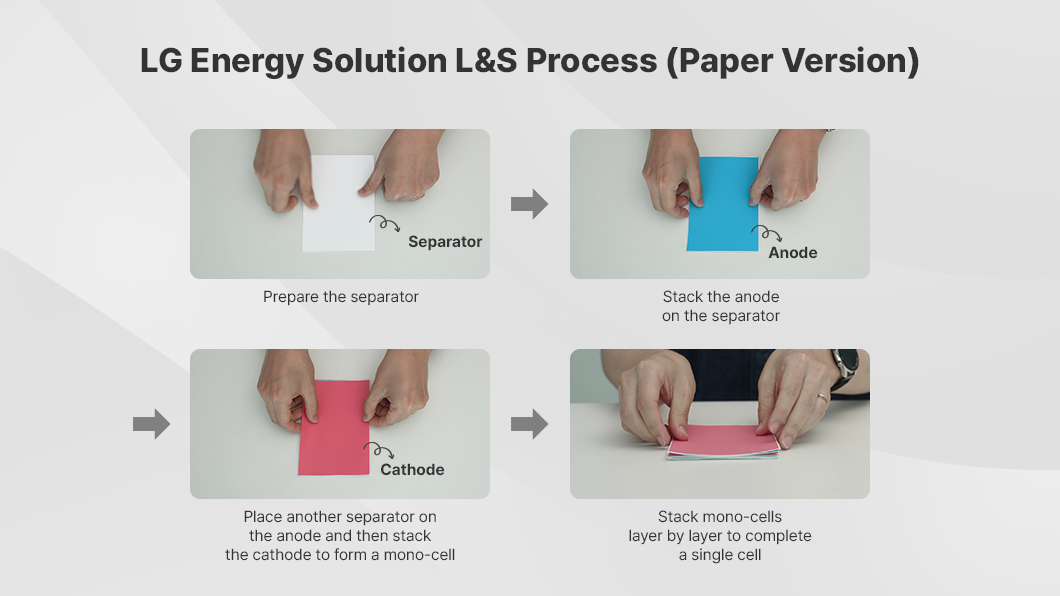
In the L&S process, the anode is placed on top of the separator, followed by another separator layer. The cathode is stacked on top to form a mono-cell. These mono-cells are stacked layer by layer to manufacture a single cell, and the process is completed with taping at the final stage.
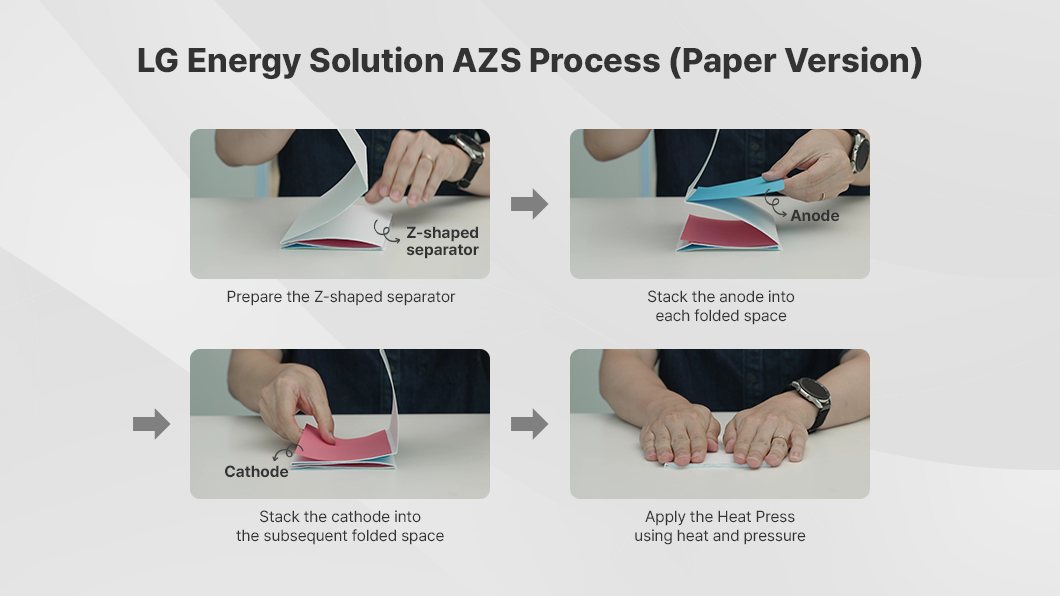
In the AZS process, the key step is first forming the separator into a Z shape. The anode, cathode, and another anode are placed in sequence between the folded sections of the Z-shaped separator to form a single cell. Next, a Heat Press process is carried out using LG Energy Solution’s specialized technology. Heat Press is a thermal bonding step that applies heat and pressure to fix the electrodes, ensuring that the cathode and anode are positioned in their intended locations inside the separator.
Q. What are the key features and differentiators of the AZS process?
LG Energy Solution’s AZS process structurally blocks the possibility of contact between the cathode and anode and secures alignment with minimal bonding force, thereby enhancing safety.
In particular, the ability to secure bonding strength between the electrodes and separator through the Heat Press process is a key differentiator of LG Energy Solution’s AZS process. By applying heat and pressure, the electrodes and separator are precisely aligned, effectively addressing issues such as electrode shifting. This contributes to higher safety and reliability.
Another benefit of the Heat Press step is that it helps optimize the internal cell space. This increases the capacity of individual cells, which in turn leads to improved driving range.
Q. What is the most important factor in the AZS process?
Due to the characteristics of the AZS process, alignment and bonding between the electrodes and the separator are critical.
From an alignment perspective, even slight misalignment between the cathode and anode can trigger a short circuit, causing resistance to approach zero and allowing excessive current to flow, which may result in serious issues. Cells manufactured using the AZS process structurally separate the cathode and anode with the separator, significantly reducing the possibility of a short circuit.
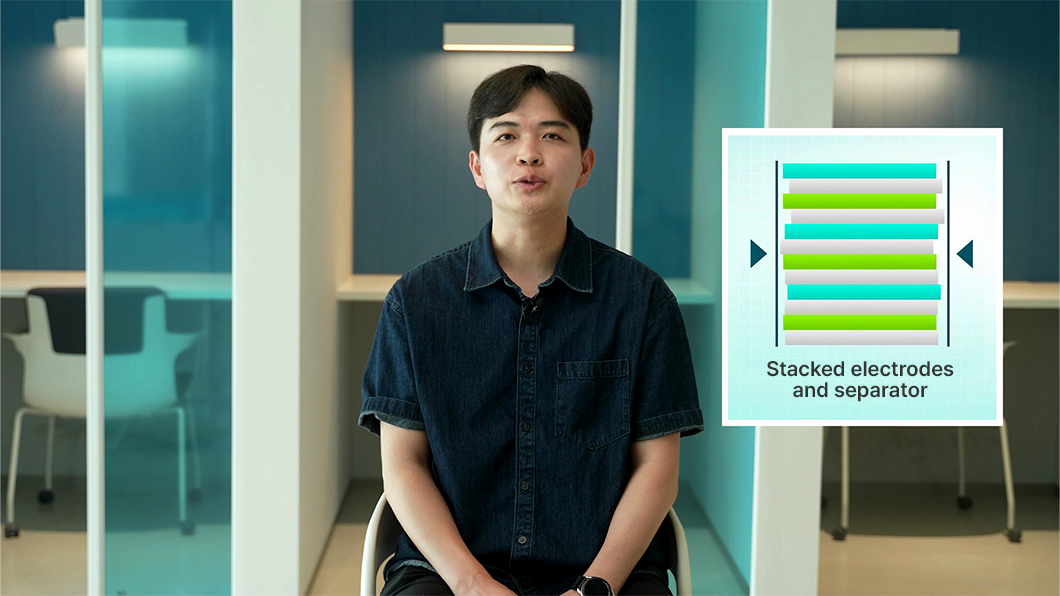
Bonding strength between the electrodes and separator is another key factor. In the activation process that follows AZS, aging as well as charging and discharging determine battery performance.
If bonding strength is insufficient, lithium plating may occur during charging and discharging, leading to capacity degradation or safety issues.
On the other hand, if bonding strength is too strong, it can cause structural deformation during electrochemical expansion and contraction. This can reduce the electrode surface area and result in electrical short circuits.
Based on its lamination technology expertise, LG Energy Solution has applied optimal temperature and pressure conditions to the AZS process to secure the electrode alignment and bonding strength. Through this approach, both battery performance and safety can be achieved.
Q. What are LG Energy Solution’s plans for the AZS process going forward?
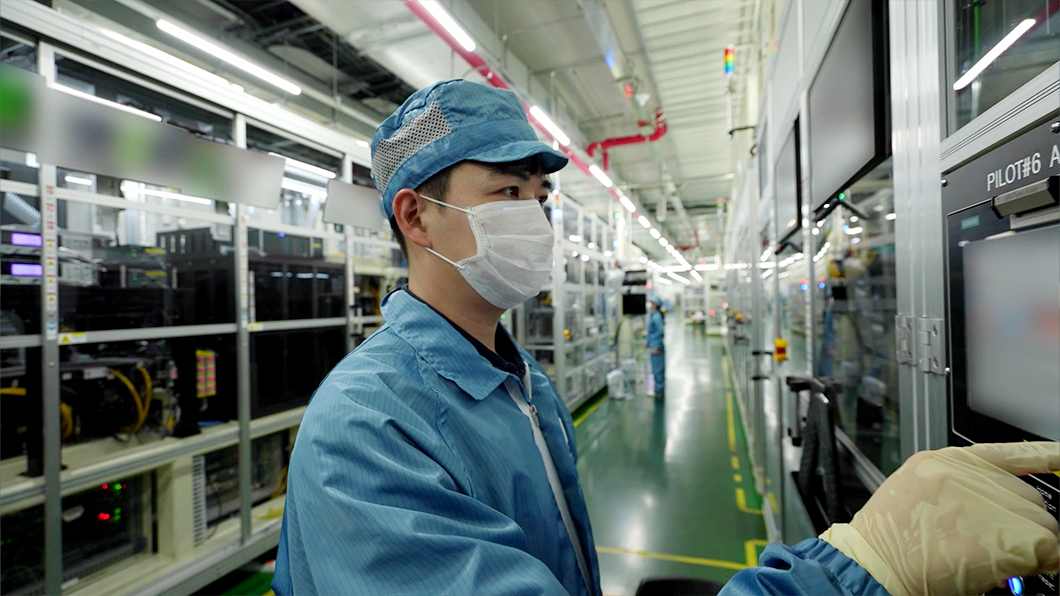
LG Energy Solution began mass production using the AZS process in April 2024 at HLI Green Power in Indonesia. Although this was the first application of the process in mass production, it achieved a yield exceeding 99 percent within four months. Building on this performance, the company is considering broader application of the AZS process beyond the Indonesian production site and pouch-type form factors.
The company is also developing processes to enable faster production. To support this, research on machine learning and AI linked to manufacturing processes is actively underway.
So far, we have taken a closer look at LG Energy Solution’s AZS stacking technology. By combining Lamination and Stacking with Z-Stacking and applying Heat Press to secure higher safety and reliability, LG Energy Solution will continue to expand possibilities for the development of high-quality, high-performance batteries. Please stay tuned.