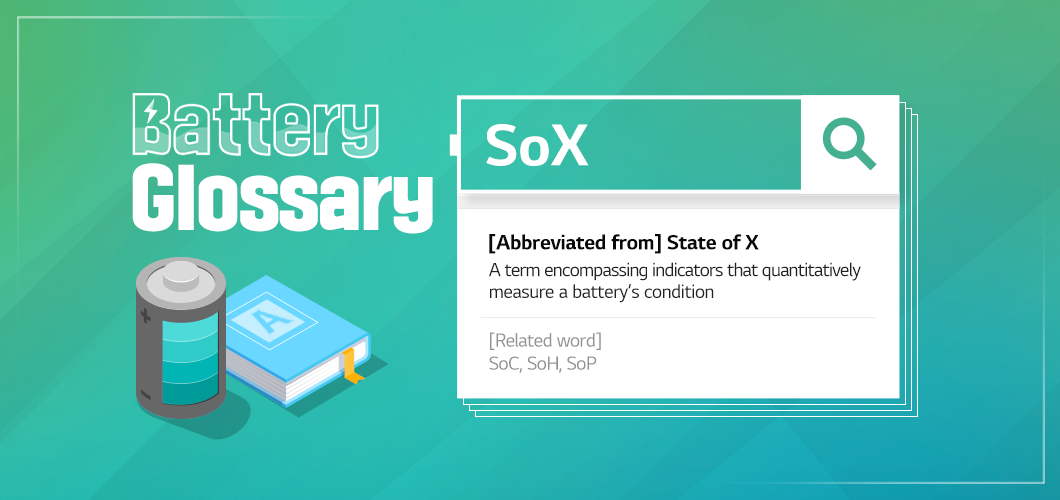
Proper management is essential for the safe and long-term use of batteries. For this, it is important to monitor the condition of the battery accurately, which is where the concept of SoX (State of X) comes in. SoX includes indicators that represent various states of a battery. This time, we will take a closer look at SoX.
The Background of the SoX (State of X) Concept
As the adoption of electric vehicles (EVs) and energy storage systems (ESSs) expands and the use of renewable energy increases, batteries are increasingly used in diverse applications. Accordingly, the importance of high-power batteries with complex structures and the battery management systems (BMS) that efficiently manage them has increased, prompting ongoing efforts to analyze the condition of batteries more precisely.
In line with this trend, the concept of SoX has been introduced to better understand and predict the condition of batteries more accurately. SoX stands for “State of X,” and it is a concept that encompasses the overall condition of a battery. The “X” broadly represents various battery characteristics, such as the state of charge, health, and performance.
Types of SoX and Key Indicators
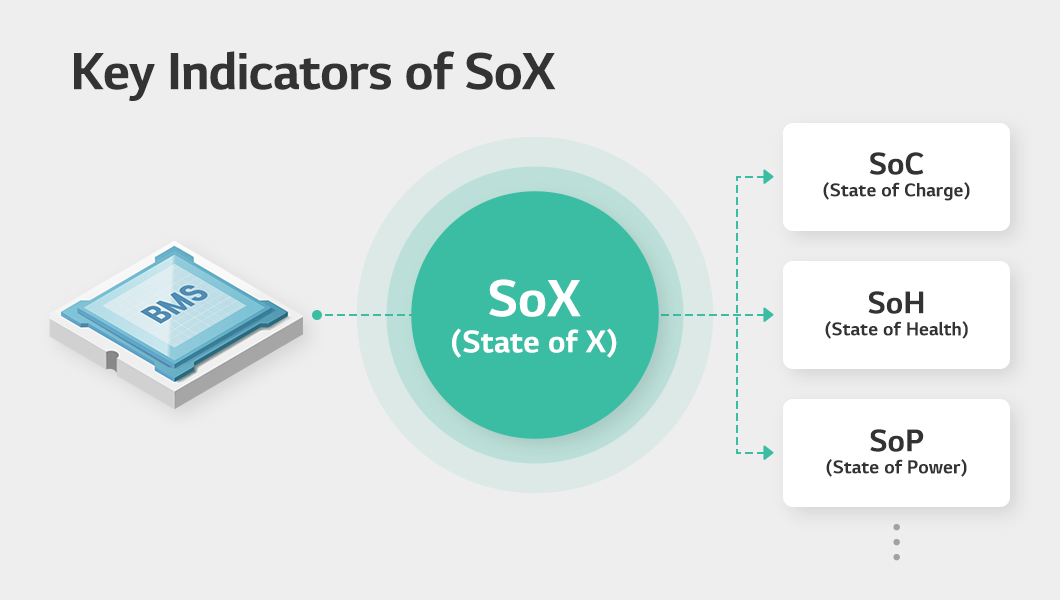
SoX includes SoC (State of Charge), SoH (State of Health), SoP (State of Power), SoE (State of Energy), SoF (State of Function), and SoS (State of Safety). Among these, the key indicators are SoC, which indicates the battery’s current charge level; SoH, which evaluates its general health; and SoP, which denotes the available power output.
① SoC (State of Charge): Representing the Battery’s Current Charge Level
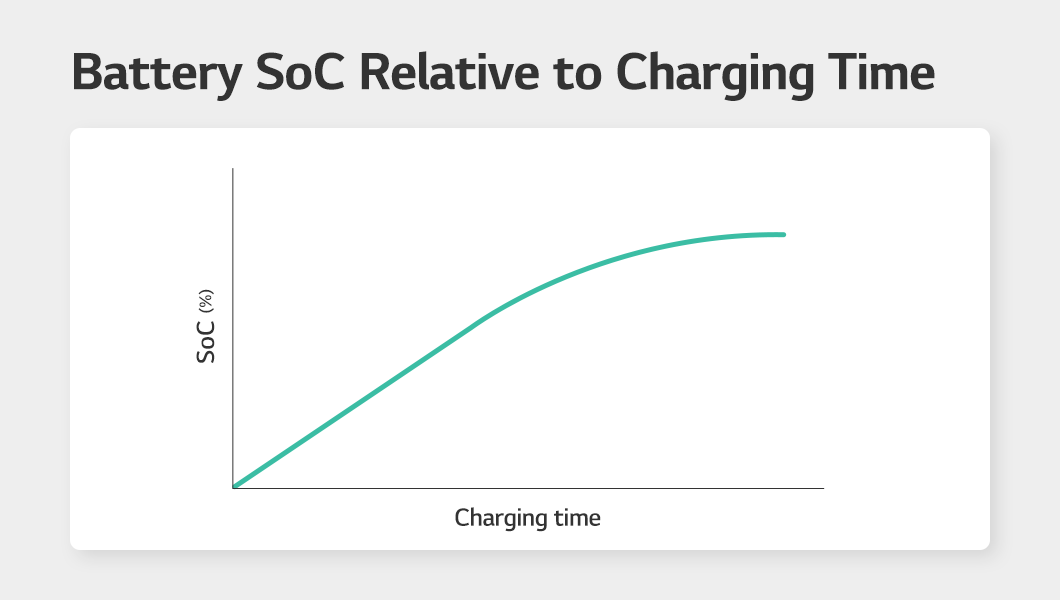
SoC is an indicator that represents the charge currently available in a battery, expressing the proportion of stored energy relative to full capacity, as a percentage. This indicator is utilized to identify the remaining energy in a battery in real time and plays an important role in various applications, such as estimating the driving range of EVs or displaying the remaining battery life on smartphones.
There are various methods for assessing SoC, including open-circuit voltage (OCV) measurement, coulomb counting, and methods that apply Kalman filter or an extended Kalman filter.
The OCV method estimates SoC by measuring the battery’s open circuit voltage and applying it to a correlation graph between OCV and SoC. While this method is easy to implement and highly reliable under controlled conditions, it is inadequate for real-time estimation.
The coulomb counting method estimates SoC by integrating the charge and discharge currents of the battery. This method is easy to implement due to its simple algorithm and can estimate SoC most quickly if the initial and measured voltages are known. However, it is susceptible to accumulating errors.
Another approach involves applying Kalman filters and extended Kalman filters, using advanced mathematical models. This method predicts the internal state of dynamic systems by filtering noise from data. It can improve accuracy under dynamic conditions by correcting errors. However, as the number of variables increases to enhance reliability, the computational load also grows, making equations more complex.
The measured SoC data enables real-time monitoring of battery condition and precise control of charging and discharging processes. In addition, by intuitively indicating the remaining battery life, it helps users manage their energy easily.
② SoH (State of Health): Reflecting the Battery’s Condition of Health
SoH is an indicator that represents the current performance of a battery compared to its initial performance and is used to evaluate its remaining life and general health. A 100% SoH means that the battery is currently meeting its original specifications and standards exactly. Generally, a battery’s SoH is 100% at the time of shipment. As the period of use extends or the number of charging and discharging cycles increases, the SoH gradually decreases. For lithium-ion batteries, replacement is recommended when the SoH value falls below 80%.
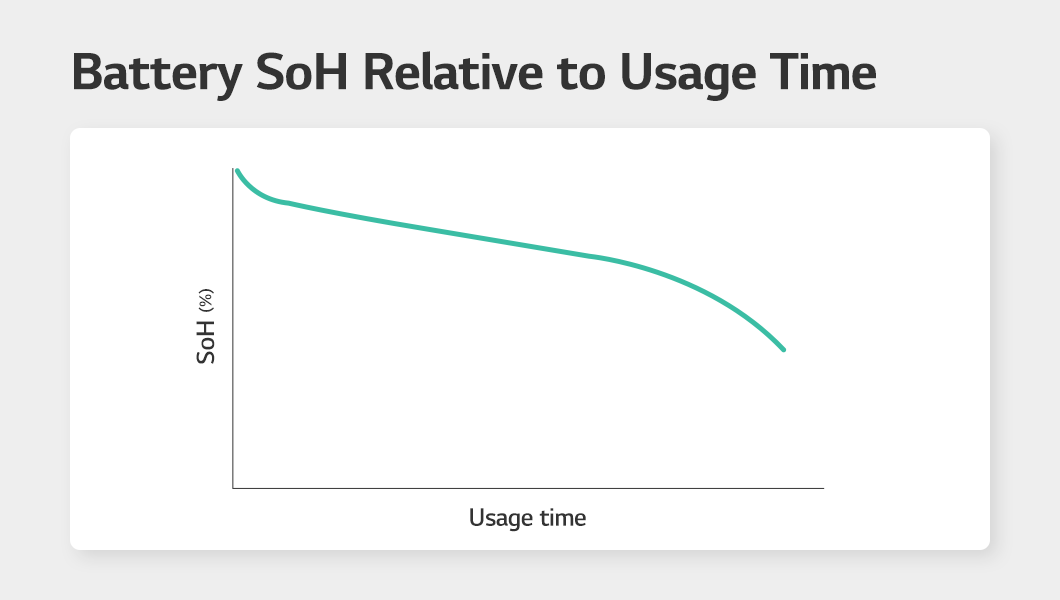
SoH data is used not only to diagnose the battery’s condition but also to design optimized management strategies for battery usage patterns. This helps extend battery lifespan and improve performance retention. Moreover, SoH data serves not only as a criterion for determining the timing of battery replacement but also functions as a key factor in assessing the value of used batteries.
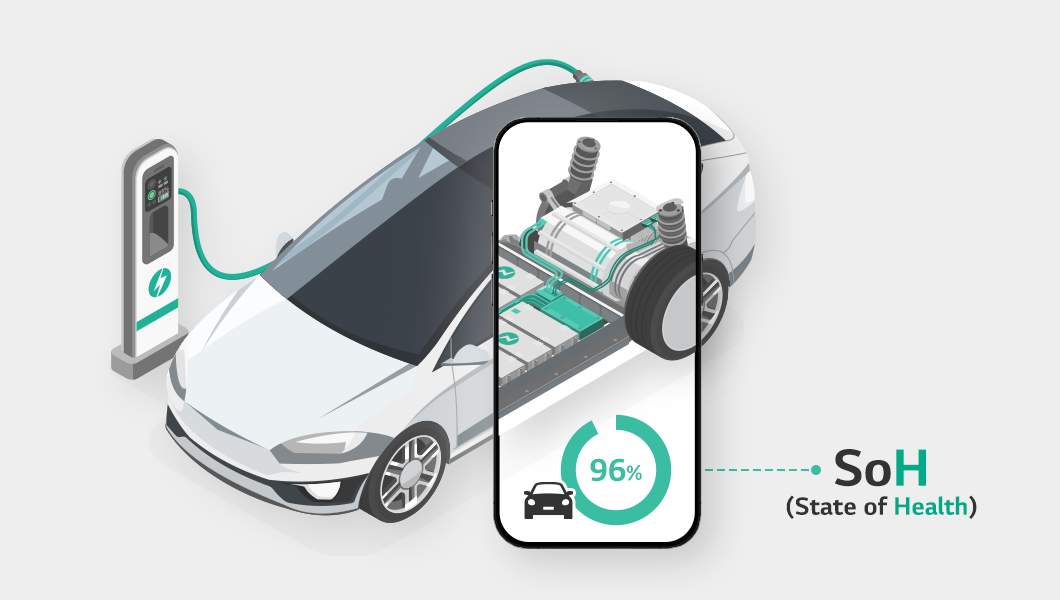
Some electronic devices provide functions for users to directly check the SoH, facilitating the condition evaluation of used devices and battery management. Additionally, even among batteries used for the same period, SoH values can vary depending on usage environment, charging and discharging habits, and external temperature. By harnessing this data, users can accurately assess the condition of the battery.
③ SoP (State of Power): Displaying the Battery’s Power Output Status
SoP is an indicator that represents the maximum power a battery can charge or discharge over a given period of time. Estimating SoP is especially crucial for high-performance applications such as EVs and ESSs. It supports stable battery operation under high-power demands, including rapid acceleration, uphill driving, and regenerative braking. SoP plays an important role in optimizing the power performance of batteries, thereby ensuring the performance and safety of EVs.
Furthermore, SoP data helps verify whether the battery can supply sufficient power to the vehicle and effectively recover energy during braking without causing overcharging or overdischarging. The vehicle delivers the optimal power performance by monitoring the status of battery cells and packs. This enables the vehicle to achieve maximum performance with minimal battery weight. Lastly, SoP is instrumental in establishing vehicle control strategies and contributes to extending the driving range of EVs.
Changes Driven by the Introduction of SoX
With the introduction of the SoX concept, battery management is evolving from simply measuring the current condition to a predictive approach. Previously, only individual indicators such as SoC and SoH were used. Now, the average values of these indicators are estimated using AI-based machine learning algorithms, enabling comprehensive analysis and accurate prediction of charging conditions, performance degradation, temperature, and power fluctuations.
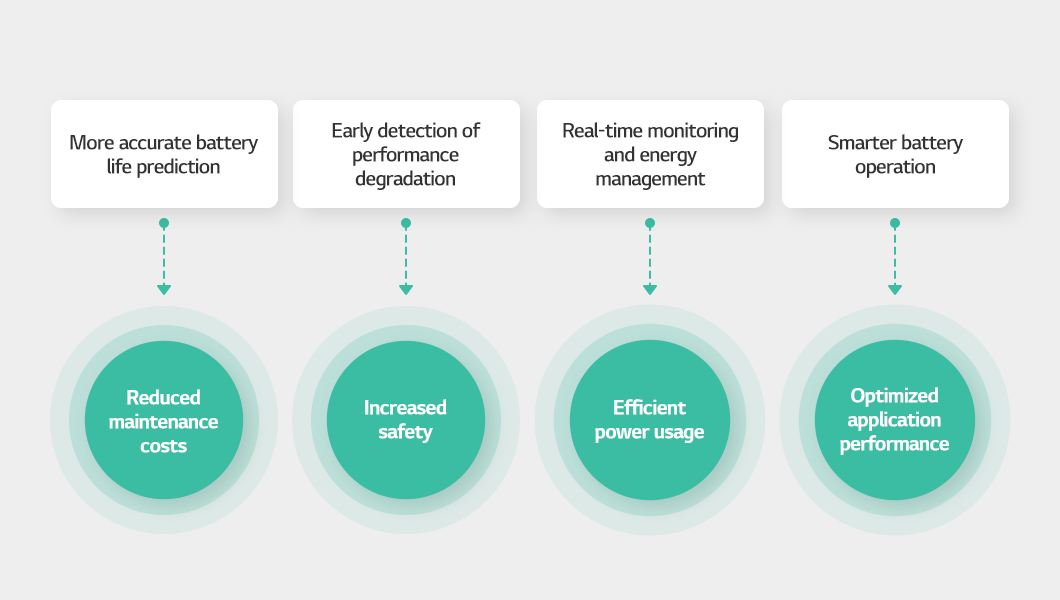
This approach facilitates the diagnosis of battery conditions and optimizes charging and discharging strategies for applications such as EVs, thereby enhancing energy efficiency. Also, SoX-based predictive maintenance allows for safer battery management.
Advancing battery management technology has become essential, as battery-powered products diversify and technologies grow more complex. In this context, the role of SoX in evaluating and managing battery conditions will become increasingly important. These changes will contribute to improving battery performance while enhancing reliability and efficiency across various applications.